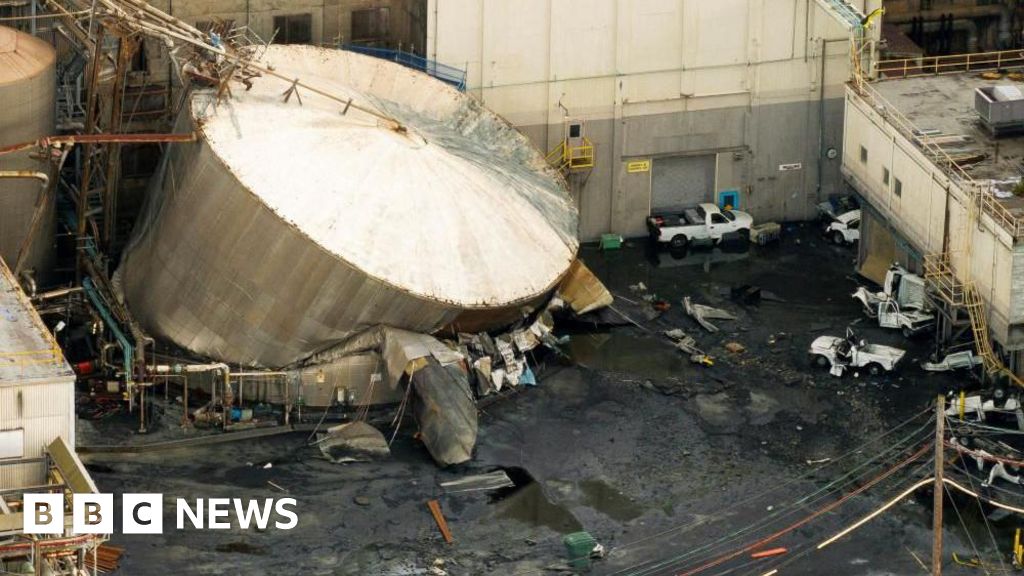
At least 2 people have died, 7 have been injured, and 9 remain missing after a tank ruptured at Nippon Dynawave Packaging's Washington paper mill, releasing hundreds of thousands of gallons of white liquor into the Columbia River. The incident has been described as the deadliest industrial accident in modern Washington history, prompting National Guard support and ongoing hazardous recovery operations. The event is a severe operational and reputational setback for the company, with potential cleanup and liability implications.
This is less an idiosyncratic tragedy than a reminder that industrial safety tail risk is underpriced in asset-heavy, older-process manufacturing. The immediate market read-through is not to the named plant but to any operator with hazardous chemical handling, aging infrastructure, or thin redundancy: one failure can instantly convert a low-beta cash generator into an open-ended remediation and litigation story. In our framework, the first-order earnings hit is usually modest; the second-order impact comes from insurance retentions, higher P&C premiums at renewal, regulatory scrutiny, and capex pull-forward across an entire subsegment over the next 2-6 quarters. The most exposed group is the paper/packaging complex and adjacent chemical suppliers that rely on the same industrial ecology: outage risk, permitting friction, and replacement cost inflation can lift input prices for surviving competitors while also tightening local labor and contractor availability. That creates a subtle relative-value setup: the facility-level shock can be margin-accretive for higher-quality peers with newer plants and stronger balance sheets if they can pass through pricing before customers renegotiate. The longer the recovery and environmental clean-up drags on, the more likely this becomes a board-level ESG and legal overhang, not just an accident headline. The contrarian point is that the market often over-discounts headline contamination while underestimating substitution behavior. If the site is forced offline for weeks or longer, there can be temporary volume tightness in certain paper grades, but customers usually re-source faster than investors expect, which can create a short-lived price pop in survivors rather than a sector-wide collapse. The bigger risk for longs is not product demand destruction; it is a cascade of one-off charges, reserve builds, and compliance capex that hits multiples before it hits EPS. Catalyst-wise, the next 1-3 days are about discovery, casualty counts, and whether the environmental footprint expands into river-related remediation. Over 1-3 months, expect insurance, OSHA, and state/federal investigation milestones to matter more than operations commentary. Over 1-2 years, this can reset underwriting terms for industrial casualty and environmental liability, which is where the real economic transfer from operating companies to insurers/reinsurers may show up.
AI-powered research, real-time alerts, and portfolio analytics for institutional investors.
Request DemoOverall Sentiment
extremely negative
Sentiment Score
-0.85
