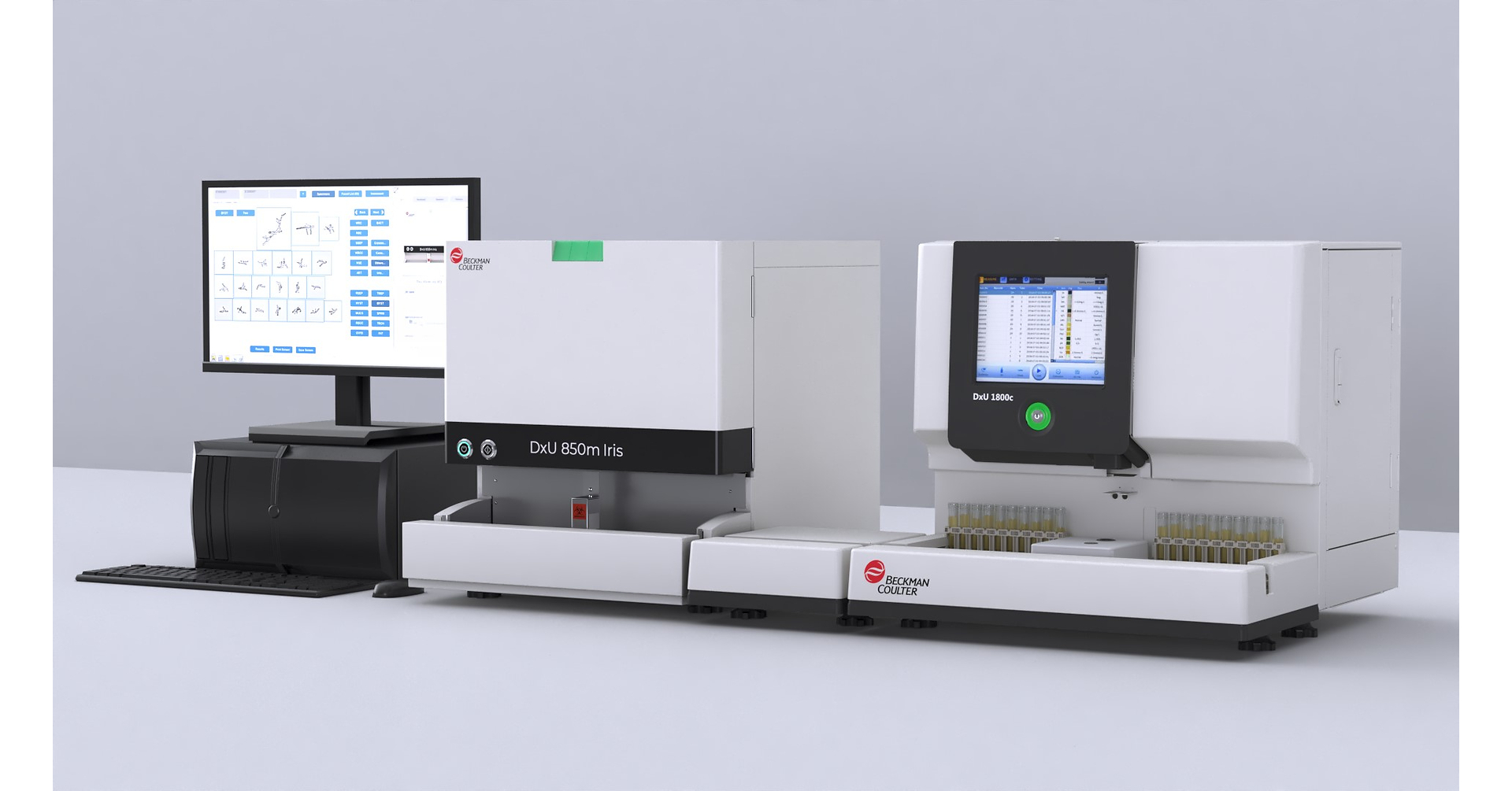
Beckman Coulter launched the DxU 1800 fully automated urinalysis system in the U.S., combining a new chemistry analyzer with integrated microscopy to standardize testing and scale throughput. The platform targets reducing manual microscopy review rates to <3% and the standalone DxU 1800c chemistry analyzer can process up to 300 samples per hour (with storage for up to 2,000,000 samples and 100,000 strip images). While this is a product-focused update, it supports demand growth drivers (e.g., rising diabetes/CKD prevalence and ~10M annual UTI encounters) and could incrementally benefit lab automation adoption.
Danaher’s upside here is less about top-line size and more about embedding a higher-switching-cost workflow inside large reference labs. That favors recurring consumables, service, and software pull-through, while pressuring smaller point-solution vendors that depend on manual review labor or fragmented chemistry/microscopy stacks. HSMD has no obvious direct read-through.
Near term, this is mainly a sentiment and channel-check catalyst, not an earnings event. The stock reaction should fade quickly unless sales teams can show actual placements and validation wins over the next 1-3 months; the real P&L impact would arrive over 6-18 months through reagent attach and share gains in high-throughput labs. The main reversal risk is that labs already budgeted automation spend elsewhere, or procurement freezes delay conversion despite a decent product story.
Contrarian view: the market may be overestimating the incremental TAM because urinalysis is high-volume but low-ASP, and many of the addressable sites are the most price-sensitive. If adoption is mostly a workflow substitution rather than demand creation, this becomes a steady but not material growth lever for DHR rather than a re-rating driver. The thesis is falsified if DHR’s diagnostics segment doesn’t show improved instrument placements or consumables growth in the next two quarters.
AI-powered research, real-time alerts, and portfolio analytics for institutional investors.
Overall Sentiment
mildly positive
Sentiment Score
0.15
Ticker Sentiment
