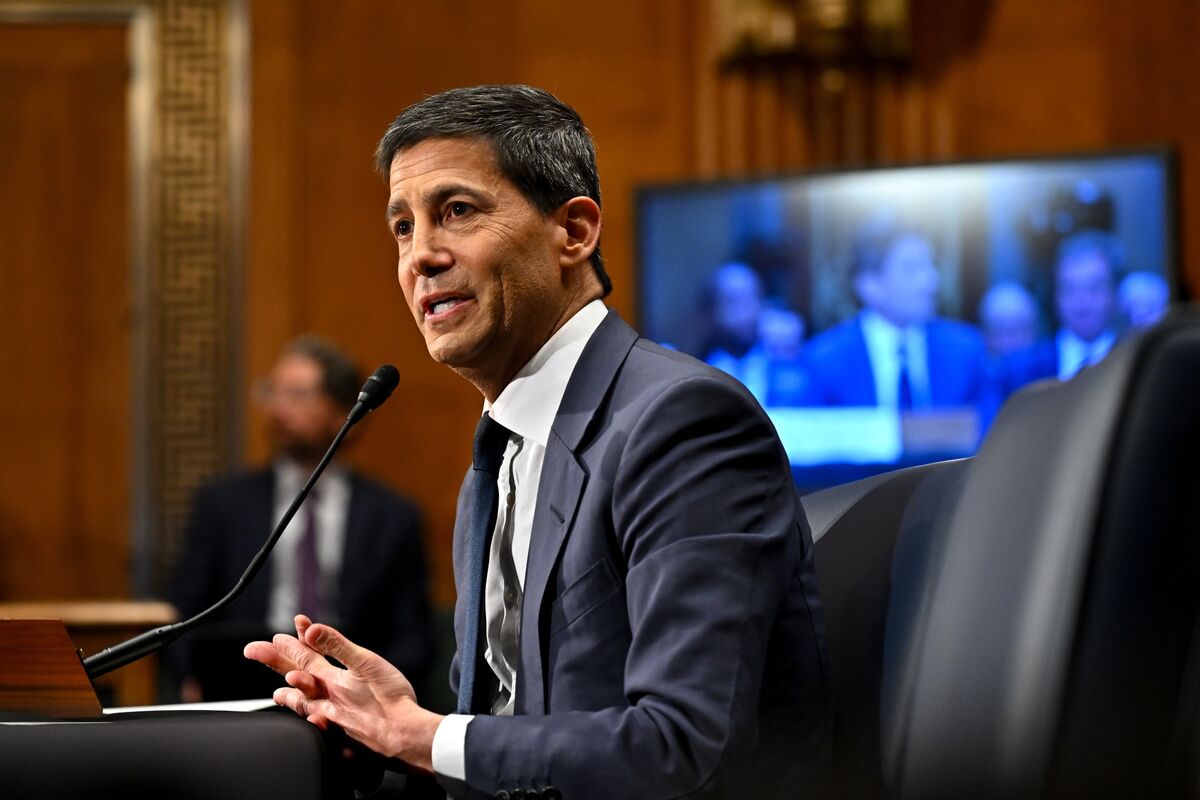
A rare four-way dissent at the Fed underscores policy division, with three FOMC members opposing the easing bias and Governor Stephen Miran still calling for a 25 bps cut. JPMorgan’s Bob Michele said the split creates a challenge for chair-designate Kevin Warsh amid pressure from President Trump for lower rates. The disagreement appears to reflect policy uncertainty rather than a direct rebellion against Jerome Powell.
The market implication is less about the current policy path and more about the credibility discount now embedded in the next chair’s setup. A visibly fractured committee makes it harder for any successor to quickly re-anchor expectations, which usually steepens the front end only if investors think the new regime will force cuts faster than the inflation data allow. That creates a tactical winner in rate volatility, but a medium-term headwind for risk assets that had been pricing a smoother glide path.
For banks, the second-order effect is mixed: a modest backup in the front end can help deposit pricing and protect NIMs, but a more disorderly leadership transition raises term-premium uncertainty and can hurt mortgage, trading, and capital-markets sentiment. JPM is relatively insulated versus regional lenders because of balance-sheet diversity, but the bigger opportunity is in relative value versus rate-sensitive financials that need a clean easing cycle to justify multiple expansion. If the market starts treating the Fed as politically fragmented rather than data-driven, long-duration financial exposures should de-rate first.
The contrarian miss is that dissent can be bullish for the dollar and credit spreads if it reduces conviction around imminent cuts. Consensus may be too focused on the headline of lower-rate pressure and underappreciating that a noisier policy process can delay easing, keeping real rates higher for longer. Over the next 1-3 months, the cleanest expression is not a directional rates bet but a volatility trade: the path is more uncertain than the endpoint, and that tends to cheapen carry trades while enriching optionality.
Tail risk is a sharp policy repricing if incoming data force the committee to validate the hawkish dissents; that would trigger a fast bear steepener and hurt duration-heavy equities. Conversely, if Warsh signals independence and the market reads him as more pragmatic than political, the dissent premium can unwind quickly. The key catalyst window is the next 4-8 weeks of Fed communication and macro prints, when the narrative either hardens into a contested transition or is dismissed as noise.
AI-powered research, real-time alerts, and portfolio analytics for institutional investors.
Request DemoOverall Sentiment
neutral
Sentiment Score
-0.05
Ticker Sentiment
