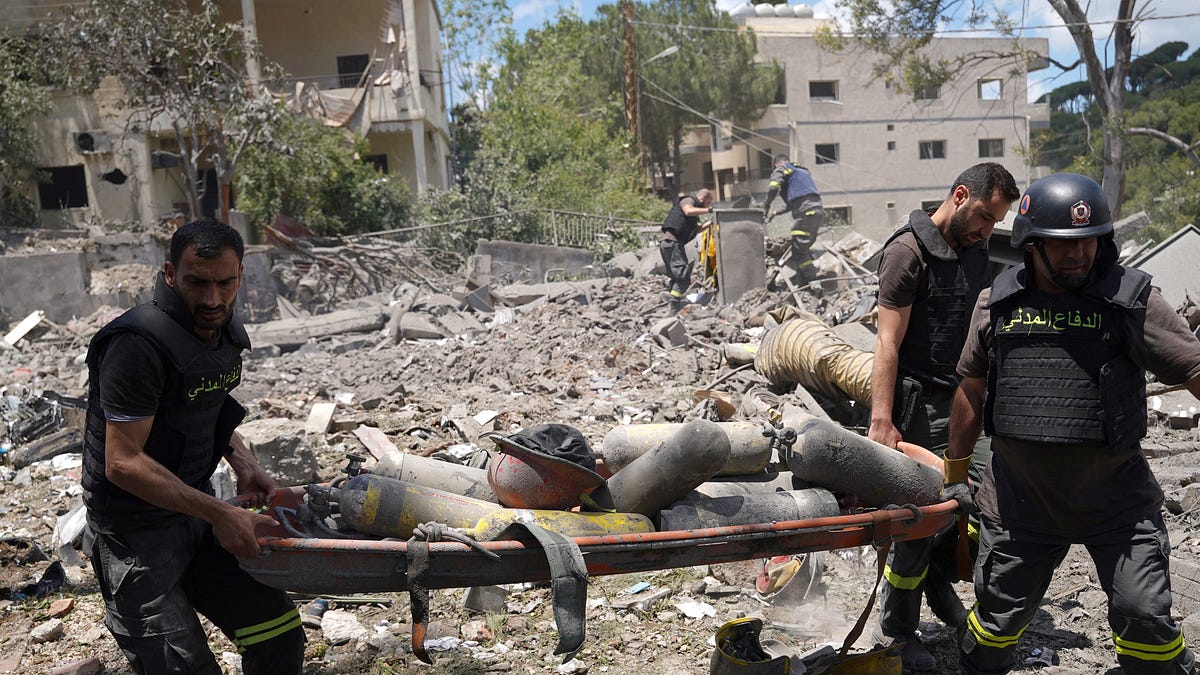
The article is dominated by escalating geopolitical conflict: U.S. strikes near Bandar Abbas, renewed Iran-U.S. negotiations, and major Israeli escalation in Lebanon and Gaza, including at least 11 killed in one Lebanese strike and continued displacement orders. It also highlights multiple destabilizing developments across emerging markets, including a suicide car bomb in Pakistan that killed at least 24, RSF drone strikes in Sudan that killed at least 21 civilians, and worsening tensions in Cuba, Bangladesh, Turkey, and Iraq. Market implications are skewed risk-off, with added pressure on energy and shipping from Hormuz-related rhetoric and broader regional conflict risk.
The market implication is not just higher headline risk in the Middle East; it is a distribution shift in the probability of discrete supply-chain shocks. Even without a formal Hormuz closure, the combination of maritime harassment, mine-clearing fears, and the signaling value of U.S.-Iran talks means tanker insurance, freight, and delivery optionality can reprice faster than spot crude. The first second-order winners are not necessarily upstream producers but names with embedded pricing power and low direct geopolitical exposure: shipping insurers, defense electronics, and select oil-service companies with Middle East replacement demand.
The Gaza/Lebanon escalation matters because it raises the odds that negotiations fail on sequencing, not substance. If talks stall, the near-term risk is less a full regional war than a rolling cycle of retaliatory strikes that keeps Gulf logistics on edge for weeks, which tends to compress equity multiples in EM and import-dependent sectors even if oil itself only moves modestly. Conversely, any temporary de-escalation can be quickly reversed by a single casualty event, so the trade is path-dependent and best expressed with defined downside rather than outright beta shorts.
China’s rice shipment to Cuba and the broader EM news flow point to a world where trade flows are increasingly politicized and subsidized, which supports relative outperformance of logistics winners with protected corridors and government-backed routes. The AI/encyclical angle is less about near-term price action and more about regulatory narrative risk: sovereigns are converging on AI as a labor, truth, and security issue, which can cap multiple expansion in the highest-duration AI names if policy friction widens. The consensus is probably underestimating how quickly these overlapping conflicts translate into tighter financial conditions via oil, freight, and risk premia rather than through direct earnings hits.
The contrarian view is that the deal pathway may be more advanced than positioning implies; if frozen assets and port/security terms are already close, the market could see a sharp reversal in volatility premium within days. That argues for keeping geopolitical hedges convex and tactical, not structural, unless Hormuz actually shows sustained disruption or Gulf state alignment with the U.S. visibly fractures.
AI-powered research, real-time alerts, and portfolio analytics for institutional investors.
Request DemoOverall Sentiment
strongly negative
Sentiment Score
-0.70
