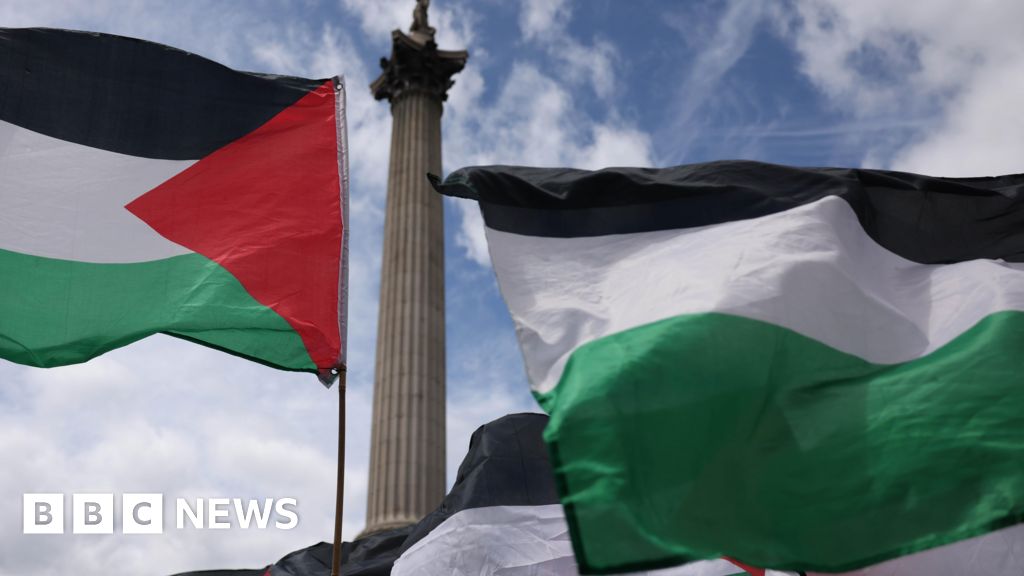
The UK announced a significant shift in foreign policy, with Prime Minister Sir Keir Starmer stating Britain's intent to recognize Palestinian statehood, conditioned on Israel taking substantive steps towards peace. This move, aimed at reviving the two-state solution and influenced by the Gaza humanitarian crisis, was immediately and fiercely rejected by Israeli Prime Minister Netanyahu, who views it as rewarding Hamas. The decision, alongside France's similar stance, highlights increasing diplomatic pressure on Israel from some Western allies despite U.S. opposition, signaling an attempt to re-engage the stalled peace process.
The United Kingdom has announced a significant shift in foreign policy, signaling its intent to recognize a Palestinian state. This move, described by diplomatic sources as a 'diplomatic crowbar,' is designed to revive the long-stalled two-state solution and is conditioned on Israel taking substantive steps toward a ceasefire and sustainable peace. The policy change appears to be driven by the escalating humanitarian crisis in Gaza and represents a break from previous UK positioning. Israel's immediate and forceful rejection of the proposal, with Prime Minister Netanyahu framing it as a reward for terrorism, suggests the UK's path toward recognition is now 'irreversible.' This decision aligns the UK with France, another permanent UN Security Council member, indicating increasing diplomatic pressure on Israel from key European allies. However, it also creates a potential transatlantic rift, as the US government's stated position opposes such recognition at this time. While the geopolitical implications are substantial, the direct market impact is assessed as low, framing this primarily as a long-term strategic development rather than an immediate catalyst for market volatility.
AI-powered research, real-time alerts, and portfolio analytics for institutional investors.
Request DemoOverall Sentiment
Neutral
Sentiment Score
0.10
