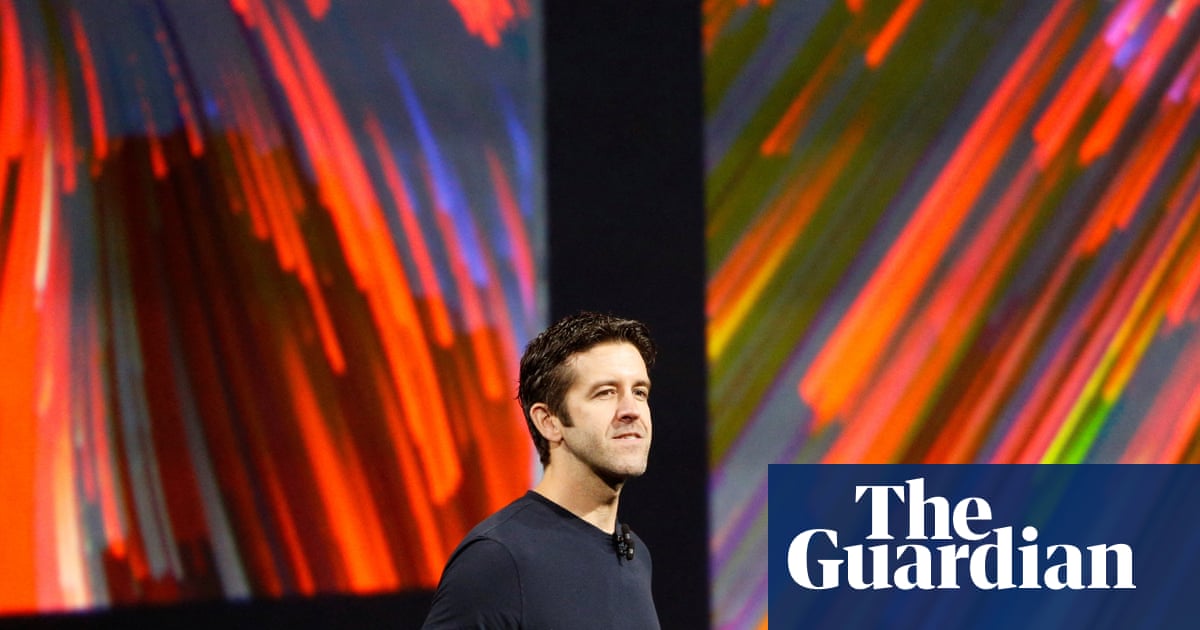
Apple’s incoming CEO John Ternus faces four major strategic challenges: fixing Apple’s AI approach, reducing iPhone concentration, navigating geopolitics and regulation, and sustaining the services business. The article highlights Apple’s reliance on Google Gemini for AI, the iPhone still contributing just over 50% of $416bn in annual sales, and ongoing pressure from the US, China, and European regulators. The tone is cautious, with the piece framing Ternus’s transition as a test of execution rather than an immediate catalyst.
The setup is less about a clean leadership transition and more about a forced re-rating of Apple's growth durability. The market has been paying premium multiples for a company that behaves like a cash compounder with optionality, but the optionality is being tested: if Apple remains an AI distribution layer rather than an AI control point, the iPhone ecosystem becomes more defensible operationally but less valuable strategically. That creates a subtle risk that services growth may decelerate at the margin even if headline revenue holds up, because the next upgrade cycle increasingly depends on perceived software indispensability rather than hardware refresh cadence.
The competitive second-order effect is that Google, not Apple, may capture the most economics from any near-term AI integration path. If Gemini is the engine behind a better Siri, Apple preserves user retention but cedes model economics, query monetization, and developer mindshare to GOOGL, while MSFT/META/AMZN remain the capex arms race leaders. That is why the market should not treat Apple's AI gap as merely a feature lag; it is a bargaining-power issue that can leak into search, app discovery, and default-use behavior over the next 12-24 months.
Geopolitics is the underappreciated near-term catalyst because supply-chain diversification is not binary. Even modest tariff escalation can compress gross margin faster than a full-scale reshoring effort can offset it, and the political optics of US manufacturing are likely to remain a headline overhang into the next election cycle. The harder problem is that any meaningful onshoring would require multi-year capex with limited economic payback, so the equity can be penalized on uncertainty long before actual margin damage appears.
Contrarian view: the consensus may be underestimating how resilient Apple’s services and ecosystem economics are even with a weaker AI story. Investors are extrapolating today’s AI leadership gap into permanent share loss, but Apple can still monetize installed base behavior through bundles, payments, and default settings without owning the frontier model stack. The risk/reward is therefore asymmetric: the stock likely de-rates if execution disappoints, but it only re-rates modestly if Ternus delivers incremental rather than transformational progress.
AI-powered research, real-time alerts, and portfolio analytics for institutional investors.
Request TrialOverall Sentiment
mildly negative
Sentiment Score
-0.15
Ticker Sentiment
