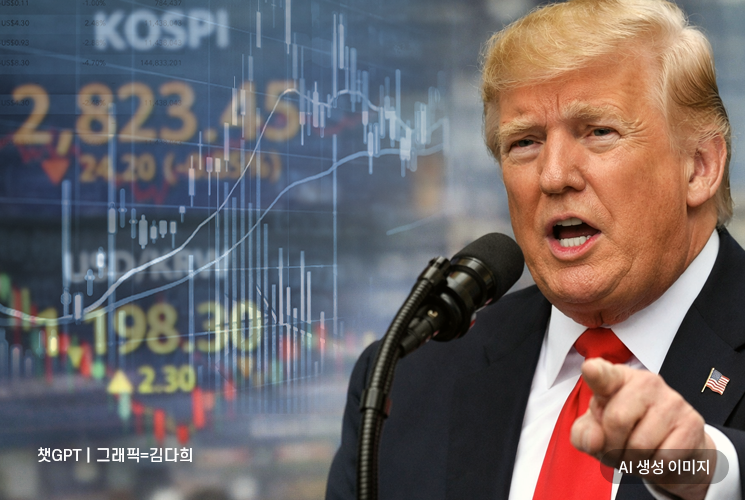
Trump-related remarks and Truth Social posts were cited as the driver behind the S&P 500’s five best and five worst trading days since his inauguration, underscoring a market unusually sensitive to presidential commentary. The article highlights sharp swings tied to Iran ceasefire rhetoric and tariff announcements, including a 9.5% one-day surge on tariff-delay news, a 4.8% drop on sweeping tariff impositions, and a 2.9% jump on progress in Iran negotiations. It also notes the S&P 500 and Nasdaq hit all-time highs on April 24 as ceasefire expectations lifted tech stocks.
The market is increasingly trading U.S. policy communication as a high-frequency macro input, which changes the distribution of returns more than the direction of any single day. The second-order effect is that realized vol is now being manufactured by headline risk rather than earnings dispersion, which tends to flatten cross-sectional stock picking and reward index-hedged or convexity-based expressions. Passive ownership amplifies this because forced flows can chase or dump the same basket regardless of fundamentals, making brief policy reversals disproportionately powerful.
The clearest beneficiaries are short-dated options sellers and dispersion traders who can monetize the gap between elevated index vol and still-compressed individual-name vol in sectors less directly exposed to tariffs or geopolitics. The losers are balance-sheet-heavy industrials, import-sensitive retailers, and global cyclicals whose supply chains cannot reprice as quickly as the tape; they face downside from abrupt tariff headlines with only partial offset from later moderation. Energy is a special case: it has become both a direct geopolitical hedge and an indirect volatility amplifier, so crude-linked equities can rally on escalation-risk even when the broad market sells off.
The consensus is likely overestimating the durability of the “one person moves the market” narrative and underestimating how much of this is reflexive positioning. Once systematic funds de-risk into a headline shock, the subsequent reversal can be mechanically larger than the original move, creating V-shaped rebounds that are more a function of positioning than conviction. That argues for treating the next selloff as a short-duration event unless it coincides with a policy action that changes cash flows for multiple sectors over months, not days.
AI-powered research, real-time alerts, and portfolio analytics for institutional investors.
Request DemoOverall Sentiment
neutral
Sentiment Score
-0.05
