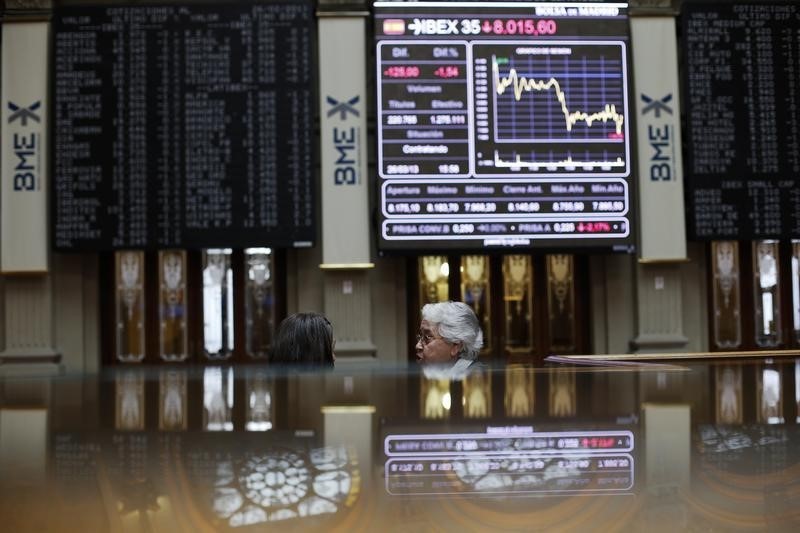
The IBEX 35 rose 0.69% to a new all-time high, led by banks including BBVA (+2.43%), Caixabank (+1.78%) and Sabadell (+1.59%). Risk appetite was mixed as crude oil fell sharply, with July WTI down 5.75% to $76.11 and Brent August down 4.99% to $79.02, while gold rose 0.27% to $4,363.51. FX was broadly steady, with EUR/USD unchanged at 1.16 and the U.S. Dollar Index Futures down 0.16% to 99.22.
The immediate winner is not just the Spanish banks in isolation, but the domestic financial complex leveraged to a steeper, calmer macro backdrop. A softer energy impulse lowers near-term inflation pressure in Europe, which should reduce tail-risk around funding costs, deposit competition, and credit deterioration for retail-heavy lenders; BBVA benefits additionally from the market signaling that risk appetite is rotating back toward cyclical financials rather than defensive utilities.
The bigger second-order effect is on relative performance across Spain’s market: lower crude is a direct earnings headwind for renewable utilities and energy-linked cash flows, but it also eases pressure on broader Spanish consumers and small businesses, which is constructive for loan growth and asset quality with a lag of 1-2 quarters. If the geopolitical de-risking narrative holds, the market may start pricing lower terminal inflation and a less restrictive ECB path, which would be a modest multiple tailwind for banks that still trade with financing and sovereign-risk sensitivity.
The contrarian miss is that a peace-deal headline can compress oil quickly without necessarily removing supply-risk premium for long. If the agreement is fragile or enforcement is unclear, crude can snap back within days, but the equity signal may persist longer because investors will have already rotated into rates-sensitive cyclicals. That makes the current move more attractive as a relative-value bank trade than as a directional macro call on Spanish equities.
AI-powered research, real-time alerts, and portfolio analytics for institutional investors.
Overall Sentiment
mildly positive
Sentiment Score
0.15
Ticker Sentiment
