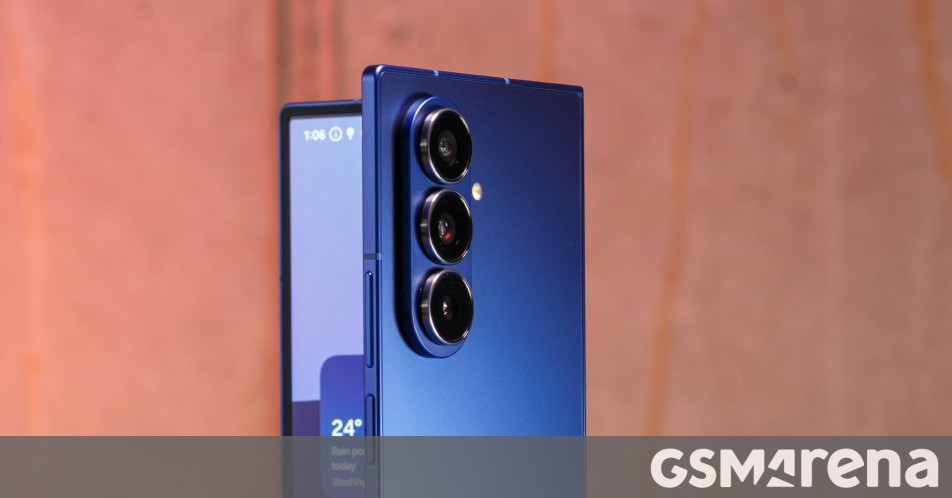
Samsung is reportedly planning a naming shift for its next Galaxy Z foldables, with the wider model expected to debut as the Galaxy Z Fold8 and a higher-tier Galaxy Z Fold8 Ultra positioned above it. The Ultra is said to feature a 5,000 mAh battery and improved triple-camera hardware, while the Galaxy Z Fold8, Fold8 Ultra, and Z Flip8 are expected to launch in July at the next Galaxy Unpacked event. The article is rumor-driven and largely non-financial, so near-term market impact appears limited.
The important signal here is not the naming shuffle; it is Samsung segmenting the foldable stack into a clear premium ladder ahead of a broader form-factor reset in the category. A wider base Fold paired with an Ultra variant implies Samsung is willing to use product architecture, not just price, to defend share against both Apple’s eventual entry and Chinese OEMs that have been winning on display ergonomics. That usually benefits the component set with the highest content intensity: larger batteries, more complex hinge assemblies, higher-end camera modules, and potentially richer display BOMs.
The second-order effect is margin dispersion inside Samsung’s own ecosystem. A true Ultra tier should lift ASPs, but it also raises execution risk because foldables are still yield- and reliability-sensitive; any launch hiccup would hit the premium halo harder than the unit model. If Samsung can pair a wider main display with better battery life, that could slow the category’s long-running objection around usability, which would be bullish for adoption over the next 2-4 quarters rather than just at launch.
The market may be underestimating how much this increases competitive pressure on Chinese foldable vendors. If Samsung normalizes a wider aspect ratio at scale, rivals will be forced to re-tool industrial design and camera stack priorities, potentially compressing their short-term margins. On the flip side, if the new Ultra is meaningfully more expensive, volume could concentrate at the base model, limiting the headline halo effect and leaving the broader foldable TAM growth story intact but slower than bulls expect.
Catalyst-wise, the next 6-10 weeks matter most for supply-chain reads and preorder signals into the July event. A strong response would likely show up first in hinge, battery, and camera module suppliers before it is obvious in handset unit data. The contrarian view is that the naming change itself may be a tell that Samsung is trying to simplify a more crowded lineup than the market realizes, which would argue for selective exposure rather than a broad bullish bet on foldables.
AI-powered research, real-time alerts, and portfolio analytics for institutional investors.
Request DemoOverall Sentiment
neutral
Sentiment Score
0.15
