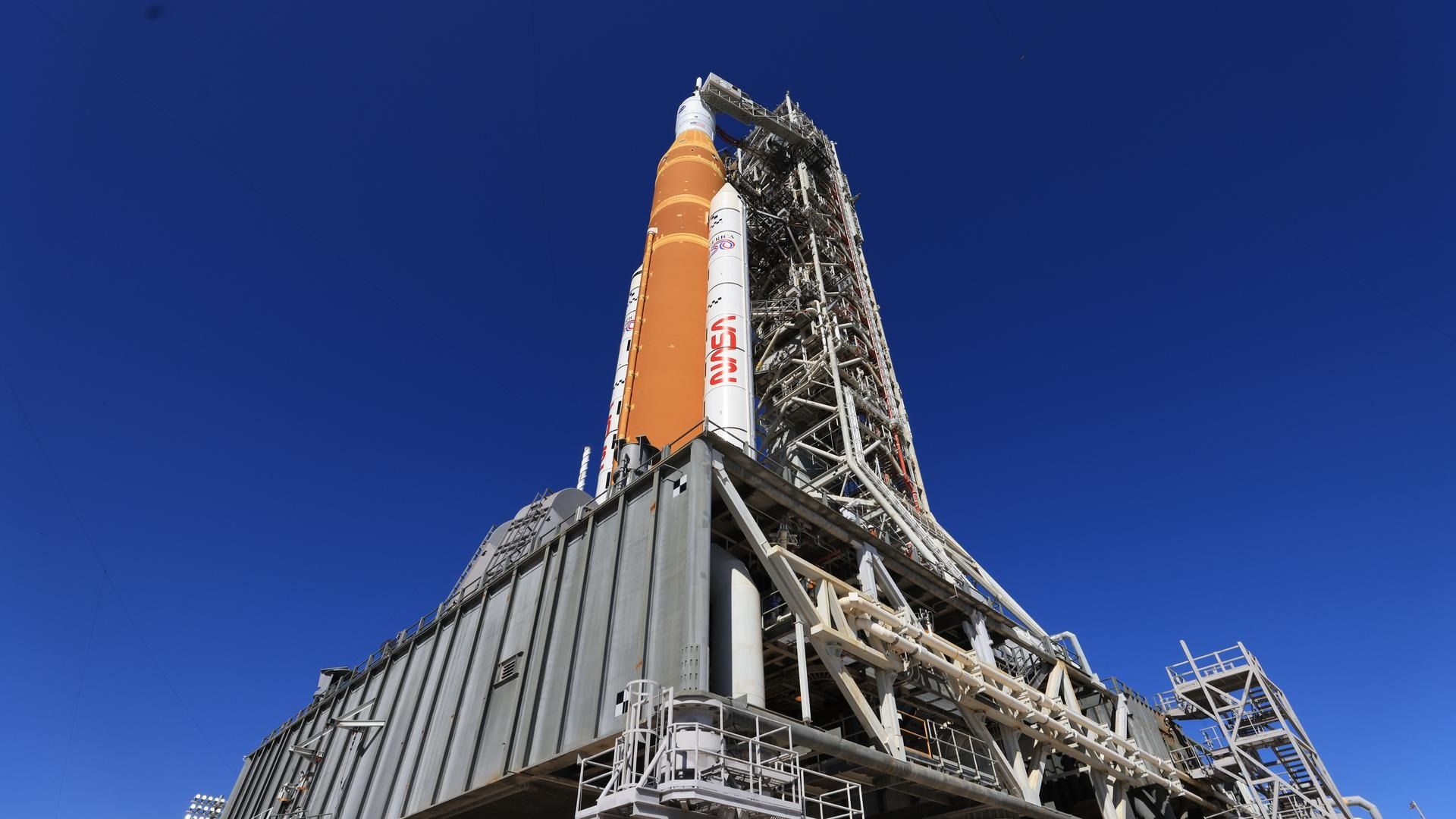
NASA will roll the 322-foot Artemis II Space Launch System and Orion spacecraft off Launch Pad 39B back to the Vehicle Assembly Building to investigate an interruption in helium flow to the upper stage, a problem discovered after a successful wet dress rehearsal. The rollback, announced Feb. 22, removes the mission from a short March launch window (March 6–9 and March 11) and puts an April window (target dates April 1, April 3–6 and April 30) at best, with repairs and data review potentially taking weeks. The delay is operationally significant for program scheduling and contractor activity but does not indicate a catastrophic failure of hardware or propulsion systems at this stage.
Market structure: The Artemis 2 rollback is a localized operational shock that benefits large, cash-rich primes (Lockheed Martin - LMT, Northrop Grumman - NOC) that absorb schedule risk and hurt smaller, specialized suppliers (Aerojet Rocketdyne - AJRD, small avionics contractors) whose revenue is nearer-term and capacity-constrained. Pricing power shifts subtly toward primes who can bid for corrective work and sustain change-orders; expect a 1–3% re-rating differential intra-sector if delays extend beyond 30 days. Demand for engineering labor and test facilities will temporarily rise (spot rates +5–15% likely in the regional market for 4–12 weeks), while overall program funding remains intact barring macro shocks.
Risk assessment: Tail risks include a major technical discovery that extends delays into H2 2026 (high impact, low prob ~5–10%) or regulatory/safety investigations that increase compliance costs across contractors (medium probability). Immediate risk (days): program newsflow and NASA telemetry updates; short-term (weeks): rollback duration and shop capacity; long-term (quarters): contractor backlog and budget re-phasing. Hidden dependencies: small suppliers with single-source components could see insolvency if paid on milestones; watch accounts receivable aging for AJRD and niche vendors.
Trade implications: Favor defensive exposure to large primes via 3–4% portfolio positions in LMT/NOC (long) financed by 1–2% short exposure to AJRD and select small-cap space suppliers; implement options hedge: buy 30–60 day puts on AJRD/BA sized to cover 1–2% portfolio downside, and buy 3–6 month call spreads on LMT (cost <1% portfolio) to capture program continuity. Rotate 0.5–1% into industrial gas names (APD, LIN) only if helium spot moves >5% in 14 days; otherwise avoid commodity bets.
Contrarian angles: The market may over-penalize small suppliers while underpricing the competitive advantage primes gain from increased NASA oversight—historical parallels: Apollo/Shuttle delays compressed small-cap survival but concentrated revenue to large primes, generating outsized long-term returns for those names. If rollback is fixed within 14 days, small-cap selloff will be overdone; prepare to cover shorts and re-deploy into beaten-down suppliers only if receivables and order books remain intact. Monitor: NASA anomaly reports, supplier AR days, and backlog disclosures in quarterly filings within 30–90 days.
AI-powered research, real-time alerts, and portfolio analytics for institutional investors.
Request DemoOverall Sentiment
mildly negative
Sentiment Score
-0.25
