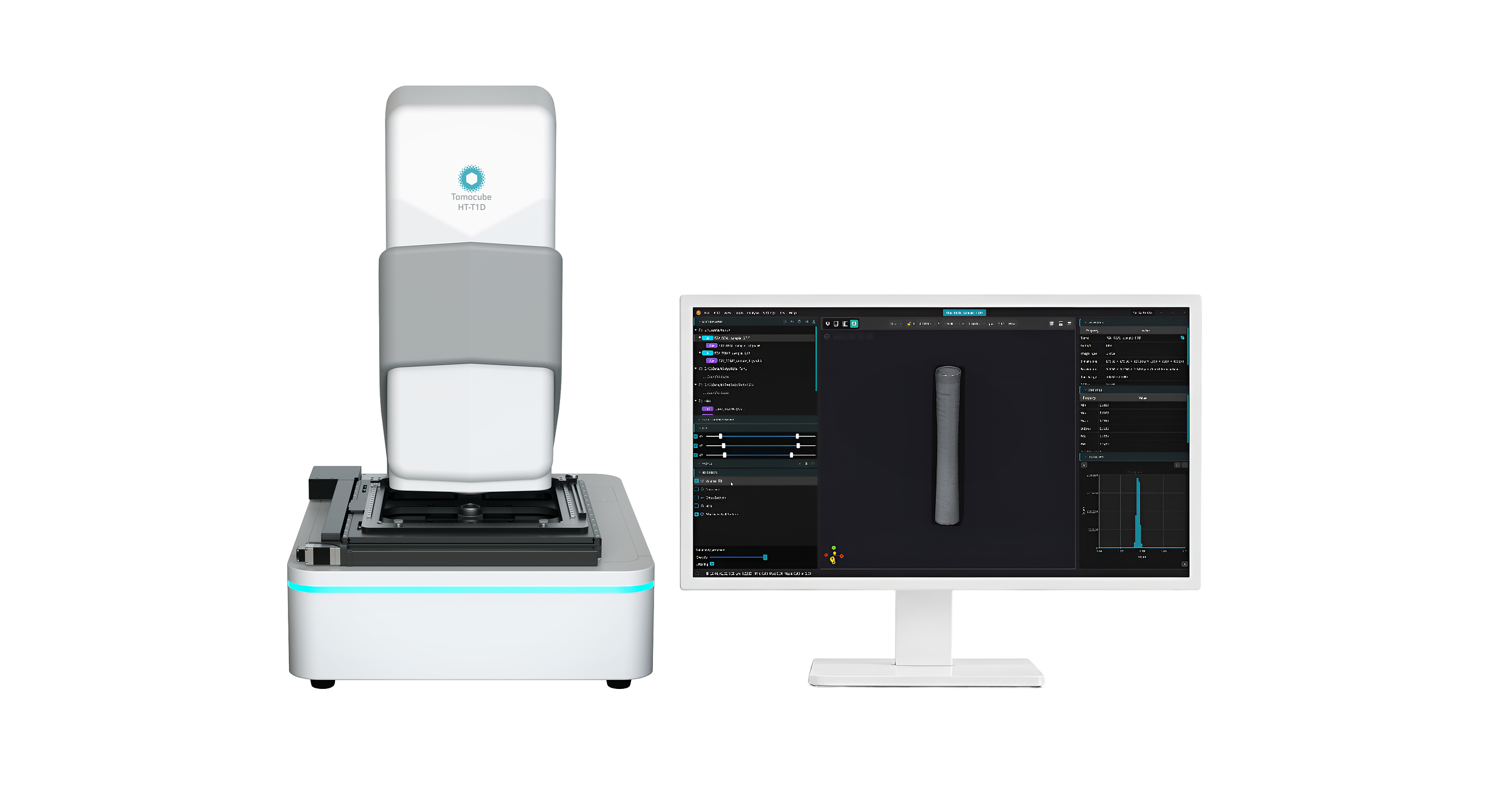
Tomocube lanzó el sistema desktop HT-T1D para inspección 3D no destructiva de defectos en sustratos de vidrio usados en empaquetado avanzado de semiconductores. La holotomografía visible alcanza sensibilidad de $10^{-4}$ y permite convertir análisis de causa raíz que antes tomaban días o semanas en “solo unos minutos”, reduciendo el tiempo antes de etapas de alto costo. La empresa también presentó TAMI (TomoAnalysis MI) para análisis volumétrico del índice de refracción y reportes estructurados, integrando el flujo de I+D a inspección en línea.
This is less about one tool and more about a shift in where value accrues in advanced packaging: from pure throughput to defect intelligence. If glass substrates move from pilot to volume, the economic bottleneck becomes yield learning, which typically expands spending on metrology, inspection, and data software faster than on commodity assembly capacity. That favors KLA and, secondarily, Onto Innovation/Amat-style process-control franchises more than OSATs, because every basis point of yield improvement has outsized economics when a single latent defect can scrap an expensive package.
The second-order effect is pressure on incumbent organic-substrate ecosystems and lower-tier inspection vendors. Glass is harder to qualify and creates a larger software/data moat; the winner is whoever owns the loop between inline AOI, root-cause analysis, and process correction. Near term, however, this is mostly a customer-evaluation event: tool revenue is gated by qualification cycles, and a press release does not equal booked orders. The market should discount the immediate financial impact unless we see design-ins at major substrate makers or a move from lab deployment to production lines.
Contrarian view: consensus may overestimate how quickly glass-substrate adoption converts into spend. If adoption stalls at R&D, the result is a niche metrology story, not a budget cycle. Falsifiers are simple: delayed customer references, no follow-on module wins, or continued preference for lower-risk organic substrates in HBM/AI packaging. The real 6-18 month catalyst is not the desktop launch itself, but whether it becomes the standard forensic workflow for a production ramp.
AI-powered research, real-time alerts, and portfolio analytics for institutional investors.
Request TrialOverall Sentiment
moderately positive
Sentiment Score
0.45
