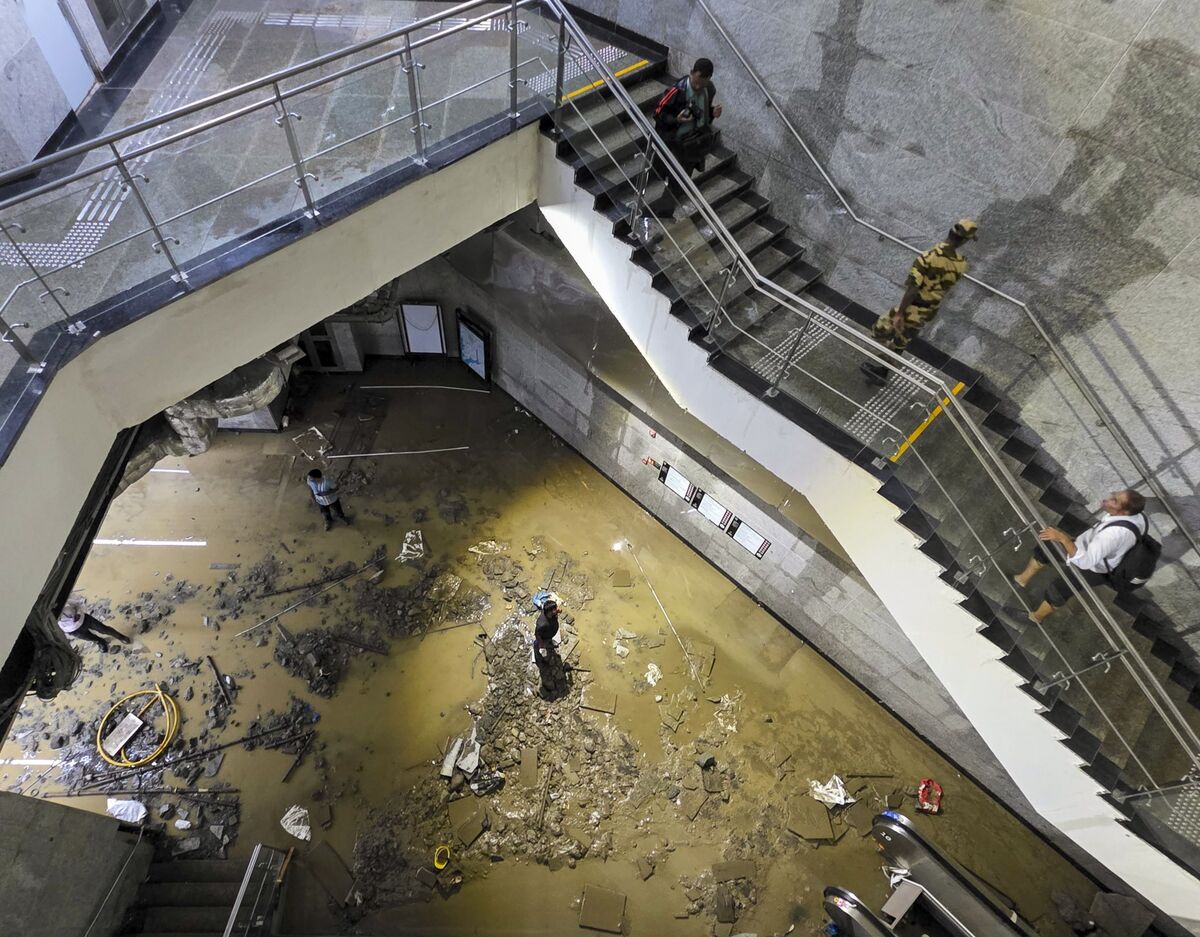
Early and intense monsoons in India have damaged newly built public infrastructure, including Mumbai's $2.7 billion Metro Line 3, which experienced flooding due to a broken barrier at the Acharya Atre Chowk station. This disruption highlights the vulnerability of India's infrastructure to extreme weather and poses a challenge to Prime Minister Modi's ambitious infrastructure upgrade plans.
The recent onset of early and intense monsoons in India, reportedly the earliest since 2009, is significantly stress-testing the nation's newly developed public infrastructure, thereby exerting pressure on Prime Minister Narendra Modi’s extensive infrastructure upgrade program. A critical illustration of this vulnerability is the flooding of Mumbai's recently inaugurated Metro Line 3, a substantial $2.7 billion state-run initiative; specifically, the Acharya Atre Chowk station experienced water ingress through a broken barrier following record heavy rainfall on May 26, leading to service disruptions. This event, underscored by a strongly negative sentiment score of -0.6 and an uncertain overall tone, highlights the material risks posed by extreme weather to these significant capital investments. The moderate market impact score of 0.55 suggests that while not yet a systemic shock, these incidents are raising concerns about the operational reliability, design adequacy, and potential for increased future maintenance and retrofitting costs for India's critical infrastructure, particularly as climate-related events become more frequent and severe.
AI-powered research, real-time alerts, and portfolio analytics for institutional investors.
Request DemoOverall Sentiment
strongly negative
Sentiment Score
-0.60
