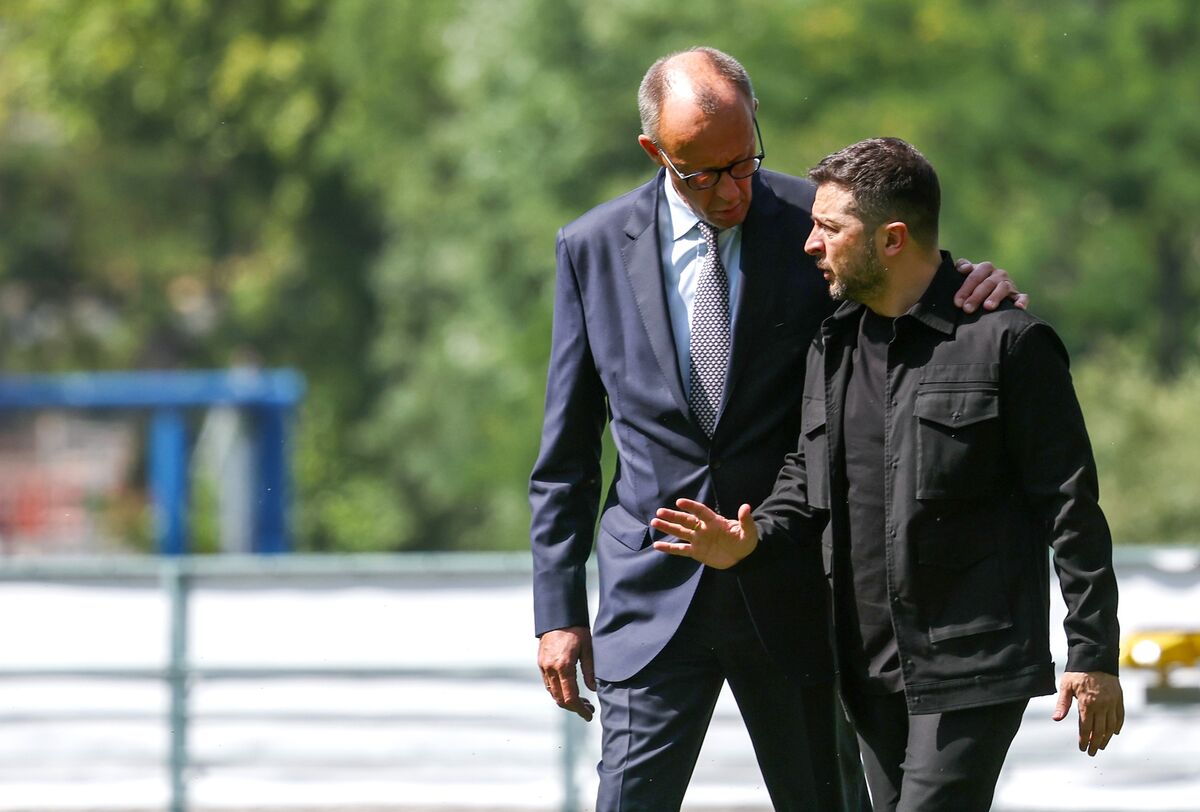
German Chancellor Friedrich Merz has endorsed an EU proposal to provide Ukraine with a nearly €140 billion ($164 billion) interest-free loan, leveraging frozen Russian assets to bolster its defense capabilities. The plan stipulates that the loan would only be repaid after Russia compensates Ukraine for war damages, with the Russian assets remaining frozen until that condition is met.
German Chancellor Friedrich Merz has publicly endorsed a significant European Union proposal to funnel approximately €140 billion ($164 billion) to Ukraine through an interest-free loan. The plan's financial architecture is novel, as it intends to leverage frozen Russian sovereign assets as collateral or a source of value, directly linking the sanctioned funds to Ukraine's defense funding. A critical condition of the proposal stipulates that the loan will only be repaid once Russia compensates Ukraine for war damages, ensuring the Russian assets remain frozen indefinitely until that point. The high market impact score of 0.7 reflects the proposal's magnitude and its potential to set a major precedent in the use of sanctioned assets. This move signals a strong, long-term financial commitment to Ukraine's defense sector and could be interpreted as a creative fiscal solution that avoids immediate budgetary strain on EU member states, contributing to the 'moderately positive' market sentiment.
AI-powered research, real-time alerts, and portfolio analytics for institutional investors.
Request DemoOverall Sentiment
moderately positive
Sentiment Score
0.50
