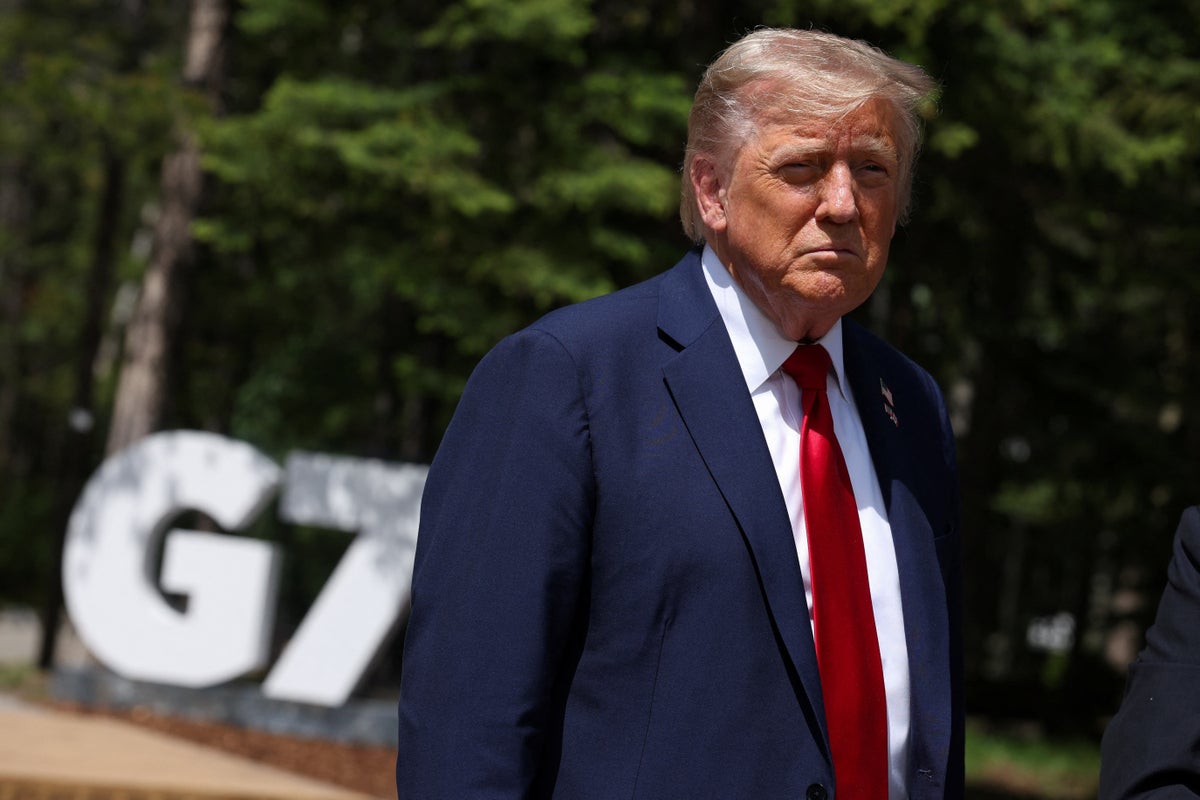
Former President Trump issued a threat to Iran's Supreme Leader Khamenei, stating the U.S. knows his location and demanding "UNCONDITIONAL SURRENDER" amid escalating tensions in the region. Trump's comments follow increased Israeli military action against Iranian nuclear sites and a build-up of U.S. military assets in the Middle East, including the redeployment of the USS Nimitz carrier group, signaling a potential shift towards direct U.S. involvement in countering Iran's nuclear program, though the administration continues to deny direct involvement in Israel's actions. The State Department has also updated its travel advisory for Israel, Gaza and the West Bank territory to “do not travel”.
The geopolitical landscape in the Middle East is experiencing a significant escalation, primarily driven by President Donald Trump's direct and aggressive threats towards Iran's Supreme Leader Ali Khamenei, which include a demand for "UNCONDITIONAL SURRENDER" and a thinly veiled warning regarding Khamenei's safety. This rhetoric indicates a potential shift towards a more confrontational U.S. stance, further substantiated by considerable U.S. military reinforcements in the region. Key deployments include the USS Nimitz carrier group moving to the Arabian Sea to join the USS Carl Vinson, the transfer of U.S. Air Force refueling aircraft to Europe, and the repositioning of destroyers in the Mediterranean closer to Israel. The authorization for military families at U.S. bases in the Middle East to evacuate underscores the perceived imminence of heightened conflict. While Israel continues its campaign against Iranian nuclear capabilities, the destruction of heavily fortified sites like the Fordow enrichment facility may necessitate U.S. specialized munitions, such as the GBU-57A/B Massive Ordnance Penetrator, which Israel does not possess. President Trump's early departure from the G7 summit, attributed to the escalating Middle East crisis, and the State Department's issuance of a "do not travel" advisory for Israel, Gaza, and the West Bank, further amplify concerns. The accompanying data signals—a strongly negative sentiment (-0.75), a hawkish tone, and a high market impact score (0.7)—collectively suggest a substantial risk of increased hostilities, portending significant market volatility, particularly within energy and defense sectors.
AI-powered research, real-time alerts, and portfolio analytics for institutional investors.
Request DemoOverall Sentiment
strongly negative
Sentiment Score
-0.75
