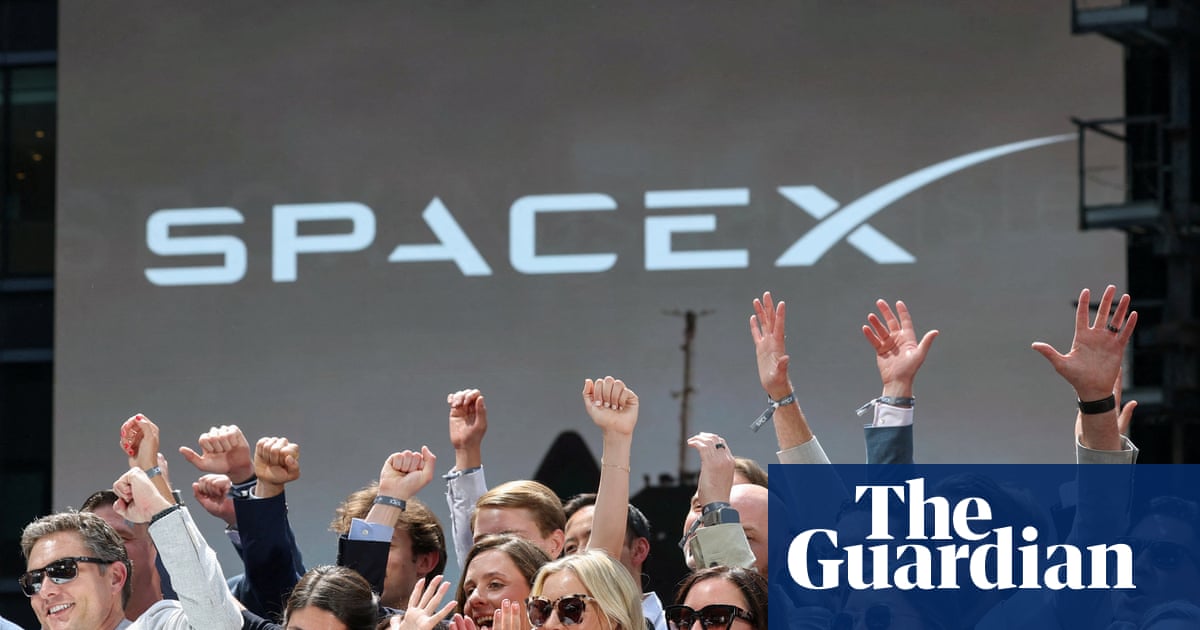
SpaceX agreed to buy Anysphere, the startup behind AI coding app Cursor, for $60bn, a major AI-focused acquisition expected to close in Q3 2026. The company also overtook Amazon in market value, reaching just under $2.8tn after a 13% opening-day gain and rising roughly 60% since its $135-per-share float. The deal is stock-based and does not use IPO proceeds, underscoring strong investor demand and SpaceX's expanding push into AI capabilities.
This is less about one private asset buying another and more about Musk internalizing the high-margin “copilot” layer that is becoming the gating function for frontier-model monetization. If xAI gets privileged access to a top coding product, the second-order effect is distribution: model quality matters, but embedded workflow wins more durable pricing power, which is why this should be read as a competitive signal against Anthropic and, to a lesser extent, Microsoft/OpenAI in developer tooling.
For AMZN, the immediate read-through is not AWS demand destruction but a valuation multiple headwind: investors will increasingly compare Amazon’s incremental AI monetization against a faster-moving, more vertically integrated Musk stack. That raises the bar for AMZN to show tangible developer adoption and enterprise attach rates over the next 2-3 quarters; otherwise, AI optionality remains a narrative with limited re-rating power. The per-ticker negative sentiment is therefore more about relative disappointment risk than absolute fundamentals.
NDAQ is a cleaner beneficiary than it first appears. A high-profile IPO that gaps higher and trades through its issue price supports the idea that scarce, brand-name listings can still command premium pricing even in a selective market, which helps sustain issuer appetite and trading activity into 2026. The main risk is a fast reversal if post-listing volatility compresses or if insiders/lockups create secondary supply that cools the “AI IPO” premium.
The contrarian take is that this may be a late-cycle signal on AI infrastructure exuberance: the market is paying not for current cash flow but for control of scarce developer attention. If coding assistants become commoditized faster than expected, the acquisition premium will look rich in 12-18 months, and the winning economics may migrate from app-layer consolidators to whoever owns inference efficiency and enterprise distribution.
AI-powered research, real-time alerts, and portfolio analytics for institutional investors.
Request DemoOverall Sentiment
strongly positive
Sentiment Score
0.72
Ticker Sentiment
