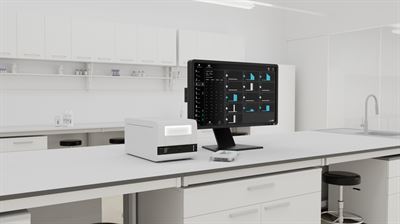
The FDA has issued a hold letter on Gradientech's 510(k) submission for QuickMIC, requesting additional information focused primarily on cybersecurity and limited additional performance testing; Gradientech has started activities to address the requests and is continuing dialogue with the agency. QuickMIC, a CE‑marked ultra‑rapid phenotypic antimicrobial susceptibility testing system that delivers results in 2–4 hours and holds FDA Breakthrough Device designation, remains commercially available in Europe but is investigational only in the U.S.; the regulatory clarification may delay U.S. clearance but is described by management as constructive and addressable.
Market structure: The FDA hold for Gradientech on cybersecurity and limited performance testing likely delays U.S. commercialization by ~1–6 months, benefitting large, diversified IVD incumbents (Roche RHHBY, Abbott ABT, Thermo Fisher TMO, Becton Dickinson BDX, bioMérieux BIM.PA) that can capture hospital procurement windows and pricing power while the new entrant is stalled. Startups and pure-play rapid-AST challengers lose optionality and near-term revenue; hospital demand for same-day AST remains intact so long-term structural demand is positive. On cross-assets expect elevated implied volatility in small-cap medtech equities and a modest widening of credit spreads for early-stage diagnostics firms; bond markets of large caps should be largely unaffected.
Risk assessment: Tail risks include a full FDA non-clearance or cybersecurity vulnerability discovery (low probability 5–15% but high impact — potential write-downs for private investors), or a multi-quarter regulatory drag if additional trials are required. Short-term (days–weeks) volatility will spike around FDA correspondence; medium (1–6 months) depends on submission turnaround and re-testing; long-term (6–24 months) depends on reimbursement (CMS CPT codes) and hospital adoption rates. Hidden dependencies: Gradientech’s EU revenues and investigational US pilots provide limited offset if U.S. clearance is delayed; cybersecurity requirements may raise integration costs industry-wide and accelerate consolidation.
Trade implications: Tactical overweight large diversified diagnostics: allocate 1–3% positions in RHHBY and ABT to capture defensive sepsis diagnostics demand and potential share gains during delay; trim small-cap medtech/diagnostics ETF exposure (IHI) by 1–2% and buy 3-month ATM puts sized to ~0.75% portfolio notional to hedge regulatory shocks. Relative-value: long bioMérieux (BIM.PA) vs short IHI (equal notional) for 3–12 month horizon expecting outperformance by established AST vendors. Options play: buy 6-month call spreads on Roche sized to 0.5–1% notional if FDA signals rapid resolution within 60 days.
Contrarian angles: The market understates the strategic value of a delayed entrant — incumbents can lock multi-year contracts and raise switching costs, which could justify 5–10% re-rating for durable incumbents if delays exceed 3 months. Conversely, investors may have over-penalized all diagnostic names; a quick FDA turnaround (<=60 days) would catalyze mean reversion in small-cap AST names and compress put premiums. Historical parallel: protracted regulatory scuffles in point-of-care diagnostics often led to M&A at premium for proven tech; cybersecurity-driven product requirements could accelerate consolidation and increase acquisition multiples for cash-rich large caps.
AI-powered research, real-time alerts, and portfolio analytics for institutional investors.
Request DemoOverall Sentiment
neutral
Sentiment Score
-0.15
