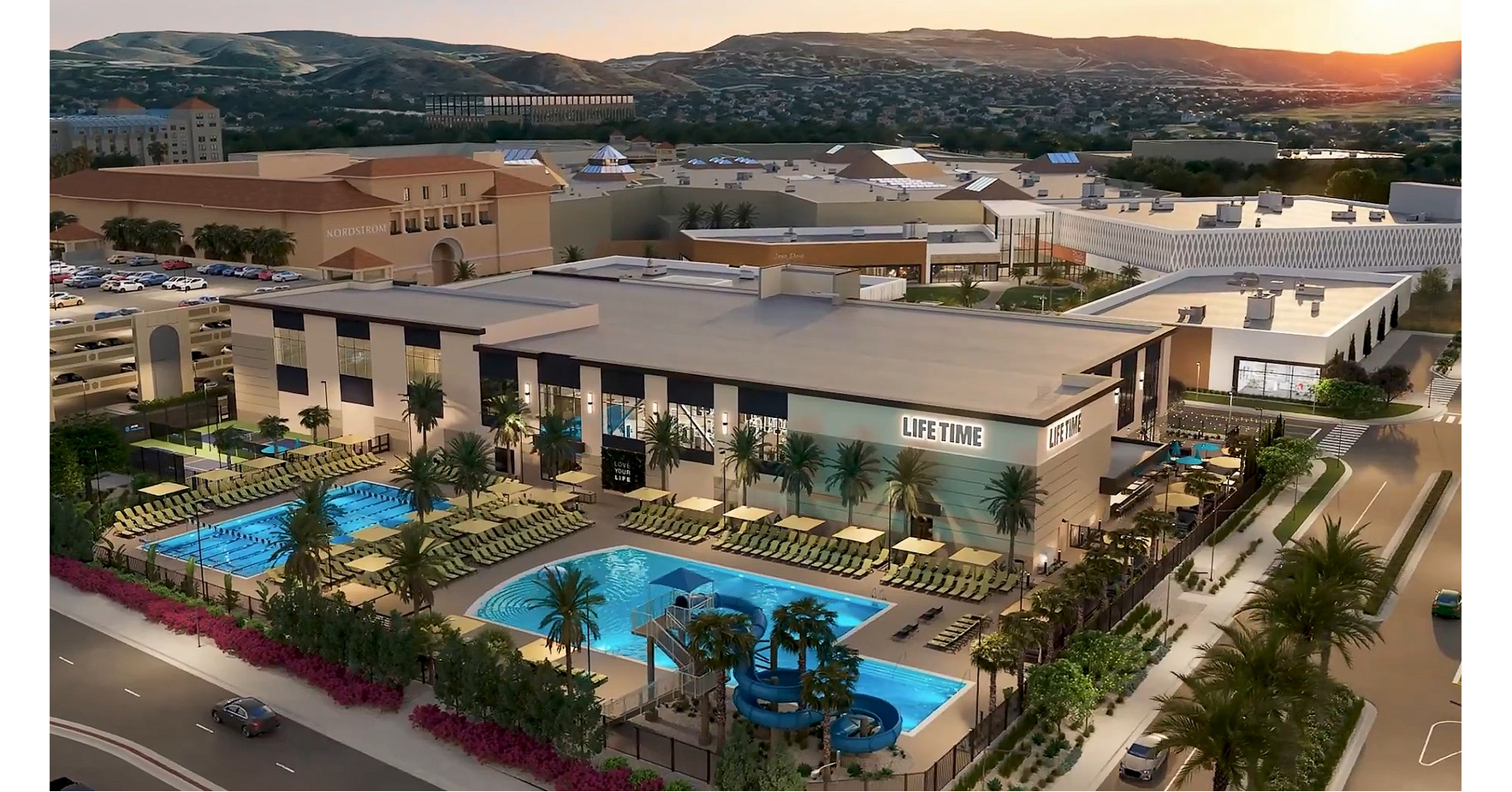
Life Time (NYSE: LTH) opened its Life Time Brea Athletic Country Club at Brea Mall, expanding the company’s footprint with its 10th California location and 4th in Orange County. The club spans nearly 123,000 sq. ft. (85,000 sq. ft. indoor plus 38,000 sq. ft. outdoor) and features a resort-style beach club, 5 pickleball courts, full recovery/wellness amenities, LifeSpa, and LifeCafe. The opening reflects continued demand for experience-driven, wellness-focused retail anchors within Simon properties, but the news appears incremental with limited market-wide pricing impact.
This is more useful as a read-through on unit economics and real-estate optionality than as a standalone operating catalyst. For LTH, the signal is that premium suburban wellness remains sticky enough to justify large-format, high-capex builds in affluent trade areas; that supports the idea that member lifetime value can still outrun opening costs if retention stays high. The market should care less about the ribbon-cutting and more about whether this format sustains utilization without forcing discounting or heavy promotional spend over the next 2-4 quarters.
For Simon, the second-order effect is the real story: experience anchors that force repeat visits can lift dwell time, adjacency sales, and lease negotiation power for surrounding tenants. That matters most at A-class malls where mixed-use redevelopment can reprice the asset class away from pure apparel exposure; it is less relevant for weaker malls that cannot attract a similar tenant mix. If this model keeps working, the winners are landlords with capital and entitlements, while commodity fitness operators and lower-quality retail centers are pressured by a widening traffic gap.
The contrarian risk is that investors may be extrapolating a single opening into a durable growth vector without evidence that new-club ramps are additive rather than cannibalistic. If macro spending softens, premium membership growth could slow before mall traffic visibly weakens, which would show up first in churn, utilization, and ancillary spend rather than headline openings. The thesis is falsified if the next couple of quarters show flat same-club trends, slower new-club payback, or Simon commentary on redevelopment yields failing to improve.
AI-powered research, real-time alerts, and portfolio analytics for institutional investors.
Request DemoOverall Sentiment
mildly positive
Sentiment Score
0.20
Ticker Sentiment
