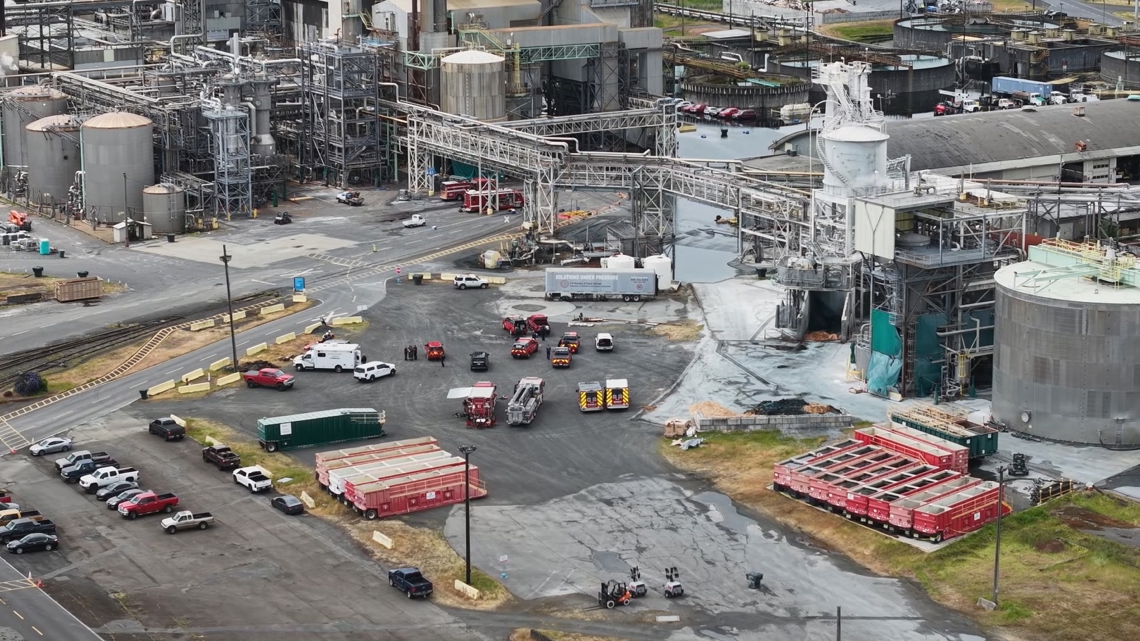
A tank implosion at Nippon Dynawave's Longview paper mill has left nine people missing and required decontamination before the deceased can be identified. The tank remains unstable, creating hazardous conditions and delaying recovery efforts, while officials investigate the cause. The incident highlights significant operational, safety, and environmental risks at the facility, with prior fires at the site underscoring a pattern of industrial hazards.
The immediate market read-through is not the paper business itself but the liability stack that sits around any large-scale chemical process with worker fatalities and environmental exposure. Expect a fast repricing of insurance, remediation, and litigation reserves across industrial operators with similar high-temperature, caustic-process footprints; the second-order effect is likely tighter underwriting, higher deductibles, and more frequent covenant scrutiny over the next 1-3 reporting cycles. This is especially relevant for smaller operators where a single incident can consume a meaningful share of equity value.
The bigger competitive angle is that incidents like this tend to accelerate compliance capex and inspections across the sector, which is a tax on the least efficient mills and a relative advantage for larger integrated players that can absorb the spend. Suppliers of process safety systems, industrial monitoring, and containment infrastructure should see a multi-quarter demand tailwind as plants move from reactive fixes to preventive upgrades. Conversely, industrial insurers and reinsurers may see higher loss assumptions if similar legacy sites show up in the claims pipeline.
The contrarian point is that the headline risk may be more idiosyncratic than systemic for the broader paper industry, so the trade is not to blanket-short all packaging/paper names. The more durable bearish angle is on companies with concentrated legacy asset bases, weak balance sheets, or recent history of operational incidents, where the probability of incremental regulatory scrutiny and capex overhang is underappreciated. Near term, the catalyst path is dominated by the investigation timeline and any evidence of maintenance or compliance failures, which could turn a tragic event into a drawn-out legal reserve reset over months to years.
AI-powered research, real-time alerts, and portfolio analytics for institutional investors.
Request DemoOverall Sentiment
strongly negative
Sentiment Score
-0.75
