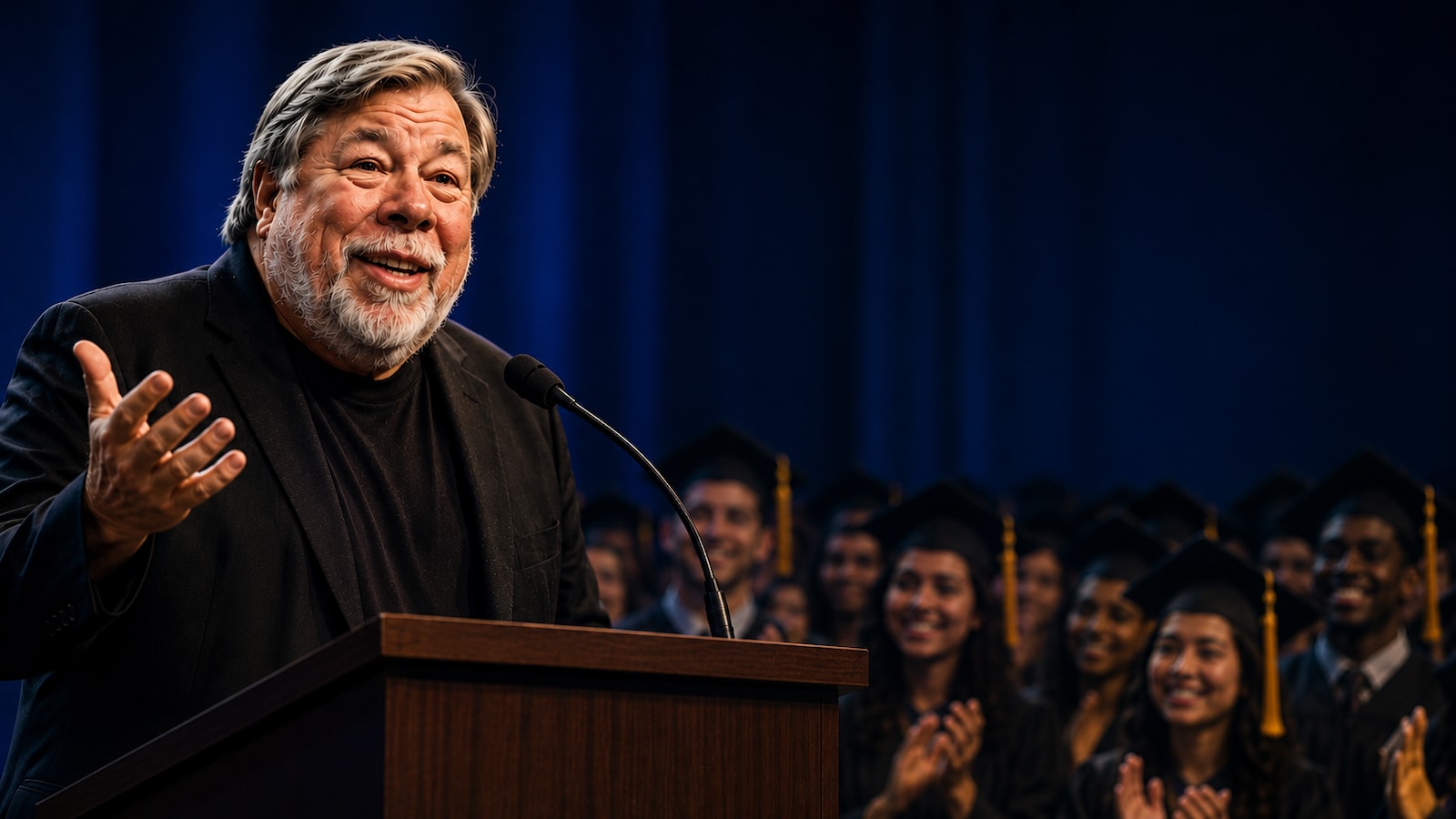
Steve Wozniak used a Michigan graduation speech to contrast human intelligence with AI, drawing applause for a cautious, skeptical message. The article highlights a growing backlash among students toward AI-focused commencement speeches, along with broader concern about layoffs, automation, and the limits of machine intelligence. Wozniak reiterated that he uses AI sparingly and prefers human-generated work, reinforcing a more conservative stance on the technology.
The market implication is not a near-term revenue read-through for AI leaders so much as a sentiment signal: the social license for aggressive AI monetization is getting more fragile, especially among the next generation of talent and consumers. That matters for GOOGL more than AAPL in the medium term because search, productivity software, and ad workflows are the most visible consumer-facing AI surfaces; if users become more skeptical of “AI-first” experiences, conversion into paid tiers and usage expansion can slow at the margin.
The second-order effect is on labor economics, not model quality. If students are explicitly signaling concern about entry-level displacement, companies may get pushed toward a slower adoption curve that emphasizes augmentation over substitution, which reduces the near-term productivity upside many software multiples are implicitly discounting. That is mildly negative for broad AI infrastructure enthusiasm, but potentially positive for firms positioned around human-in-the-loop workflows, premium hardware, and trusted consumer ecosystems.
Contrarian read: this is not anti-AI sentiment in absolute terms; it is anti-hype and anti-certain-yield promises. The booing suggests investors should stop extrapolating a linear “AI = margin expansion” story into FY26 without evidence of retention, willingness-to-pay, or workflow stickiness. If monetization disappoints in the next 2-3 quarters, the rerating risk is highest in stocks that have the most AI premium embedded in multiples rather than the strongest actual cash-flow contribution.
For AAPL, the setup is relatively constructive because its brand benefits if the conversation shifts from machine intelligence to human augmentation and device-mediated intelligence. For GOOGL, the risk is that AI remains strategically essential but commercially awkward: the company may spend heavily to defend distribution while facing user resistance to the exact interface changes that are supposed to drive monetization.
AI-powered research, real-time alerts, and portfolio analytics for institutional investors.
Request DemoOverall Sentiment
neutral
Sentiment Score
0.00
Ticker Sentiment
