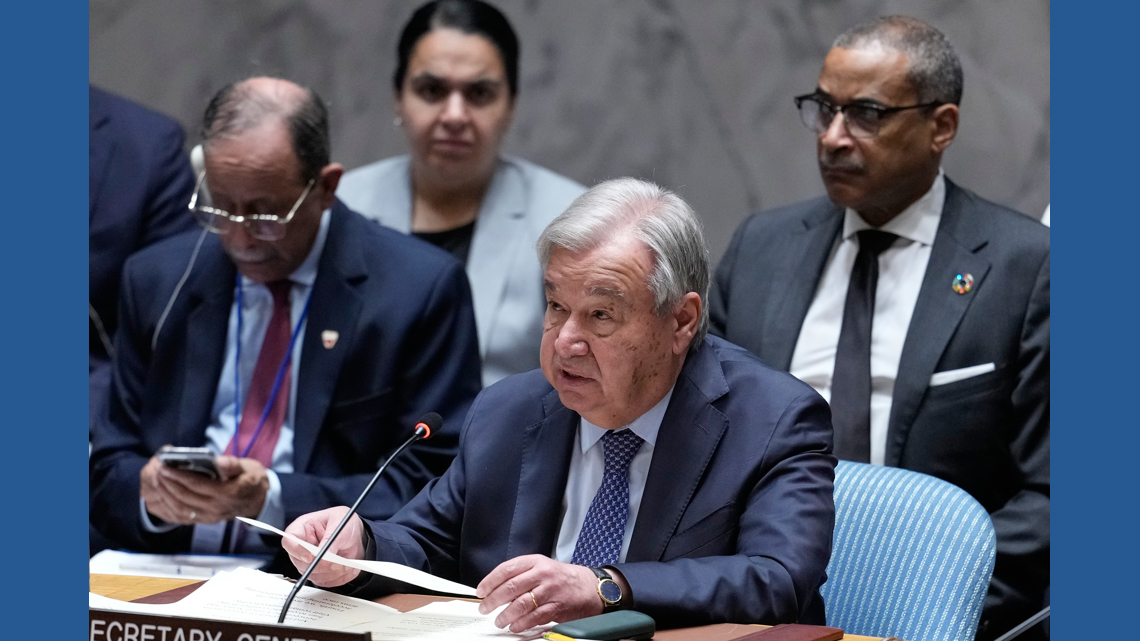
The U.N. blacklist of conflict-related sexual violence includes Israeli armed and security forces for the first time, alongside Russia, while the report says documented cases rose sharply in 2025. It cites verified abuses against 14 men, seven women, nine boys and one girl from Gaza and the West Bank, and says there were 310 verified cases in Russia and Russian-occupied areas of Ukraine. The article is primarily reputational and geopolitical, with limited direct market impact, but it underscores elevated war-related scrutiny for Israel and Russia.
This is less a direct market event than a signal that conflict-related ESG and legal scrutiny is migrating from abstract controversy into documented, quasi-adjudicative reputational risk. The second-order effect is not just headline pressure on Israel-linked sovereign assets or defense sentiment; it is a broader tightening of diligence standards for any contractor, prison-services vendor, border-tech provider, or defense prime with exposure to detention operations, where procurement teams may now face NGO and parliamentary pushback even absent formal sanctions.
The more important setup is that the report increases asymmetry for companies with Israel/Gaza adjacency because the burden of proof shifts onto counterparties to demonstrate controls, training, and auditability. That tends to show up first in longer-cycle channels: delayed procurement awards, more exclusions in European public tenders, and higher litigation/insurance friction rather than immediate earnings hits. For Russian-linked sovereign and quasi-sovereign risk, the incremental impact is mostly on diplomatic optionality and legal discoverability, not on already-restricted tradable assets.
The contrarian read is that the market may overestimate near-term financial damage and underestimate the risk of policy normalization. Unless this escalates into targeted sanctions, export controls, or a U.S./EU procurement reaction, the cash-flow impact on large defense names is likely de minimis; the real pressure lands on sentiment-sensitive small caps and contractors with reputationally exposed service lines. Over 3-12 months, the more durable effect is a higher cost of capital for any company whose revenue depends on government discretion and humanitarian optics.
Catalyst-wise, watch for follow-on parliamentary inquiries, NGO campaigns, and procurement reviews over the next 1-2 quarters; those are more actionable than the report itself. A reversal would require a credible independent investigation, access for monitors, or a geopolitical de-escalation that reduces media intensity and reopens contracting channels.
AI-powered research, real-time alerts, and portfolio analytics for institutional investors.
Request TrialOverall Sentiment
mildly negative
Sentiment Score
-0.35
