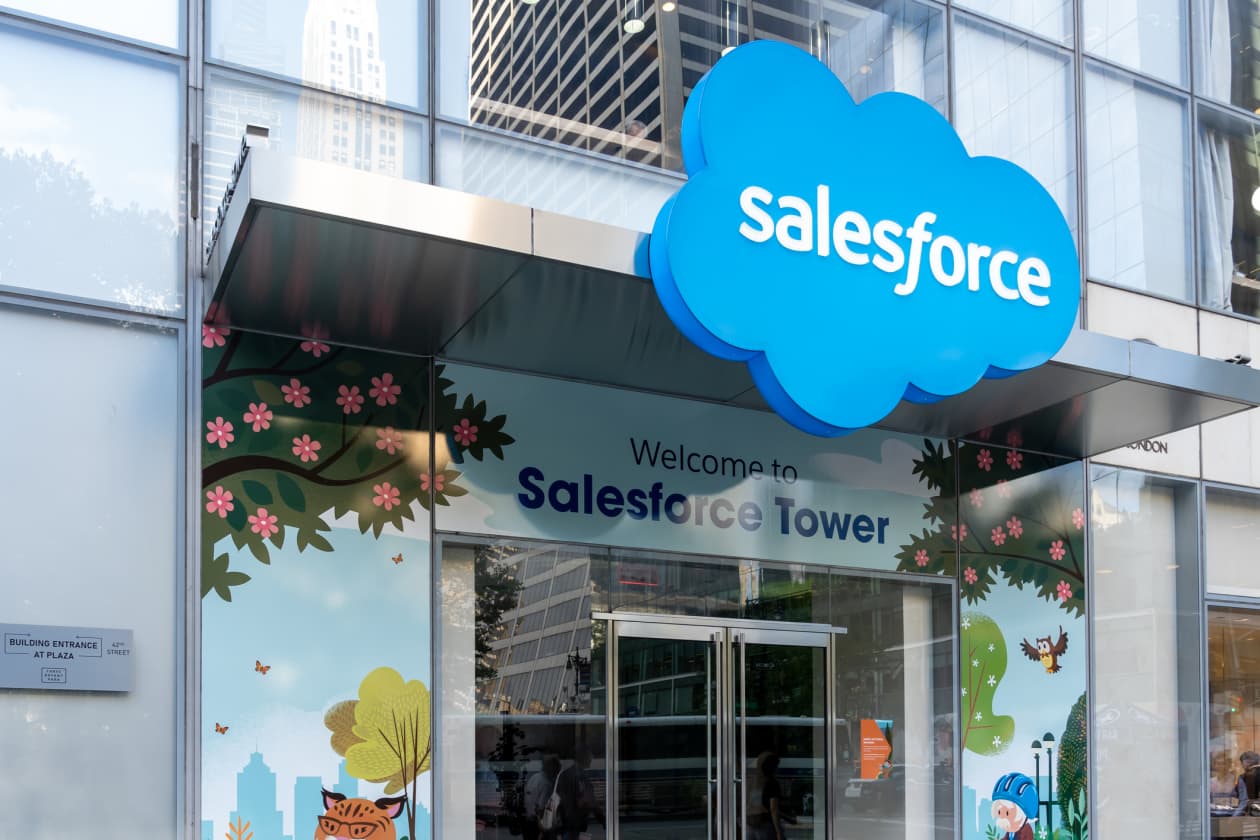
Salesforce fell for an 11th straight trading day, its longest losing streak on record, with the stock down more than 22% over that span. The decline reflects investor anxiety that the company’s AI spending and newest acquisition may be adding integration risk without yet convincing the market on returns. The move is significant for CRM shares but is company-specific rather than a broader market event.
The market is treating CRM less like a software compounder and more like a capital-allocation story with execution risk. The key second-order effect is that every incremental AI acquisition raises the hurdle rate on integration: if the purchased asset does not produce visible cross-sell or margin lift within 2-3 quarters, investors will assume the company is buying growth rather than earning it. That typically compresses multiple faster than any near-term revenue benefit can offset, especially for a name already embedded in crowded growth and AI factor baskets.
The loser set extends beyond CRM holders. Enterprise software peers with active AI M&A or heavy “AI narrative” spend can see sympathy de-rating if the market starts to question payback periods and integration bandwidth. By contrast, best-in-class platforms with cleaner organic AI monetization and lower acquisition intensity should outperform as capital rotates toward proof-of-earnings rather than promise-of-product.
Technically, an 11-day drawdown often forces systematic selling to continue until either short-term momentum is fully washed out or a catalyst interrupts the trend. Near term, the path of least resistance remains lower over days to weeks; the more meaningful reversal would require a clear integration roadmap, stable guidance, or evidence that AI attach rates are moving enough to reaccelerate bookings. Absent that, the downside risk is not just incremental multiple compression but a longer-period trust discount that can persist for months.
The contrarian view is that the selloff may be ahead of fundamentals if the market is extrapolating integration failure before the company has had time to prove operating leverage. If CRM can show even modest margin stability while absorbing acquisition costs, the current de-rating could overshoot and create a tradable bounce. The real issue is whether investors believe AI spend is defensive necessity or value-destructive empire building; that framing will determine whether this becomes a one-quarter washout or a multi-quarter rerating lower.
AI-powered research, real-time alerts, and portfolio analytics for institutional investors.
Request DemoOverall Sentiment
moderately negative
Sentiment Score
-0.38
Ticker Sentiment
