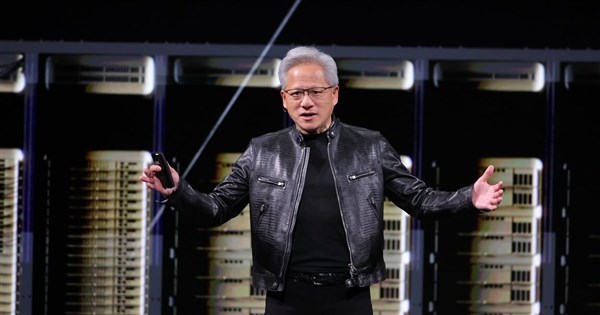
Nvidia said its N1X AI-PC processor, co-developed with MediaTek and manufactured by TSMC on 3nm, will power new RTX Spark laptops launching this fall, while its next-generation Vera Rubin platform has entered full production. Jensen Huang framed AI as a driver of profits, GDP growth and hiring demand, and highlighted Taiwan's strategic role through 150 supply-chain partners. The announcement is constructive for Nvidia, MediaTek and TSMC and reinforces continued AI-infrastructure spending across the sector.
The market implication is not just another positive Nvidia product cycle; it is a potential re-acceleration of the entire AI capex loop. If agentic workloads really do increase token consumption per user and per workflow, then the bottleneck shifts from model quality to throughput, which is structurally bullish for the highest-leverage infrastructure names and the Taiwanese manufacturing stack. The near-term read-through is strongest for NVDA, but the second-order beneficiary is TSM: every additional platform generation strengthens pricing power for advanced-node capacity and makes Taiwan an even more critical choke point in the AI supply chain.
The more interesting wrinkle is the PC angle. AI-PC adoption is unlikely to move as a consumer upgrade story in the next 1-2 quarters; the real inflection is enterprise refresh budgets where software vendors can monetize on-device inference and agents. That creates a pathway for DELL and HPQ to see mix improvement before unit growth shows up, because premium AI-PC SKUs can lift ASPs and attach rates even in a muted hardware market. However, if this becomes a broad PC replacement narrative, competitive pressure rises quickly and the benefit may leak to channel inventory rather than OEM margins.
META and AMZN are the more subtle losers: the message reinforces a world where AI spend stays elevated and compute demand remains scarce, which means their margin expansion thesis is less about efficiency and more about continuously funding infrastructure. The risk is that the market extrapolates token monetization too far ahead of enterprise willingness to pay; if AI agents drive usage faster than revenue conversion, capex intensity could remain high for longer and eventually compress ROI expectations across hyperscalers. That risk would matter most over the next 6-18 months, not immediately, because the current setup still favors suppliers over buyers of compute.
The contrarian view is that this is less a demand breakthrough than a narrative defense of the current investment cycle. If agentic AI meaningfully boosts productivity, companies may hire fewer incremental engineers than the speech implies, which would eventually slow the very infrastructure growth being celebrated. In other words, the first-order trade is bullish for semis and Taiwanese supply chains, but the medium-term risk is that the market overprices perpetual capex growth before the end-user monetization curve is proven.
AI-powered research, real-time alerts, and portfolio analytics for institutional investors.
Request DemoOverall Sentiment
moderately positive
Sentiment Score
0.62
Ticker Sentiment
