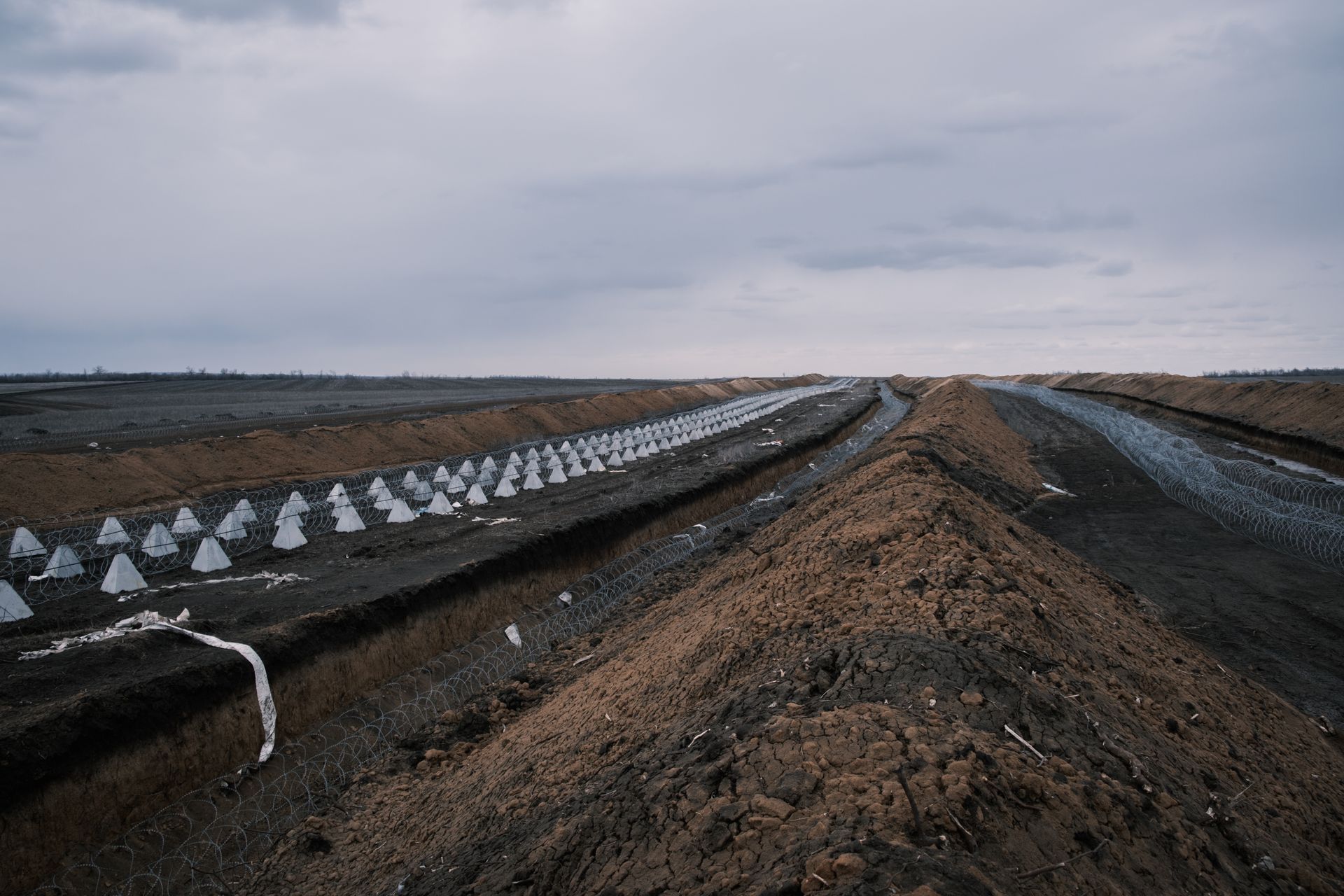
Ukrainian officials reportedly floated a proposal to rename part of Donbas as "Donnyland" to appeal to President Trump and encourage a tougher U.S. stance on Russia, but the idea has not produced clear gains for Kyiv. U.S.-facilitated talks remain centered on the future of the Donbas, with Russia pressing for Ukrainian withdrawal from territory it has not fully captured and Kyiv refusing to concede the region. The issue carries meaningful geopolitical risk and could influence war-related market sentiment, but it is not an immediate market-wide catalyst.
The market implication is less about an imminent ceasefire and more about a higher probability of a drawn-out negotiation regime where territorial ambiguity becomes the default. That tends to favor defense primes and ammunition supply chains over broad Europe cyclicals: the longer the conflict remains unresolved, the more NATO members treat replenishment as structural rather than episodic. The second-order effect is on industrial planning: procurement budgets get front-loaded, but delivery schedules for air defense, artillery, and ISR systems remain tight, which supports pricing power for the incumbent U.S. primes.
The bigger geopolitical risk is that “negotiations” become a mechanism for freezing battlefield lines without reducing security expenditures, while also prolonging sanction overhangs on Russian energy and commodity flows. That combination is marginally negative for European transport, chemicals, and energy-intensive manufacturing, because it sustains input-cost volatility without delivering the valuation uplift from a clean postwar reconstruction thesis. For Ukraine-adjacent reconstruction names, the setup remains premature; capital will not flow meaningfully until there is a durable sovereign guarantee framework, not just a tactical pause.
Contrarian view: the consensus may be overestimating how much any administration can enforce a territorial bargain if Kyiv refuses to concede militarily defensible ground. If talks fail, the market may have already priced in too much de-escalation, creating a fast repricing higher in defense and cybersecurity while reversing any short in European risk assets. The key catalyst window is days to weeks around any formal U.S.-brokered proposal; the bigger structural catalyst is 3-6 months, when procurement guidance and supplemental appropriations either validate or disappoint the “peace premium” thesis.
AI-powered research, real-time alerts, and portfolio analytics for institutional investors.
Request TrialOverall Sentiment
moderately negative
Sentiment Score
-0.25
