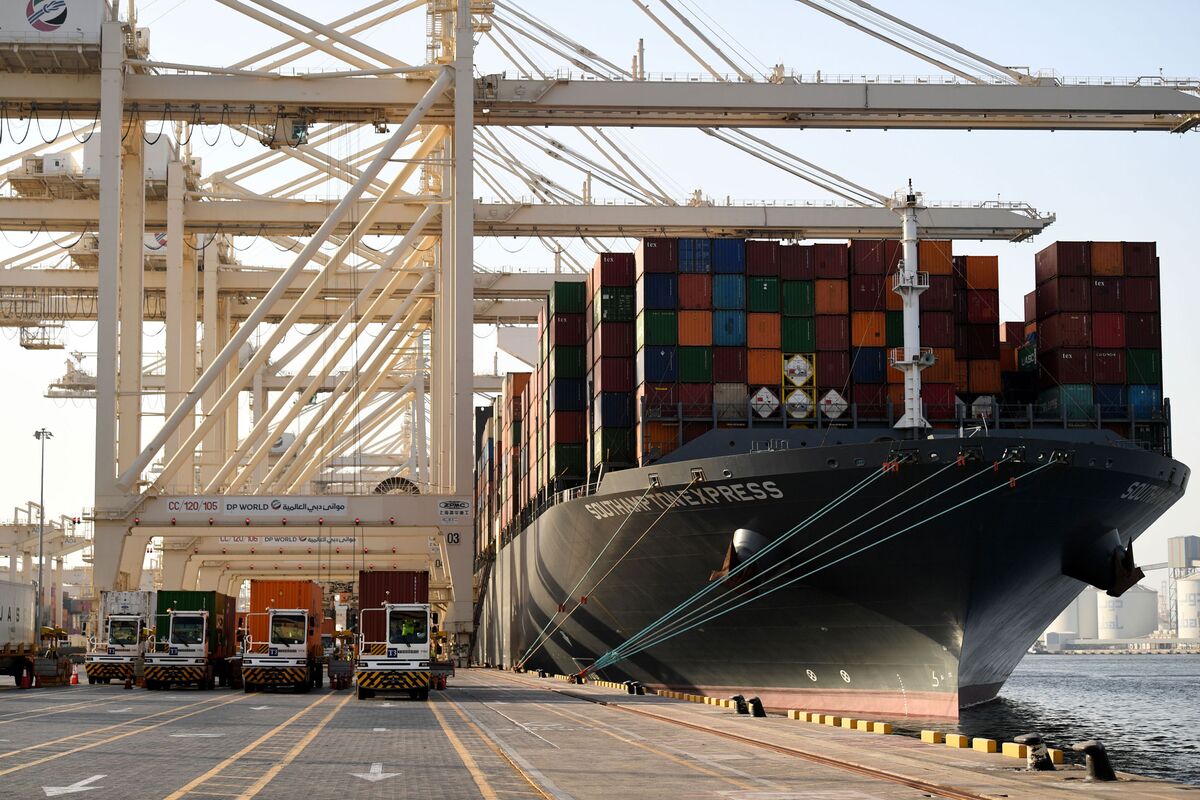
The UK signed a long-awaited free trade agreement with the Gulf Cooperation Council after four years of talks, deepening commercial ties with Saudi Arabia, the UAE, Qatar, Kuwait, Oman and Bahrain. The deal is supportive for trade and investment relations, but the article does not include tariff reductions, sector specifics, or quantified economic impacts. The main significance is strategic and geopolitical, rather than an immediate market catalyst.
The immediate market read is less about tariff mechanics and more about signaling: the UK is buying optionality to diversify trade and capital flows as Europe remains politically and fiscally constrained. The first-order beneficiary is UK cyclicals with GCC exposure, but the deeper winner is sterling-facing assets that monetize cross-border services, financing, and infrastructure rather than pure goods trade. Expect the more durable effect in project finance, defense-adjacent supply chains, energy services, and logistics where Gulf sovereigns can move faster than Western public procurement.
The second-order effect is competitive pressure on continental European exporters that have traditionally treated the Gulf as a captive premium market. If UK firms gain even modest preferential access, margin pools shift toward UK-based legal, financial, and engineering intermediaries, not just manufacturers. That matters because the Gulf is increasingly a capital allocator, so the real prize is securing a seat in sovereign wealth fund deployment rather than incremental merchandise volume.
Risk is mostly execution and geopolitics. These agreements tend to disappoint on near-term P&L because implementation lags can run 6-18 months, and the upside can be offset by renewed regional volatility or a UK domestic backlash if market access concessions are seen as asymmetrical. A stronger-than-expected UK fiscal backdrop could also dilute the narrative if the deal gets absorbed into broader risk sentiment instead of re-rating specific names.
The contrarian view is that the consensus may be overstating the trade-value and underpricing the balance-of-payments and investment-allocation angle. The real alpha is likely in firms that can intermediate Gulf capital into UK hard assets, energy transition infrastructure, and defense procurement, while pure exporters may see little immediate uplift. If the deal is meaningful, it should surface first in capex commitments and advisory pipelines before headline trade volumes move.
AI-powered research, real-time alerts, and portfolio analytics for institutional investors.
Request DemoOverall Sentiment
mildly positive
Sentiment Score
0.25
Ticker Sentiment
