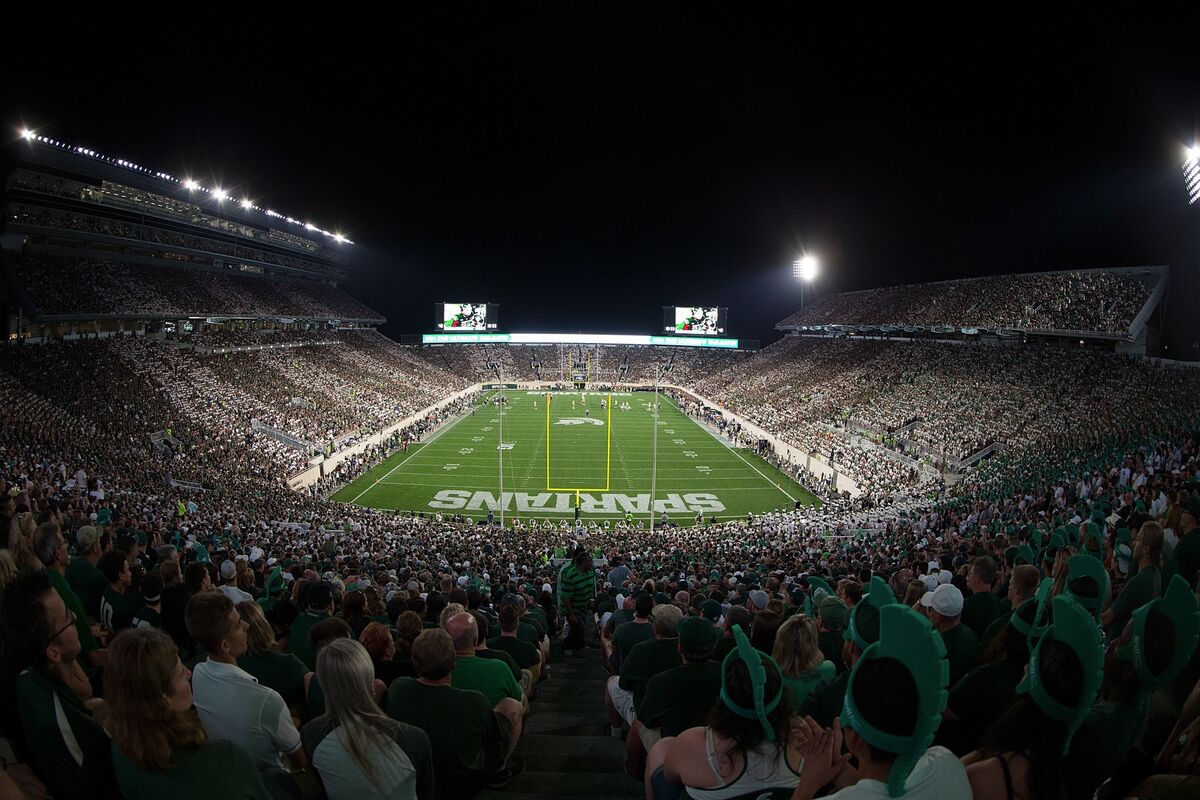
Michigan State University has received a record $401 million pledge from Acrisure co-founder and CEO Greg Williams and his wife Dawn to primarily bolster the university's athletics program amid escalating competition to compensate top college athletes. The gift, the largest in school history, was framed by the university as positioning Michigan State to be an industry leader in college athletics; Williams is the CEO of Acrisure, a financial technology and insurance company based in Grand Rapids, Michigan.
Market structure: The $401m pledge disproportionately benefits the elite-college-sports ecosystem—MSU program, apparel licensors (Nike NKE, Under Armour UA), sports agencies and sportsbooks (DraftKings DKNG, Penn PENN) via higher NIL/merchandise and betting handle. Expect short-term pricing power for top programs (ability to increase NIL bids by as much as tens of millions annually) and concentrated share gains for incumbents with strong college ties; smaller programs lose relative recruiting competitiveness.
Risk assessment: Tail risks include a regulatory clampdown on booster payments/NIL within 3–12 months, donor reputational/financial reversal causing pledge withdrawal, or an NCAA governance shift that redistributes revenue—each could wipe out >50% of projected incremental revenue for beneficiaries. Immediate market reactions (days–weeks) will be sentiment-driven; material fundamental effects will take 6–24 months as contracts, rosters and media rights reset. Hidden deps: donor liquidity tied to private financial firm outcomes and state law changes affecting university spending.
Trade implications: Relative plays favor large-cap, diversified beneficiaries—overweight NKE (6–12 month horizon) and DKNG/PENN for sportsbook volume into the 2025 college season; underweight UA or regional college-exposed competitors. Use options to cap capital: buy 6–9 month DKNG call spreads (25/40% OTM) and NKE LEAPS (12 months) to express upside while limiting downside; position sizing 1–3% NAV per idea, exit on +25–35% or -15% moves.
Contrarian angles: The market may overstate impact—$401m is large for a university but small versus public comps’ revenues, so durable earnings upside for NKE/DKNG may be limited; history shows booster-driven arms races elevate costs more than public equities’ revenue bases. Unintended consequences: increased scrutiny, tax challenges or donor tie-ups could convert perceived windfall into stranded assets, arguing for size discipline and event-triggered trade management.
AI-powered research, real-time alerts, and portfolio analytics for institutional investors.
Request DemoOverall Sentiment
mildly positive
Sentiment Score
0.35
