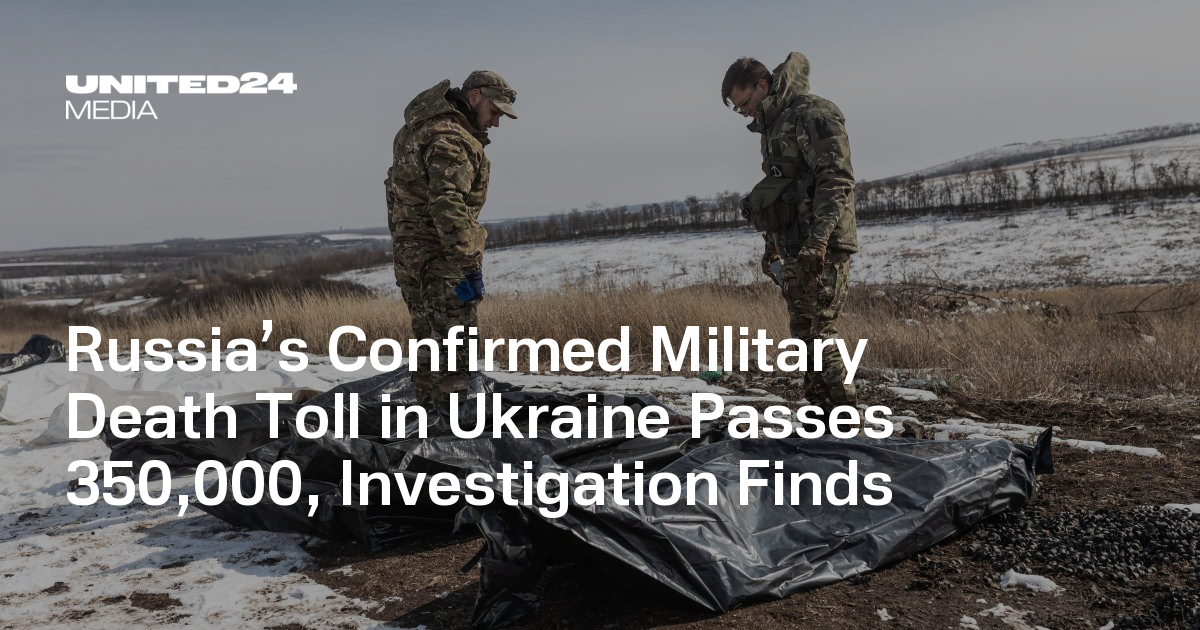
Russia’s confirmed military death toll in Ukraine has passed 352,000, according to a joint investigation by Meduza, Mediazona, and the BBC News Russian Service. The report says total documented deaths rose sharply in 2024-2025, with an additional 90,000 cases recognized by Russian courts and more than 52,000 delayed inheritance registrations by end-2025. The findings underscore escalating wartime attrition and potential strain on Russia’s manpower and mobilization capacity.
The key market implication is not the headline loss level itself, but the continued degradation of Russia’s mobilization quality. When a conflict moves from “replacement through enthusiasm” to “replacement through paperwork,” marginal recruits are increasingly lower-quality, slower to process, and more expensive to retain, which raises attrition and depresses unit effectiveness over a 6-18 month horizon. That creates a self-reinforcing loop: more casualties force harsher recruiting terms, which worsens discipline and survivability, especially in high-intensity sectors.
Second-order effects favor every downstream supplier tied to artillery, drones, EW, optics, demining, and trench engineering, because the side with superior industrial throughput benefits when the opponent’s manpower becomes the bottleneck. It is also mildly supportive for Western defense primes on the margin: prolonged attrition increases the probability of another replenishment wave in NATO inventories, particularly air defense interceptors, 155mm rounds, and short-range drone defenses. The real economic loser is not just Russia’s army, but Russian regional budgets and courts, which absorb the administrative burden of death recognition and inheritance processing, a drag that compounds local labor shortages and household balance-sheet stress.
The contrarian read is that high casualty counts can also be interpreted as evidence of Russia’s willingness to absorb losses without immediate strategic collapse, which caps the speed of any de-escalation trade. Unless battlefield conditions materially shift or external financing tightens, this remains a grinding attrition story rather than a near-term regime-risk catalyst. The cleaner market signal is not an imminent endgame, but a higher probability that the war stays capital- and munitions-intensive through 2026, with periodic spikes in Western procurement and sanctions enforcement risk.
AI-powered research, real-time alerts, and portfolio analytics for institutional investors.
Request DemoOverall Sentiment
strongly negative
Sentiment Score
-0.80
The main tail risk is a negotiated freeze that slows front-line losses while preserving force levels, which would unwind the urgency premium in defense names over 1-2 quarters. A separate risk is battlefield adaptation: if Russia becomes more drone- and standoff-enabled, casualty rates could fall without improving strategic prospects, blunting the incremental bullish case for attrition beneficiaries. Watch for any sign of a broader mobilization package, because that would be the strongest signal that current replacement channels are becoming insufficient.
