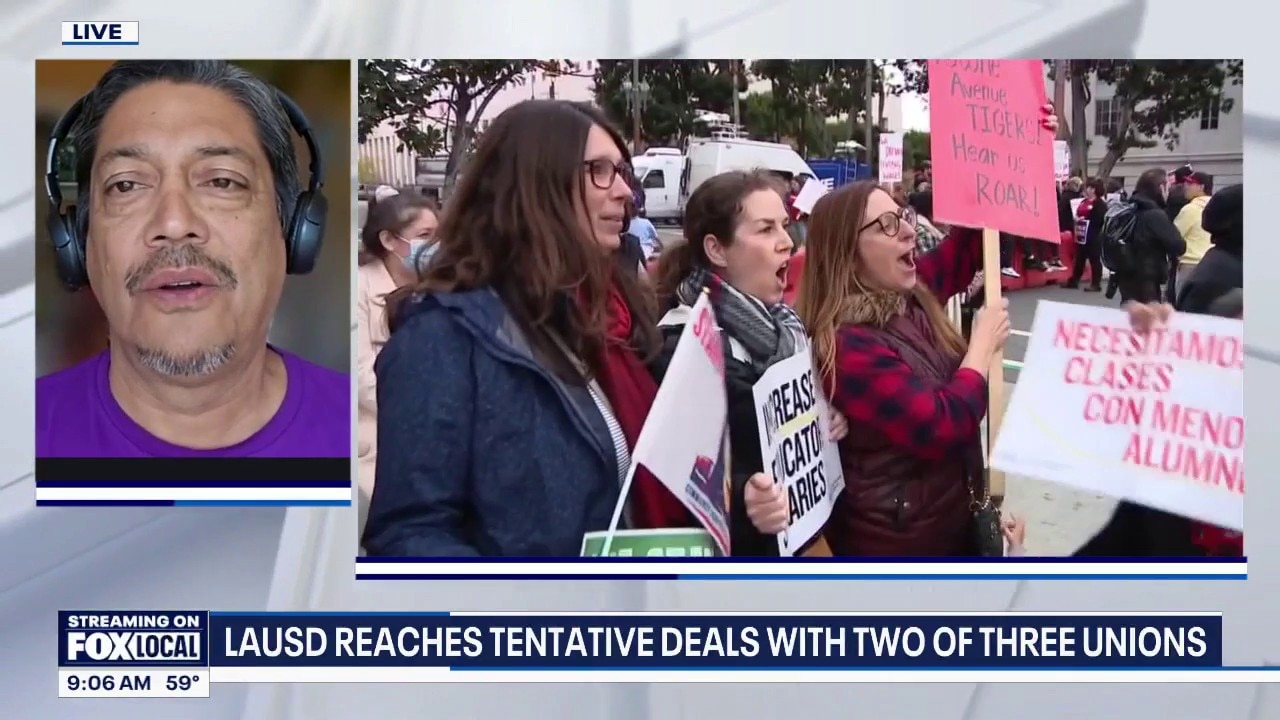
LAUSD is still negotiating with SEIU Local 99 ahead of a threatened Tuesday strike that could disrupt operations across 1,302 campuses serving about 400,000 students daily. The district has reached tentative deals with UTLA and AALA, including an 11.65% salary increase for administrators over two years and a proposed starting teacher salary rise to $77,000, but those agreements do not avert a strike unless SEIU also settles. The situation creates near-term operational risk for the school system, though broader market impact is limited.
This is a classic local-government labor squeeze that matters less for equity beta and more for budget spillovers. If the district gives meaningful concessions to one large bargaining unit, the second-order effect is a reset in wage expectations for custodial, food service, transport, and special-needs support staff across other large urban districts, especially in California where labor markets are tight and fiscal capacity is already constrained by softer property-tax receipts and elevated pension/benefit obligations.
The near-term market risk is operational, not financial: even a short strike can force emergency procurement for transportation, meals, and child care, with the district paying premium rates to fragmented vendors. That creates a delayed but real fiscal drag over the next 1-2 quarters, because these costs are often absorbed through contingency spending or one-time reserves rather than cleanly offset by state aid. The longer-dated issue is attrition: if the wage structure shifts enough to keep veterans, it can also raise the reservation wage for nonunion substitutes and neighboring districts, making the labor supply problem stickier into the next school year.
The broader implication is that public-sector labor in California remains in a wage-price feedback loop even outside inflation-sensitive sectors. The bargaining outcome here will likely be read as a template by city unions, transit authorities, and county service workers, increasing the probability of rolling labor actions into late spring and summer budget negotiations. The consensus may be underestimating how quickly a “local” school dispute becomes a governance story that pressures municipal balance sheets and raises political risk for school bonds if ratings agencies start treating labor volatility as a recurring structural expense.
AI-powered research, real-time alerts, and portfolio analytics for institutional investors.
Request TrialOverall Sentiment
mildly negative
Sentiment Score
-0.15
Contrarian angle: the market may be overpricing the strike as a binary event and underpricing the likelihood of a partial settlement that kicks the can on staffing quality. A deal that avoids a shutdown but leaves staffing ratios unresolved can still be negative for student outcomes and force districts to keep paying more for less service, which is worse for fiscal sustainability than a short-term strike headline. The cleanest signal to watch is whether the agreement includes durable staffing formulas versus one-time wage bumps; the former would imply a much larger multi-year cost reset than the headline pay increase suggests.
