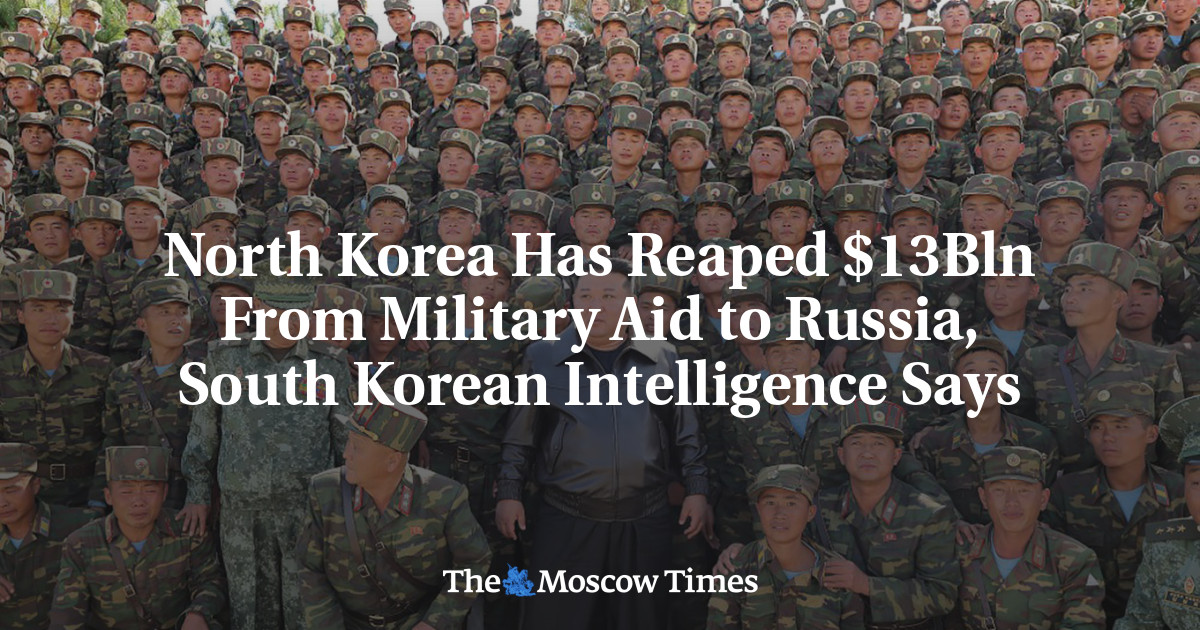
North Korea has reportedly earned about $13 billion over three years by supplying military support to Russia, with 2025 shipments of rocket artillery, shells and short-range ballistic missiles valued at $7 billion to $13.8 billion. Russia is also estimated to have paid more than $600 million for North Korean troop deployments, underscoring the deepening wartime partnership and the role of sanctions evasion. The report highlights escalating geopolitical risk and defense-supply implications, though the immediate market impact is indirect.
The market implication is not the headline dollar amount; it is the creation of a durable sanctions-evasion revenue stream that converts wartime demand into quasi-export earnings for a heavily constrained regime. That improves North Korea’s ability to import dual-use components, fuel, and machine tools, which should incrementally extend the life of its missile and artillery production pipeline even if formal sanctions remain intact. The second-order effect is a more industrialized proxy supply chain for Russia: if Pyongyang is getting paid in hard currency and technology, the transaction is likely funding throughput improvements, not just replenishment.
For defense equities, the clearest beneficiary is the Western resupply and counter-UAS ecosystem rather than traditional platform primes. Higher persistence of artillery/missile flows and continued manpower support raises the probability of prolonged interceptor burn rates, EW demand, and layered air-defense procurement over the next 6-18 months. The real loser is any near-term hope that the conflict is naturally exhausting; this trade channel lowers Russia’s marginal cost of sustaining intensity, which delays the point at which sanctions alone force de-escalation.
The key risk is not immediate escalation, but normalization: markets can become numb to headline risk while the military-industrial feedback loop quietly strengthens. A meaningful reversal likely requires tighter maritime interdiction, a China policy shift on enforcement, or a battlefield shock that makes North Korean support operationally less valuable. Absent one of those catalysts, the base case is a longer-duration attritional war with periodic spikes in missile activity and associated defense procurement.
Contrarian takeaway: the most mispriced exposure may be in industrials and logistics tied to European rearmament, not headline defense names that are already crowded. If investors assume the war is stalemated and therefore low-beta, they are underestimating how a sanctioned supplier with fresh cash can improve output quality over time. That argues for selectively owning the “picks and shovels” of munitions, sensors, and air defense while fading any short-duration peace trade.
AI-powered research, real-time alerts, and portfolio analytics for institutional investors.
Request DemoOverall Sentiment
mildly negative
Sentiment Score
-0.20
