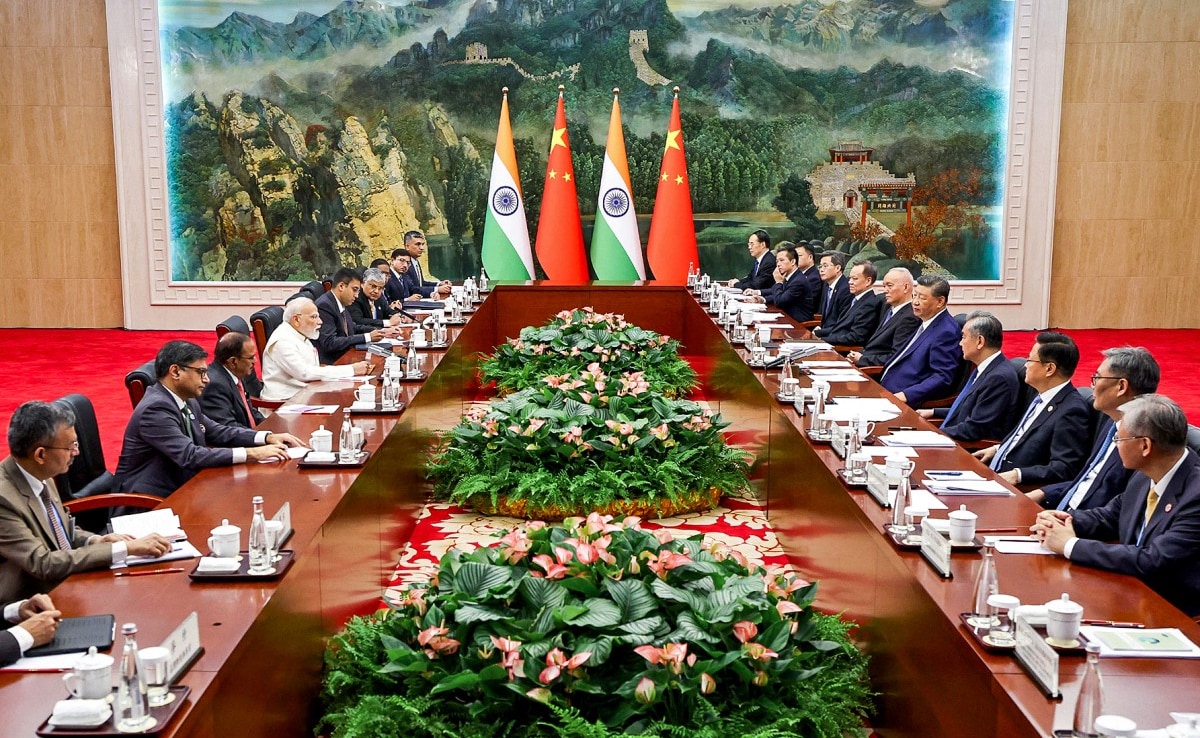
India and China have signaled a significant reset in bilateral relations during a recent summit, with China extending support to India on counter-terrorism and both nations discussing increased trade and border peace. This pivot, occurring amidst India's tariff disputes with the US, suggests a strategic realignment where both countries emphasize strategic autonomy and aim to expand common ground on global issues, potentially impacting regional trade and geopolitical dynamics.
A significant geopolitical realignment appears to be underway between India and China, driven by external pressures, notably US tariffs on Indian goods. The diplomatic rhetoric signals a deliberate 'reset' in bilateral relations, underscored by China's expressed support for India's counter-terrorism efforts—a notable departure from its previous position, such as its initial refusal to condemn the Pahalgam attack at the SCO meet. This rapprochement is framed around the principle of 'strategic autonomy', with both nations seeking to navigate global issues without the influence of a 'third country'. The discussions to increase trade and establish peace at the border, while positive, are currently high-level commitments. While the tone is optimistic, the low market impact score of 0.3 suggests that investors view this as a preliminary diplomatic development rather than a catalyst for immediate, tangible economic change. The true significance will depend on whether these political statements translate into concrete actions, such as specific trade pacts or a verifiable de-escalation of border and security tensions.
AI-powered research, real-time alerts, and portfolio analytics for institutional investors.
Request DemoOverall Sentiment
moderately positive
Sentiment Score
0.50
