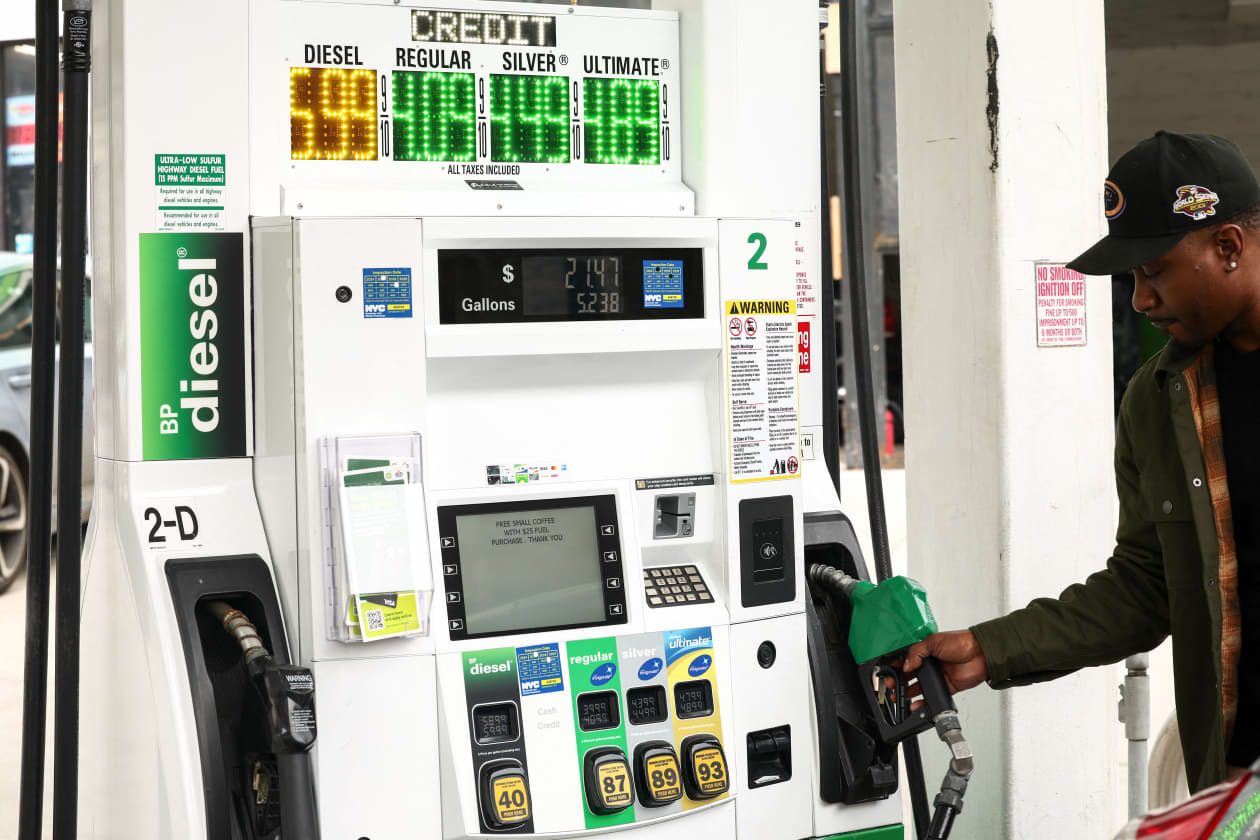
Consumer confidence rose in April to a 4-month high, but remains depressed by historical standards. The survey shows Americans remain uneasy about the Iran war and higher gas prices, though they are still going about normal spending behavior. The update is broadly neutral for markets, with modest implications for consumer sentiment and energy-related concerns.
The market signal here is less about absolute confidence and more about the absence of behavioral breakage. Consumers can be worried about geopolitics and gasoline while still spending if employment remains intact and energy prices stay below the threshold that forces budgeting substitution. That matters for retail and discretionary names: the first-order hit is sentiment, but the second-order risk is only meaningful if higher fuel costs persist long enough to erode weekly cash flow and push households down the basket toward essentials.
The key watchpoint is whether the current unease metastasizes into a delayed demand shock over the next 4-8 weeks. Gas is a highly visible tax on lower-income cohorts, so the stress will show up first in regional retail, apparel, restaurants, and travel, while big-box value chains can actually gain share as consumers trade down. If energy volatility stays elevated, the winners are defensive staples and discounters; the losers are categories with discretionary purchase deferral and high shipping intensity.
The geopolitical premium is likely being underappreciated because the headline is not a recession signal, it is a margin signal. Even modestly higher fuel can compress operating leverage for consumer-facing businesses via freight, packaging, and last-mile delivery costs before it visibly dents unit volume. That creates a lagged earnings-risk window in the next two reporting cycles, especially for companies that guided conservatively on demand but did not explicitly assume sustained fuel pressure.
Contrarianly, the consensus may be over-reading the confidence improvement as evidence of resilient consumption while underestimating how quickly behavior shifts once households face a second month of elevated pump prices. The more important question is not whether confidence rebounds, but whether consumers are front-loading spending ahead of a perceived shock. If that is happening, near-term sales can look fine while forward quarters weaken, which is the setup for a classic estimate-revision trap.
AI-powered research, real-time alerts, and portfolio analytics for institutional investors.
Request DemoOverall Sentiment
neutral
Sentiment Score
-0.05
