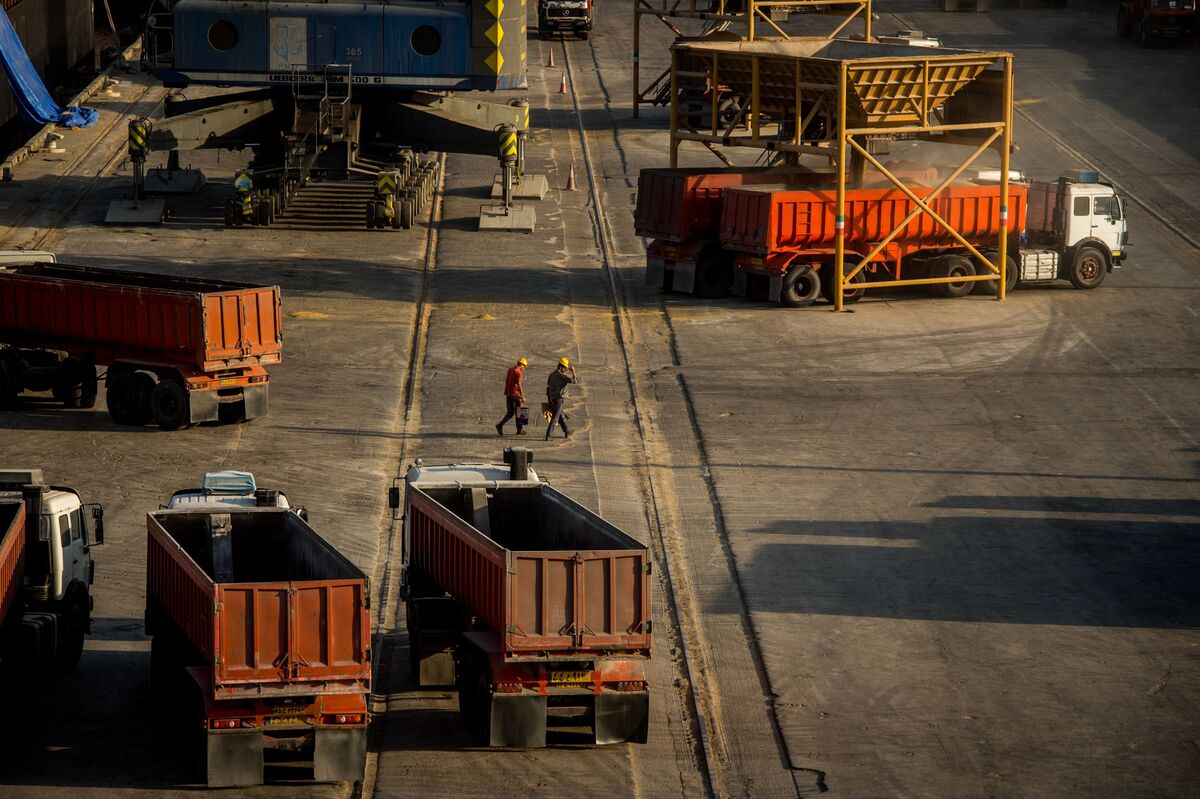
Crop shipments to Iran through the Strait of Hormuz have fallen more than 40% from March, with ships carrying grains and oilseeds lingering at sea instead of entering the Persian Gulf. The disruption is centered on Bandar Imam Khomeini, Iran’s key import gateway, and could worsen already high food inflation if the US blockade persists. The last vessel to arrive at the port transited the strait on April 28.
The key second-order effect is not just higher landed grain costs into Iran, but a shift in bargaining power across the regional logistics stack. When a constrained import corridor becomes unreliable, suppliers demand shorter payment terms, more expensive rerouting, and higher war-risk premia; that usually bleeds into broader EM food inflation with a lag of 4-10 weeks. The pressure is asymmetric because food is politically inelastic, so even a modest delivery shortfall can force more aggressive inventory builds by neighboring buyers and lift regional freight utilization.
This is also a negative for global agribulk liquidity: vessels idling outside the Gulf reduce effective fleet availability, which can tighten spot rates even if headline grain volumes don’t collapse further. The market is likely underappreciating the spillover to alternative discharge points and overland trucking capacity, both of which are structurally less efficient and can create bottlenecks in inland distribution. If the blockade persists another 1-2 months, expect a visible rise in demurrage and insurance costs that will hit smaller shippers first.
The contrarian view is that the move may be less about absolute supply loss and more about route substitution and timing. Grain is storable, so some of the near-term import decline could be inventory deferral rather than permanent demand destruction, which caps the medium-term upside for food prices unless the disruption broadens. The real tail risk is escalation into wider Strait-related shipping disruption, which would turn a localized Iran problem into a broader Gulf freight shock within days rather than months.
AI-powered research, real-time alerts, and portfolio analytics for institutional investors.
Overall Sentiment
strongly negative
Sentiment Score
-0.62
