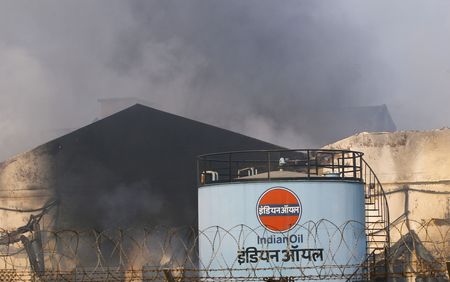
Indian state-run fuel retailers raised petrol and diesel prices for the third time in less than 10 days, with petrol up 87 paise/litre and diesel up 91 paise/litre in the latest move. New Delhi prices now stand at ₹98.64 for petrol and ₹92.49 for diesel, while Mumbai petrol and diesel are ₹95.02 and ₹108.49 per litre, respectively. The increases reflect elevated Brent crude prices and West Asia supply disruption risks, adding to inflation pressure in an import-dependent economy.
The near-term winner is the Indian upstream ecosystem and any hard-currency exporters with energy-linked revenue, but the bigger market signal is that the policy buffer inside India is getting thinner. Once state refiners stop absorbing under-recoveries, the inflation pass-through can hit with a lag through transport, packaged foods, cement, and discretionary consumption, compressing margins before headline CPI fully reflects it. That means the market impact is less about the pump-price move itself and more about the second-order squeeze on households and small enterprises over the next 1-2 quarters.
The loser set is broader than the obvious fuel-consuming sectors. Consumer staples with weak pricing power, logistics names with short contract duration, and airlines with limited hedging coverage are likely to see margin pressure if crude stays elevated for another 4-8 weeks; the duration matters more than the absolute level. India’s imports create an additional FX channel: a weaker rupee magnifies the local fuel shock and can force the central bank into a tougher policy tradeoff between growth support and inflation credibility.
The consensus risk is assuming this is a one-off administered-price adjustment when it may be the start of a normalization cycle. If geopolitical risk keeps Brent pinned, domestic fuel hikes can become a recurring tax on demand, which is bearish for cyclicals even if energy equities look safer in the short run. The contrarian view is that the move is not purely inflationary: it may improve investor confidence in state-run fuel economics and reduce future subsidy leakage, which is modestly positive for policy quality and fiscal optics over a multi-quarter horizon.
AI-powered research, real-time alerts, and portfolio analytics for institutional investors.
Overall Sentiment
mildly negative
Sentiment Score
-0.15
