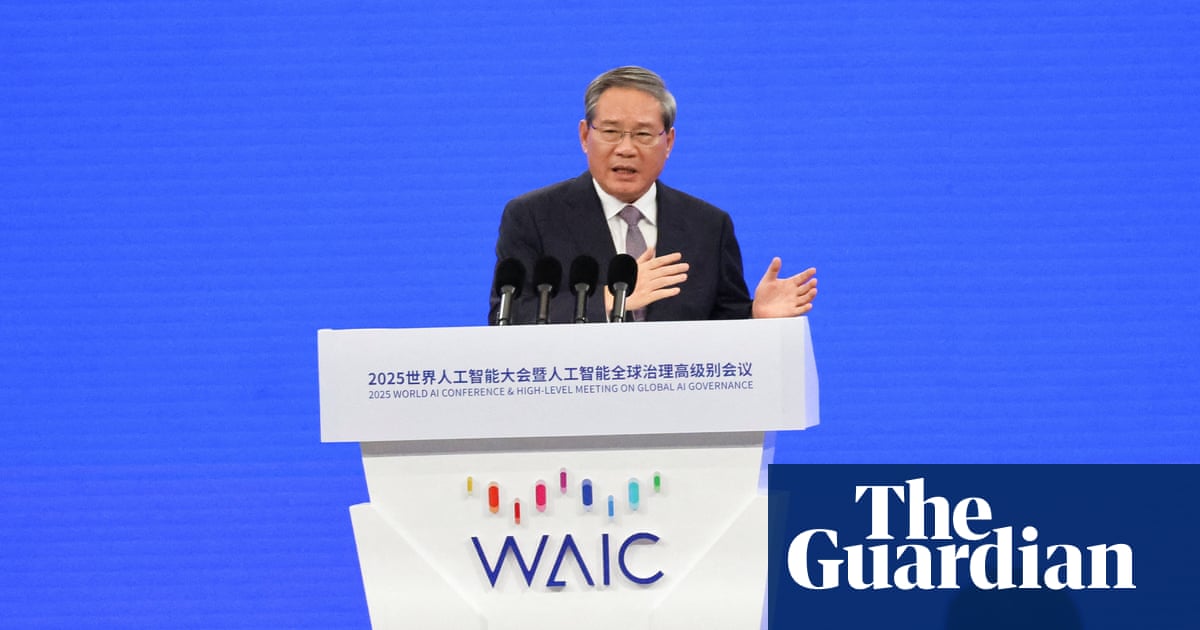
Chinese Premier Li Qiang, speaking at the World AI Conference in Shanghai, proposed establishing a global organization for AI cooperation and governance, advocating for coordinated development and security frameworks. This initiative, emphasizing open-source collaboration and a globally recognized framework, directly contrasts with the recent US strategy of low regulation aimed at securing AI dominance. Li warned against AI becoming an "exclusive game" for a few countries, implicitly referencing US export restrictions on chips and talent exchange limitations, underscoring the escalating technological competition between the two economic powers.
The World Artificial Intelligence Conference in Shanghai has highlighted a significant divergence in global AI strategy, pitting China's proposal for a cooperative, globally regulated framework against a recent US initiative focused on low regulation to secure technological dominance. Chinese Premier Li Qiang's call for a new organization to balance AI development with security risks underscores the growing geopolitical friction, directly referencing challenges such as an "insufficient supply of AI chips" and restrictions on talent—a clear allusion to US export controls impacting firms like Nvidia. While China is promoting open-source development and collaboration with the global south, the event's context is one of escalating tech competition. The cautious tone of the conference, reflected in the mildly negative sentiment score (-0.25), is further supported by tangible industry concerns, such as a study indicating AI summaries could reduce publisher clickthroughs by up to 80%, posing a threat to digital media business models. The presence of major Chinese firms like Alibaba and Western companies including Tesla and Alphabet, contrasted with the notable absence of Elon Musk as a speaker, encapsulates the complex and shifting dynamics of global tech collaboration and competition.
AI-powered research, real-time alerts, and portfolio analytics for institutional investors.
Overall Sentiment
mildly negative
Sentiment Score
-0.25
Ticker Sentiment
