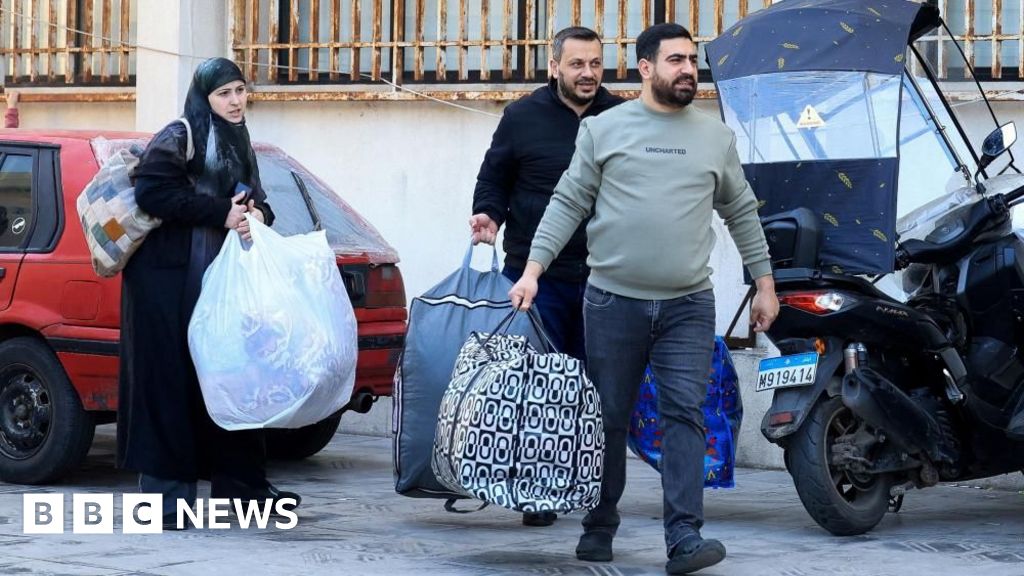
The Israeli military ordered civilians across large parts of southern Lebanon to evacuate north of the Litani River and reported beginning a "wave of strikes" against Hezbollah after the group launched rockets and drones; tens of thousands have been displaced from southern Lebanon, the Bekaa Valley and the Dahieh suburbs of Beirut. The escalation — the first Hezbollah rocket fire since the November 2024 ceasefire — and strikes hitting urban areas (including a hotel) create near-term regional instability and humanitarian strain, posing downside risk to regional economic activity, tourism and risk sentiment that investors should monitor for potential spillovers.
Winners are defense contractors (Lockheed LMT, Northrop NOC, Raytheon RTX), energy producers and Brent-linked instruments, and classic safe havens (gold, USD, USTs); losers are regional EM assets (Lebanon sovereigns, LBP, local banks), travel & leisure (airlines, cruises, JETS ETF) and Lebanon-facing insurers. The displacement of civilians and potential for wider Iran/Hezbollah escalation increases near-term demand for munitions, ISR, and fuel security services; pricing power for select defense names can re-rate by 5–15% over weeks if strikes persist.
Tail risks include rapid Iran state involvement or Red Sea shipping shocks that could spike Brent 15–30% in days and trigger global growth scares; low-probability sovereign contagion (Lebanon banking collapse) could widen EM spreads 200–400bp. Immediate (0–14 days) is volatility spike and risk-off flows; short-term (1–3 months) sees commodity repricing and credit widening; long-term (3–24 months) depends on duration of conflict and domestic political fallout in Lebanon.
Cross-asset signals: expect USD and JPY strength, 5–15bp rally in 2–10y UST yields (prices up), wider EM FX and sovereign CDS, and oil/gold appreciation. Implement short-dated volatility and directional commodity plays rather than long-biased carry in EM credit; rotation into defense and UST duration is mechanically supported by flows.
Contrarian: the knee-jerk oil and defense rallies can be mean-reverting if escalation stays localized — a 10% oil spike absent shipping disruption is unsustainable. Look for overstretched moves: >15% rise in Brent or >20% rally in LMT without clear war expansion are signals to take profits or initiate mean-reversion pair trades (long travel vs short oil/defense hedge).
AI-powered research, real-time alerts, and portfolio analytics for institutional investors.
Request TrialOverall Sentiment
strongly negative
Sentiment Score
-0.65
