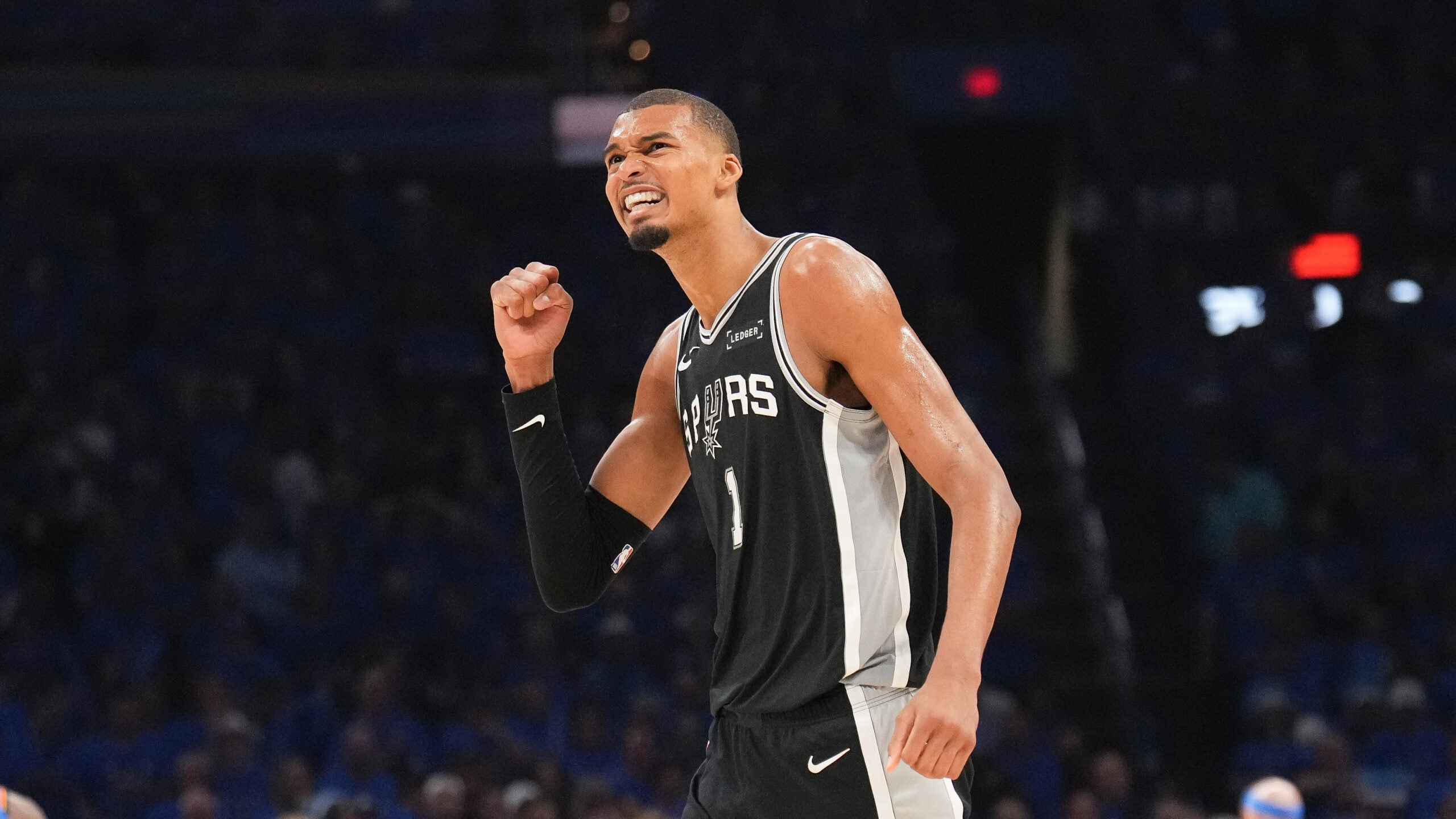
The San Antonio Spurs defeated the Oklahoma City Thunder 111-103 in Game 7 to advance to the NBA Finals, led by Victor Wembanyama’s 22 points and 7 rebounds and a series MVP effort of 27.3 points, 10.9 rebounds and 2.7 blocks per game. San Antonio’s young core produced seven double-figure scorers, while Oklahoma City was hampered by injuries to Jalen Williams and Ajay Mitchell and struggled offensively despite Shai Gilgeous-Alexander’s 35 points. The result is a major on-court milestone for the franchise, but it has minimal direct market impact.
The market implication here is less about the title itself and more about the re-rating of San Antonio as a durable national brand asset. A Finals run from a young roster with a marketable franchise centerpiece should improve pricing power across the local media ecosystem, sponsorship inventory, and national TV relevance for at least the next 12-24 months. That matters because the NBA’s value creation is increasingly driven by a few must-watch properties, and a Wembanyama-led contender is exactly the kind of long-duration narrative that lifts league-wide engagement rather than just team-specific demand.
Second-orderly, this is a positioning event for the Spurs’ ecosystem, not just a basketball result. If Wembanyama is now viewed as a credible title engine rather than a developmental curiosity, the franchise has moved ahead of the typical “young team” valuation discount curve; that should pull forward ticketing, premium-seat, merch, and regional sports media monetization expectations. The bigger winner is the league’s content machine: a new dynasty candidate in a small-to-mid market creates scarcity value around prime-time inventory and could support better ad loads and higher Finals/season-long engagement if the series becomes a multi-year rivalry with Oklahoma City.
The contrarian risk is that the immediate enthusiasm is probably ahead of the cash-flow impact. One playoff run does not prove full-cycle consistency, and the roster’s age profile means volatility remains high over the next 6-18 months; any regression, injury, or playoff disappointment would compress the narrative premium quickly. For Oklahoma City, the injury caveat reduces the signal quality of the loss, which means the market may over-penalize one side and underprice the rematch risk if both teams stay healthy.
From a behavioral angle, this is a classic “new era” sentiment inflection that can persist longer than fundamentals justify. If the Finals are competitive, the media value uplift is likely to broaden beyond the Spurs to every adjacent property associated with the league’s next generation of stars, reinforcing a multi-season engagement cycle. If the series is lopsided, the short-term hype fades, but the underlying asset re-rating for San Antonio should still hold because the league now has a bankable tentpole around which to build future schedules and marketing.
AI-powered research, real-time alerts, and portfolio analytics for institutional investors.
Request TrialOverall Sentiment
moderately positive
Sentiment Score
0.35
