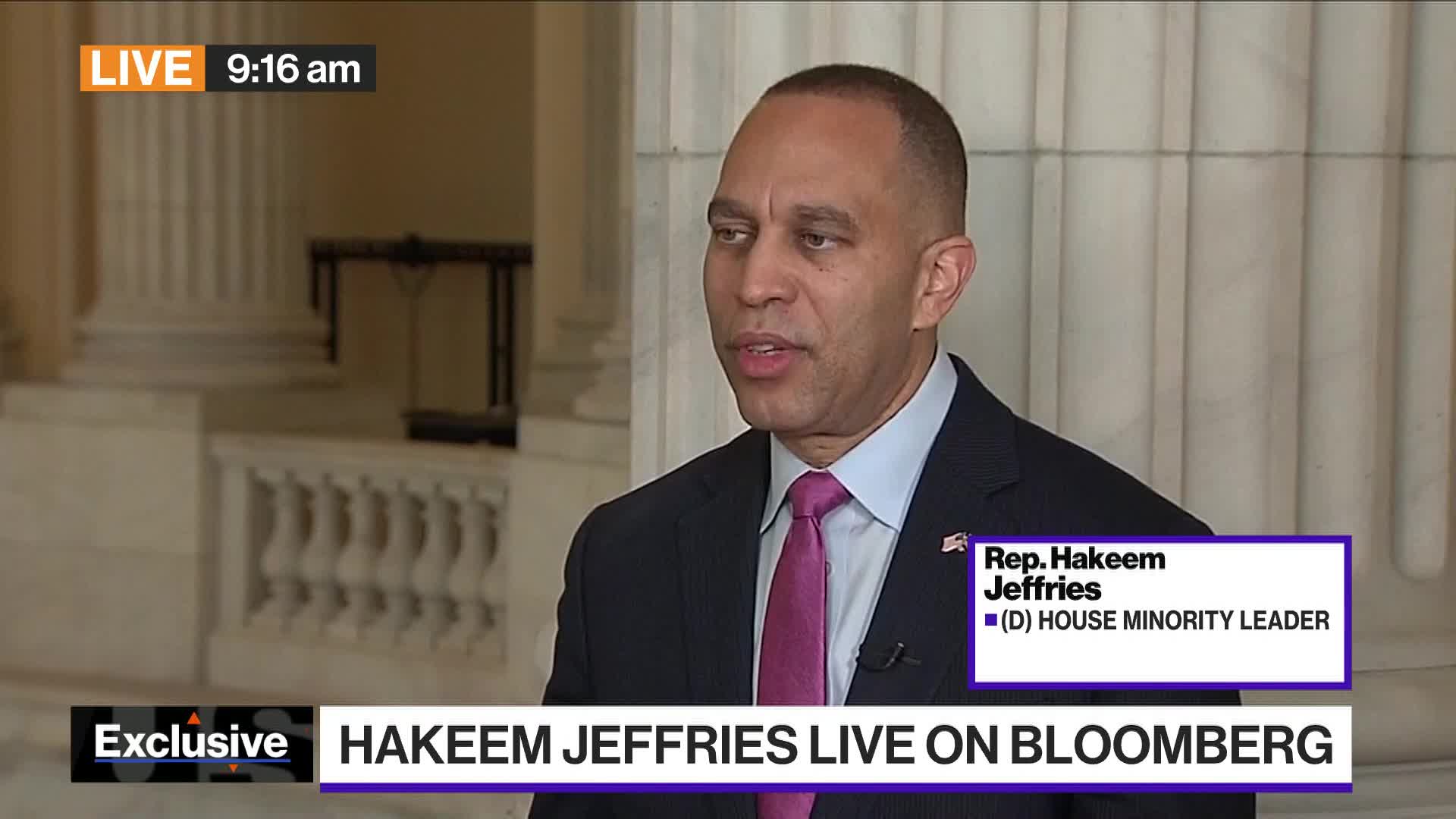
House Democratic Leader Hakeem Jeffries criticized a Supreme Court ruling upholding a Texas redistricting map and signaled continued efforts to secure fair maps nationally while monitoring litigation in New York; he cited a Tennessee special election shift as evidence of potential Democratic gains. Democrats are pushing to extend Affordable Care Act premium tax credits — 214 House Democrats backed a three-year discharge petition and Schumer plans a Senate up-or-down vote — arguing expiration at month-end would materially raise consumer health costs amid already elevated housing, grocery and electricity prices, while also blaming Trump-era tariffs for higher prices and economic uncertainty.
Market structure: The immediate battleground is health-insurance exchanges — 10–20m+ Americans rely on ACA premium tax credits that expire at month-end, so an extension materially preserves ~low-margin but high-volume revenues for insurers (UNH, HUM, CVS). If credits lapse, expect ~10–25% enrollment decline in some states and higher uncompensated care hitting hospitals (HCA, UHS) and community providers; consumer staples and utilities gain relative defensive demand as discretionary spending compresses.
Risk assessment: Tail risk is a politically-driven cliff (no extension) that would create a 1–3 quarter earnings shock for hospitals/insurers and could lift healthcare claims severity by several hundred bps; conversely a bipartisan extension would reverse volatility quickly. Time horizons: immediate (days) — Senate vote and headlines; short-term (weeks) — premium notices/enrollment flows; medium (quarters) — earnings and reserve adjustments. Hidden dependencies include state Medicaid expansions, insurer reinsurance programs, and PBM contract timing that mute or amplify shocks.
Trade implications: Equities: favor large diversified insurers that can absorb adverse selection (UNH) if extension passes; short concentrated hospital operators (HCA) on consumer-payment stress if it fails. Cross-asset: tariffs and political uncertainty raise headline CPI risk — buy TIPS (TIP) for 3–6 months; USD/FX likely to strengthen modestly in risk-off, tightening IG credit spreads by 25–75bps on headline shock. Options: asymmetric protected put or put-spread hedges on hospitals; call-spreads on insurers around vote window.
Contrarian angles: Consensus assumes a binary cliff; market may underprice a short-term bipartisan fix given 214 House Democrats + potential GOP defections — probability of extension >50% in next 2 weeks. Historical parallels (ACA uncertainty 2013–2017) show 5–15% stock swings that revert within 1–3 months; mispricings exist in hospital names and consumer discretionary. Unintended consequence: an extension is fiscally supportive to insurer revenues and could be a catalyst for 10–20% rerating of select insurers if coupled with easing tariffs.
AI-powered research, real-time alerts, and portfolio analytics for institutional investors.
Request DemoOverall Sentiment
moderately negative
Sentiment Score
-0.45
