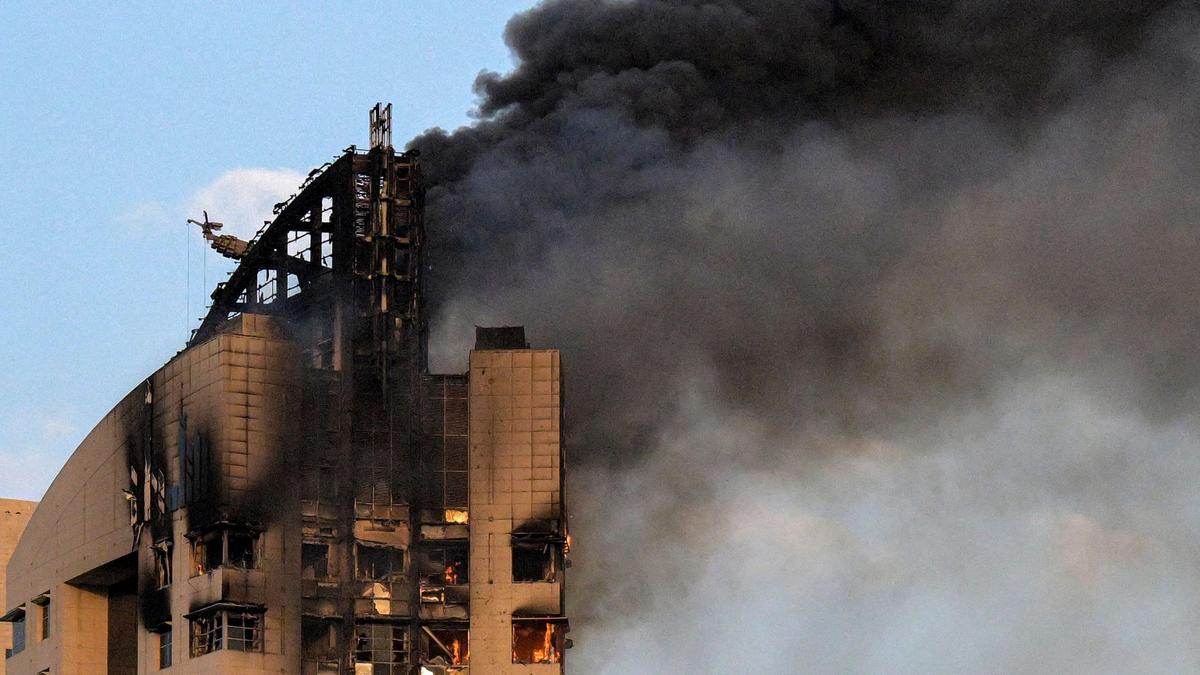
Key event: Iran launched new attacks on Gulf Arab states (UAE, Saudi Arabia, Kuwait) and Tehran experienced more than 20 heavy explosions — the heaviest air raid since the conflict began on Feb 28. The Strait of Hormuz is facing a near-total collapse in commercial traffic, creating significant upside risk to oil prices and posing broad supply-chain and shipping disruptions. The U.S. has warned of much stronger retaliation if Iran blocks oil flow, raising the probability of further escalation and sustained market-wide volatility.
Energy and shipping are the immediate profit centers: disruption to Gulf seaborne flows will transfer margin rapidly to producers and midstream owners that can route barrels to alternative markets, while tanker owners and spot charters capture outsized cash flow. Expect VLCC/AFRA-like rates to spike first (historically 5-10x moves inside weeks in similar shocks) and remain elevated until either physical flows are restored or insurance/liability economics force long-term rerouting.
Insurance, trade finance, and ports logistics are second-order choke points that amplify costs: higher war-risk premia and payment/letter-of-credit friction will raise landed energy and commodity costs by 5-15% along affected routes, compressing margins for refiners and energy-intensive manufacturers that cannot pass costs through quickly. Companies with flexible offtake or diversified feedstock sources will see relative outperformance; those dependent on seaborne crude or Gulf-sourced inputs will suffer multi-quarter margin pressure.
Tail outcomes are binary and short-dated: within days-weeks we get volatile oil and freight moves; within 1-3 months either coordinated inventory releases and diplomatic de-escalation or a sustained choke that forces structural rerouting and capex in pipelines/terminals. The single biggest downside reversal is an organized SPR + allied tanker corridor that can shave $20-40/bbl from headline Brent in weeks; conversely, a naval engagement that closes the corridor could add $30-60/bbl inside a month absent immediate offsets.
Consensus pricing likely overstates permanence — the market is pricing multi-quarter disruption that may be solved tactically — which creates an asymmetric window to sell very short-dated volatility and buy real-economy exposure (tankers, select E&Ps) on pullbacks. Maintain tight scenario-based stops: these moves are fast and frequently reversed by policy action or temporary fixes, so position sizing should assume a >30% intraday swing on headline news in either direction.
AI-powered research, real-time alerts, and portfolio analytics for institutional investors.
Request DemoOverall Sentiment
strongly negative
Sentiment Score
-0.75
