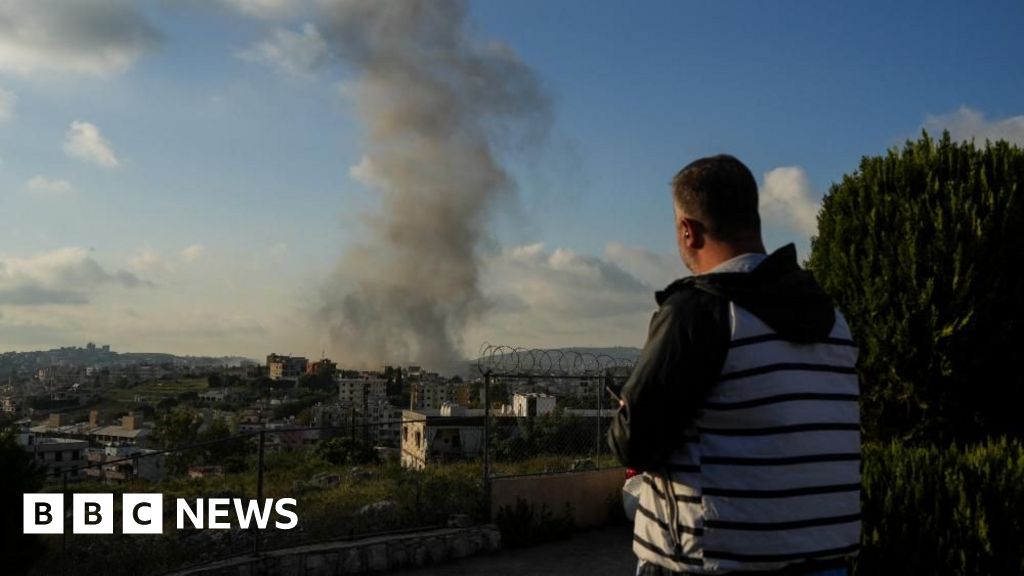
At least 13 people were killed and 32 injured in Israeli air strikes on southern Lebanon, with the Lebanese health ministry also reporting 2,586 deaths in Lebanon since early March, including 103 health care workers and emergency responders. The IDF said it carried out around 50 strikes in the last day and intercepted two aerial targets, while fighting with Hezbollah continues despite a ceasefire extension. The escalation keeps regional risk elevated and is likely to weigh on broader Middle East sentiment and defense-related positioning.
The market implication is not the headline casualty count; it is the failure of the ceasefire architecture to constrain battlefield tempo. That means this is transitioning from a diplomatic-risk event into a persistent attrition regime, which tends to keep regional risk premia sticky rather than spiking and mean-reverting. For portfolios, the more important second-order effect is that repeated strikes plus evacuation orders make reconstruction expectations progressively less credible, which raises the odds of delayed capital spending, insurance stress, and EM sovereign spread widening if investors begin to price in a longer Lebanese balance-of-payments shock.
The winner set is narrower than in a clean escalation: Israeli defense, ISR, counter-UAS, and munitions supply chains should keep seeing replenishment demand, while contractors with exposure to air-defense interceptors and precision strike munitions get a more durable backlog tail. The loser set extends beyond Lebanon into any asset tied to Levant stabilization assumptions, including frontier sovereign debt and regional airlines/tourism if the conflict starts affecting flight routing and insurance costs. A subtle second-order risk is that every episode of civilian casualties increases pressure on third-party mediators, but also reduces the probability of a near-term political settlement because both sides can use the violence to justify maximalist positions.
The contrarian view is that the market may be overpricing an immediate regional spillover while underpricing a prolonged low-to-mid intensity conflict. That usually favors defense and energy volatility expressions more than outright broad risk-off positioning, because the best setup is not a one-day shock but a multi-week grind that supports procurement, resupply, and tactical hedging flows. The key catalyst to watch is whether strikes expand materially beyond the south or whether the US pushes a stronger enforcement mechanism; absent that, this likely remains a slow-burn geopolitical premium rather than a full cross-asset de-risking trigger.
AI-powered research, real-time alerts, and portfolio analytics for institutional investors.
Request DemoOverall Sentiment
extremely negative
Sentiment Score
-0.85
