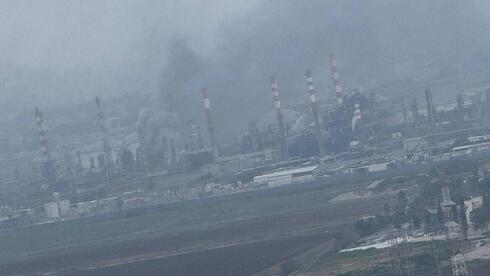
An Iranian missile strike hit the Bazan oil refineries in Haifa Bay, causing damage and a hazardous materials assessment; Petrochemicals Ltd. shares fell >10% and Bazan’s stock dropped >6.5% on the Tel Aviv exchange. Smoke, multiple impact sites (cluster warhead), localized power outages and one light casualty were reported; 15 firefighting teams responded and most electricity was restored, with officials calling the grid damage localized.
Market plumbing will reprice perceived vulnerability of regional energy and logistics hubs faster than fundamentals: insurers, underwriters and charter markets react within days via higher premiums and spherical risk loadings, while physical cargo flows take 1–6 weeks to re-route and fill the gap. That dynamic creates an asymmetric window where logistics and service providers capture margin expansion even if crude fundamentals remain unchanged — expect shipping rates in the eastern Mediterranean to spike 20–50% for short-haul clean tanker/business over the next 2–6 weeks.
Second-order winners are firms that benefit from a structurally higher cost of doing business in contested waters — marine insurers, reinsurers, and specialist security contractors — since their rate resets persist into renewal cycles (3–12 months) and are sticky. Conversely, regional downstream processors and integrated refiners face elevated working-capital needs and widening payables timing pressure; smaller, levered refiners will underperform as their cost of capital moves up by several hundred basis points.
Tail risks skew to episodic escalation: a multi-week disruption to Mediterranean crude/chemicals flows would transmit to European product markets within 10–30 days, potentially lifting nearby product cracks by $3–8/bbl for the immediate cycle. The most likely reversal is fast, diplomatic de-escalation or an insurance market backstop coordinated by P&I clubs; both would compress the newly bid-up risk premia within 2–8 weeks.
Positioning should therefore capture the reprice in risk-bearing businesses while hedging a rapid de-escalation. Tactical trades that buy underwriting exposure and oilfield-service optionality while shorting small, regional downstream equities offer asymmetric payoffs if volatility persists past the first month.
AI-powered research, real-time alerts, and portfolio analytics for institutional investors.
Request DemoOverall Sentiment
strongly negative
Sentiment Score
-0.55
