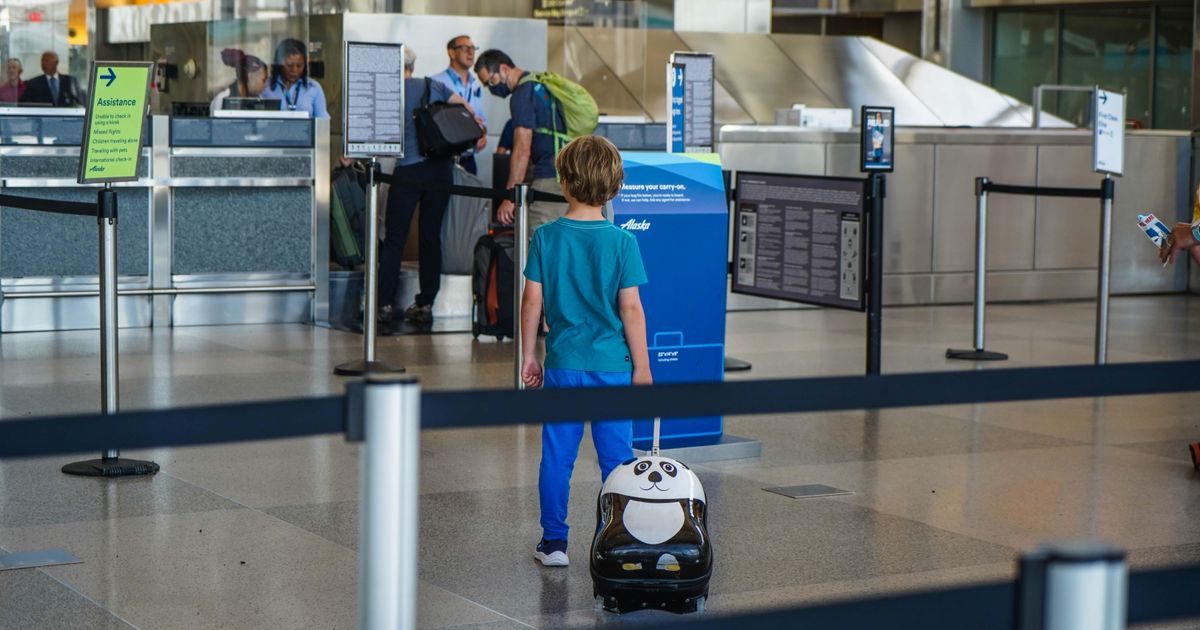
FAA briefly grounded all JetBlue flights for about 40 minutes after a JetBlue-requested halt due to a short system outage; operations resumed after the issue was corrected. JetBlue operates roughly 879 average round-trip flights daily to 108 destinations and is the U.S. sixth-largest carrier. U.S. crude is reported up nearly 70% year-to-date and >35% in the past week amid the war on Iran—United’s CEO warned the fuel spike will have a “meaningful” impact on results this quarter—and TSA staffing issues tied to a partial government shutdown have led to reported security waits up to three hours.
A brief operational outage that interrupts flight ops exposes a leverage point in airline networks: tightly banked schedules + paired aircraft rotations convert minutes of disruption into hours of system-wide delay, incremental crew overtime, and forced re-accommodation costs. Carriers that run with minimal schedule slack or outsource coreops (crew/dispatch/IT) will see a higher marginal cost per disruption and a higher probability of spillover cancellations across hub banks in the following 24–72 hours.
A sustained higher jet-fuel price regime shifts the economics from a demand problem to a margin problem — carriers with poorer hedge coverage and higher widebody share will see CASM-ex-fuel compress faster. That creates a bifurcation: well-hedged, asset-light or ancillary-rich players can protect margins and pass through price via fare mix, while high-capacity, thin-margin regional and some legacy networks will be forced into capacity cuts or steep fare increases that depress volumes over multiple quarters.
Operational friction at airports (longer security lines, staffing shortfalls) acts like a negative supply shock to available seat miles on peak days and favors airlines with dense schedules and strong loyalty/bookings engines that can re-accommodate at scale. Second-order beneficiaries include global booking/OTAs and airport service providers that can monetize disruption via premium rebooking/fast-track products.
Trade timing: expect knee-jerk moves in equities on day-of-disruption but durable P&L effects to manifest over 1–4 quarters as fuel hedges roll off and guidance is repriced. Key catalysts to monitor are quarterly fuel-hedge disclosures, TSA/federal staffing resolutions, and recurrence of operational IT/dispatch incidents — any two occurring within 90 days materially raises downside risk for exposed carriers.
AI-powered research, real-time alerts, and portfolio analytics for institutional investors.
Request DemoOverall Sentiment
mildly negative
Sentiment Score
-0.15
Ticker Sentiment
