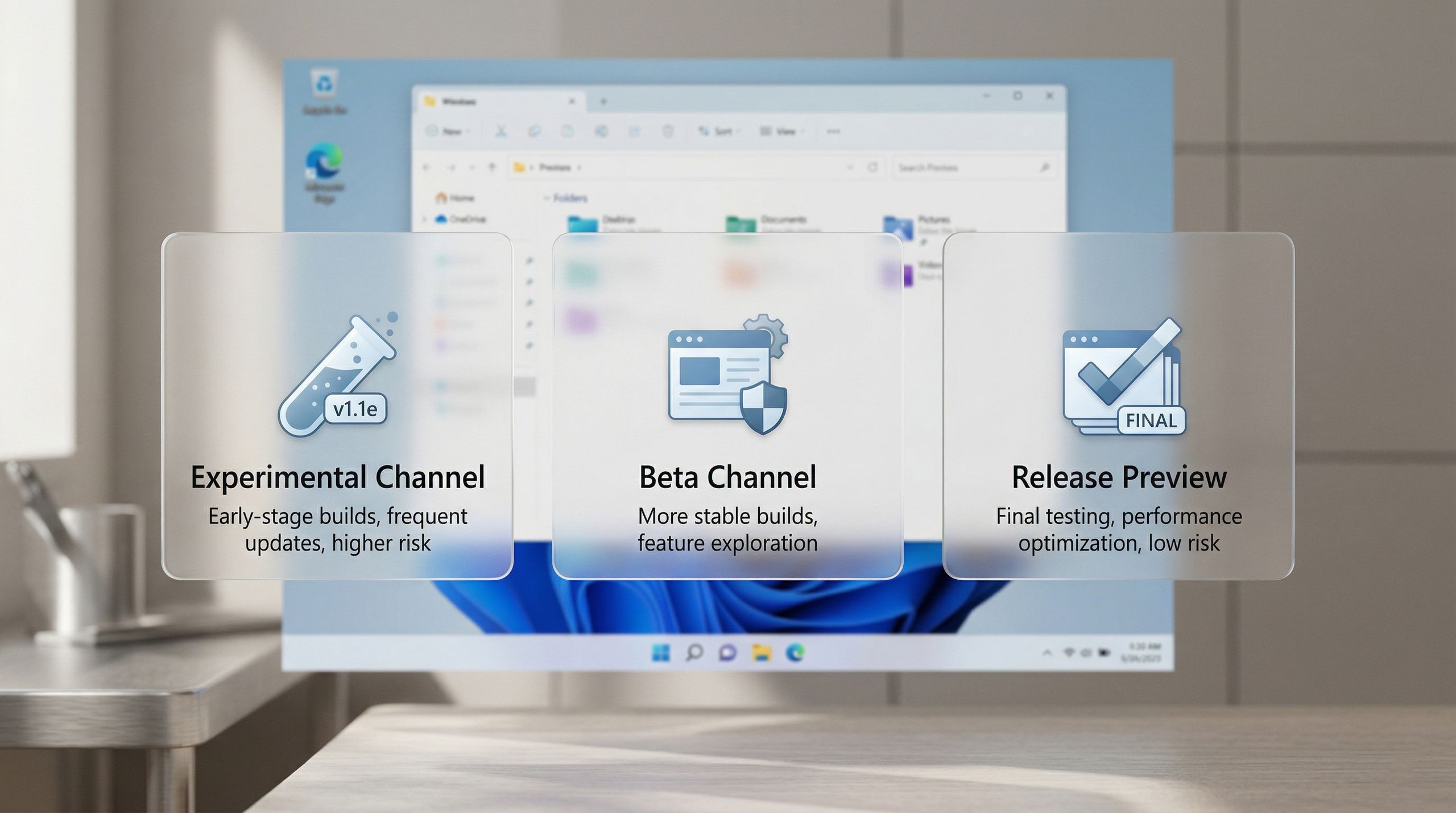
Microsoft is overhauling the Windows 11 Insider Program, consolidating preview options into Experimental, Beta, and Release Preview channels and ending Controlled Feature Rollouts in Beta. Existing Canary and Dev users will be moved to Experimental, while Beta builds will have all changelog features enabled by default, improving predictability for testers. The changes begin rolling out in the coming weeks and should make Windows feature testing more straightforward, though the impact on Microsoft's shares is likely limited.
This is less a product headline than a governance change that should improve Microsoft’s execution quality. The key second-order effect is not feature velocity; it is lower variance in the release process, which should reduce support burden, crash-induced brand drag, and the internal cost of running parallel code paths. That matters because Windows monetization is increasingly about keeping the installed base calm enough to sustain upgrade cycles, security subscriptions, and cloud attachment rather than driving pure seat growth.
The clearest beneficiaries are enterprise IT and developer-adjacent workflows, where predictable previews lower testing friction and shorten validation windows. Over time, a more legible Insider structure can modestly improve OEM and ISV confidence, since third parties hate building against unstable interfaces with unclear rollout timing. The main loser is the “power tester” ecosystem that benefited from scarcity and unpredictability; Microsoft is explicitly commoditizing early access and should reduce the signaling value of being first.
The market may underappreciate how much this de-risks Windows from a narrative standpoint ahead of broader AI-PC and device refresh efforts. If Microsoft can make preview behavior more deterministic, it improves the odds that future shell, security, and AI feature launches land with fewer regressions, which is important over the next 2–4 quarters as Copilot+ and Windows refresh marketing intensify. The contrarian risk is that tighter channel control also means fewer organic surprises and less “enthusiasm beta,” so the near-term brand lift could be smaller than bulls expect.
Watch for the rollout to be operationally smooth in the first 30–60 days; if channel migration or feature-flag controls create confusion, the initiative will read as bureaucracy rather than simplification. If execution is clean, this becomes a subtle positive for Microsoft’s product quality premium, but the upside is gradual rather than explosive. The best payoff is through reduced downside tails, not immediate multiple expansion.
AI-powered research, real-time alerts, and portfolio analytics for institutional investors.
Request DemoOverall Sentiment
mildly positive
Sentiment Score
0.30
Ticker Sentiment
