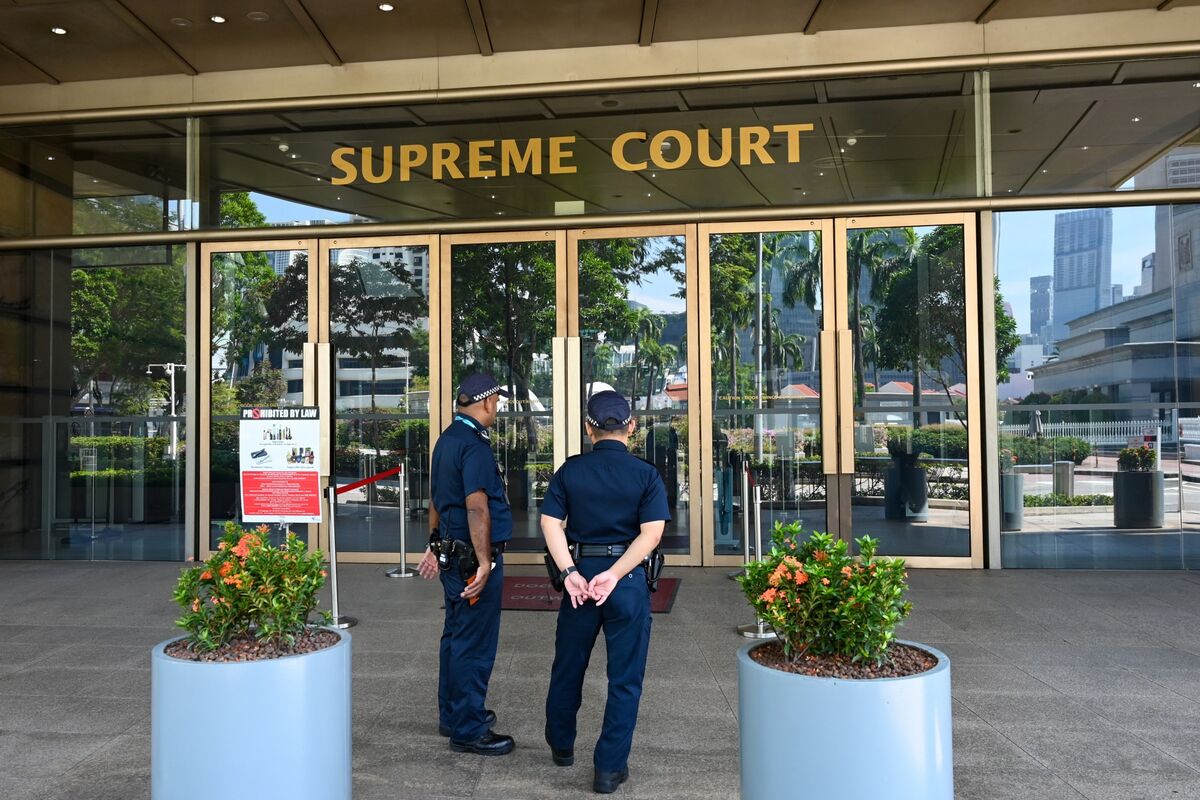
Singapore High Court denied bail to Zhi Ge, the alleged leader of an international insider trading ring, after ruling he is a flight risk. The case underscores ongoing legal exposure around insider trading and market integrity, but the article contains no direct company-specific or broader market-moving financial data.
The immediate market implication is not about one defendant, but about the probability distribution for enforcement intensity across Singapore-linked financial flows. A bail denial keeps the case in the high-visibility phase longer, which raises the odds of parallel scrutiny on counterparties, brokers, and execution venues that may have benefited from information leakage. That creates a short-term risk-off wedge for small-cap Asia-facing financial intermediaries and any platform with meaningful cross-border retail/speculative flow, even absent direct mention in the filing.
The second-order effect is reputational, not mechanical: Singapore’s value proposition as a clean, rule-bound hub depends on low tolerance for perceived market abuse. If regulators use this case to signal harsher surveillance, the likely beneficiaries are incumbent institutions with stronger compliance franchises and the losers are higher-turnover trading venues that monetize speed over controls. The impact should show up over weeks to months in tighter onboarding, slower account opening, and potentially lower activity in names exposed to discretionary trading revenue.
The contrarian view is that the selloff risk is probably overdone for systemic Singapore assets. High-profile prosecution can actually strengthen the long-run premium for well-governed brokers, exchanges, and banks by widening the moat versus opaque competitors; the market often misprices compliance as a pure cost rather than a barrier to entry. Tail risk is if investigators widen the case into a larger ring with institutional touchpoints, in which case the damage broadens from reputational to earnings and could hit Asia brokerage volumes for one to two quarters.
There is no direct single-name trade from the article, so the clean expression is a relative-value tilt toward regulated incumbents versus higher-beta trading venues in Singapore/Asia. A short-duration hedge makes sense if broader market sentiment turns risk-off around enforcement headlines, but the base case is that the event is more of a governance premium re-rate than a fundamental earnings shock.
AI-powered research, real-time alerts, and portfolio analytics for institutional investors.
Request DemoOverall Sentiment
mildly negative
Sentiment Score
-0.25
