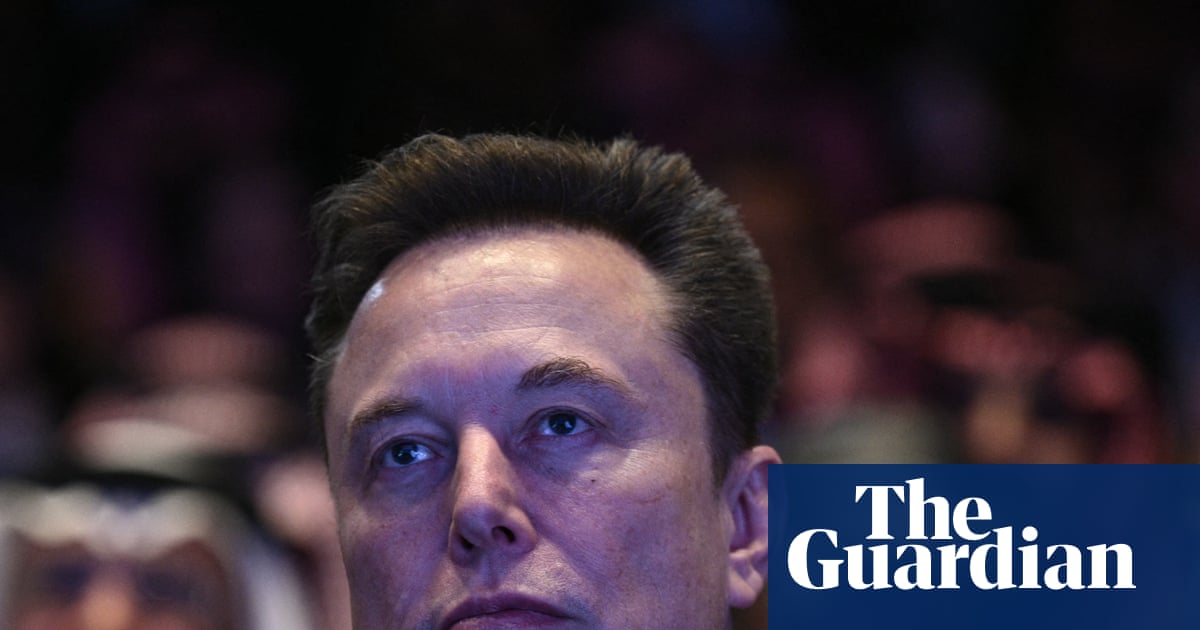
Elon Musk’s net worth fell to $970.2bn at Wednesday’s close, dropping him below the trillionaire mark after a global tech selloff hit Tesla and SpaceX-linked valuations. SpaceX’s record IPO had previously lifted Musk above $1tn, with the stock later listed at $154.35 versus an initial $135, but the move highlights how closely his wealth is tied to market swings. The article is mostly wealth-and-market commentary, though it underscores how AI-related risk appetite and rate fears are pressuring major tech names.
The key market read-through is not Musk’s personal wealth milestone; it is the volatility signal embedded in the names most levered to long-duration expectations. When rate fears and AI-bubble anxiety hit simultaneously, the market is telling you that the marginal buyer of mega-cap growth is now explicitly paying for future optionality with a higher discount rate, which compresses even the strongest narrative stocks faster than fundamentals can reset. That makes GOOGL more interesting than TSLA here: Alphabet is less balance-sheet fragile, but its exposure to AI capex enthusiasm and ad-driven multiple expansion means it can underperform sharply in a risk-off tape even without a company-specific issue.
For TSLA, the second-order effect is mechanical: a falling equity price tightens the feedback loop on sentiment, employee retention economics, and any future capital-raising optionality. The stock’s shareholder base is structurally more momentum-sensitive than GOOGL’s, so a drawdown can overshoot on the downside before fundamental buyers step in; that usually creates a better mean-reversion setup only after forced de-risking is done, not at first break. On a months-long horizon, the more important question is whether this is a regime shift in the AI/innovation trade or a one-off macro flush — if the 10-year yield keeps pressing higher, long-duration tech de-rates can persist longer than consensus expects.
The contrarian point: the move may be partially overdone because the market is conflating “AI bubble” with “all AI-adjacent platforms are equal.” Alphabet still has operating leverage and monetization optionality that pure infrastructure names do not, while TSLA’s valuation already embeds extreme execution success, making it more vulnerable to narrative air pockets. A sharp rebound is likely if rates stabilize and flows rotate back into megacap quality, but until then the path of least resistance is lower for the highest-beta expression of the theme.
AI-powered research, real-time alerts, and portfolio analytics for institutional investors.
Request DemoOverall Sentiment
mildly negative
Sentiment Score
-0.12
Ticker Sentiment
