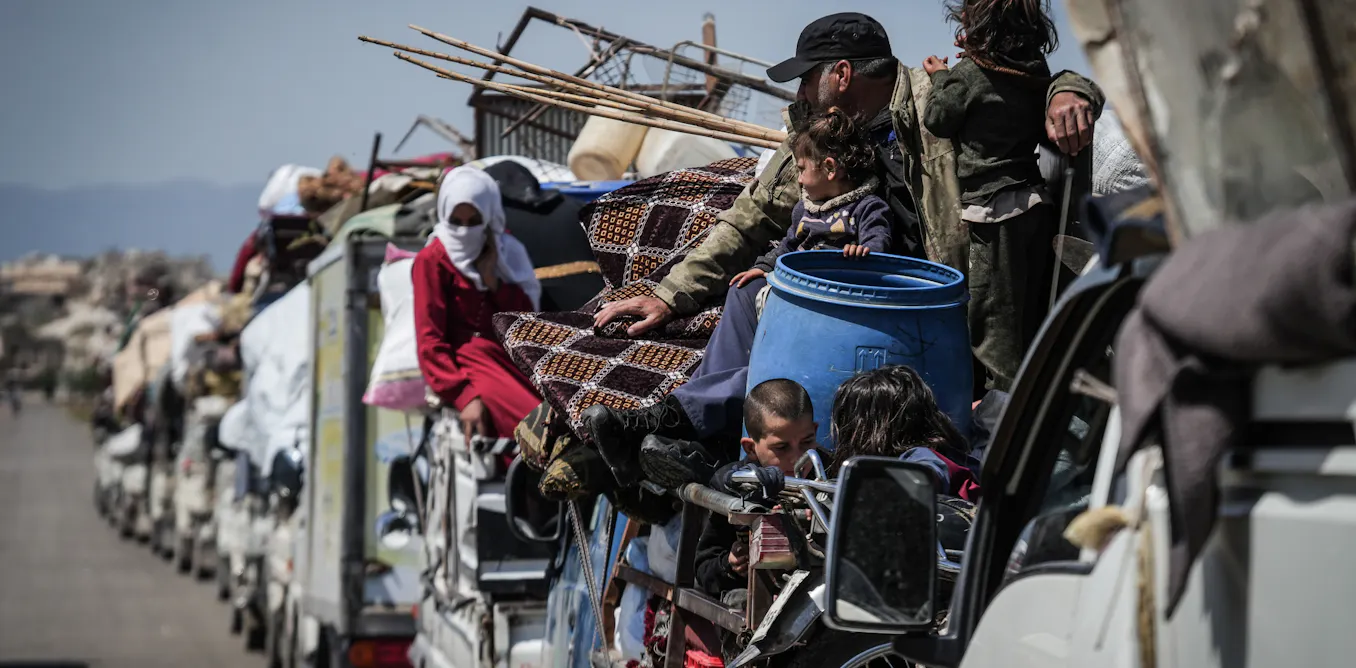
Nearly 1.5 million Syrian refugees — about one-quarter of those who fled during the 13-year civil war — voluntarily returned after the overthrow of Bashar Assad in December 2024, driven largely by deteriorating conditions and reduced aid in host countries (Turkey, Lebanon, Jordan) rather than clear improvements in safety. Widespread destruction of housing and damaged land administration (ACLED analysis of 140,000+ violent-incident reports highlights heavy damage in Aleppo, Idlib and Homs), ongoing localized violence, and unclear property rights present major obstacles to sustainable returns and will shape reconstruction needs, political risk and any future investment opportunities in Syria.
Market structure: The rapid return of ~1.5M Syrians (~25% of the diaspora) concentrates near heavily damaged inland cities (Aleppo, Idlib, Homs), implying outsized near‑term demand for cement, steel, heavy equipment, telecom rebuild and private security services. Rough, order‑of‑magnitude reconstruction math — $20k–$50k per household for repairs implies $30B–$75B latent demand if returns stabilize — but delivery will be gated by sanctions, donor funding and on‑the‑ground security. Host‑country losers include Lebanese, Jordanian and Turkish consumer demand, remittances, and local banks facing asset quality deterioration as refugees exit or are deported.
Risk assessment: Tail risks include renewed large‑scale conflict, rapid re‑imposition of international sanctions, or donor shortfall (<$10B in pledges) — any of which could wipe out reconstruction economics. Near term (0–3 months) expect volatility in EM FX and sovereign CDS; medium term (3–12 months) the key variables are donor pledges and sanction policy; long term (12+ months) success hinges on property‑rights restoration and functioning land registry systems. Hidden dependencies: insurance market appetite, availability of international contractors, and legal frameworks for compensation — all prerequisites for major capital deployment.
Trade implications: Favor selective exposure to global construction equipment (CAT) and global steel/engineering names (MT) via options to limit political downside; expect regional cement/steel spot tightness to push margins regionally but not uniformly. Hedging: buy protection on Turkey/Lebanon sovereign stress (CDS or short TUR/TRY) for 3–9 months as host‑country destabilization is the most likely knock‑on; avoid direct exposure to on‑the‑ground Syrian assets until donors and sanctions clear thresholds. Entry/exit should be event‑driven: add into longs after >=$10B donor commitments or formal sanction easing within 6–12 months; tighten hedges if major violent incidents recur.
Contrarian angles: Consensus assumes reconstruction flows quickly to large multinationals; the market is under‑pricing property‑rights frictions and litigation risk that could delay capital returns by years — that favors liquid, optioned exposure over direct M&A. Historical parallels (Iraq, Balkans) show first‑mover risk and opportunistic contracting by regional players; mispricing likely in EM FX and Turkish bank equities where panic selling can overshoot fundamentals. Unintended consequence: rapid minority outflows (Alawites, Kurds, Christians) could create labor/skills gaps, increasing wage inflation in reconstruction pockets and benefiting mechanization (positive for heavy‑equip makers).
AI-powered research, real-time alerts, and portfolio analytics for institutional investors.
Request DemoOverall Sentiment
moderately negative
Sentiment Score
-0.35
