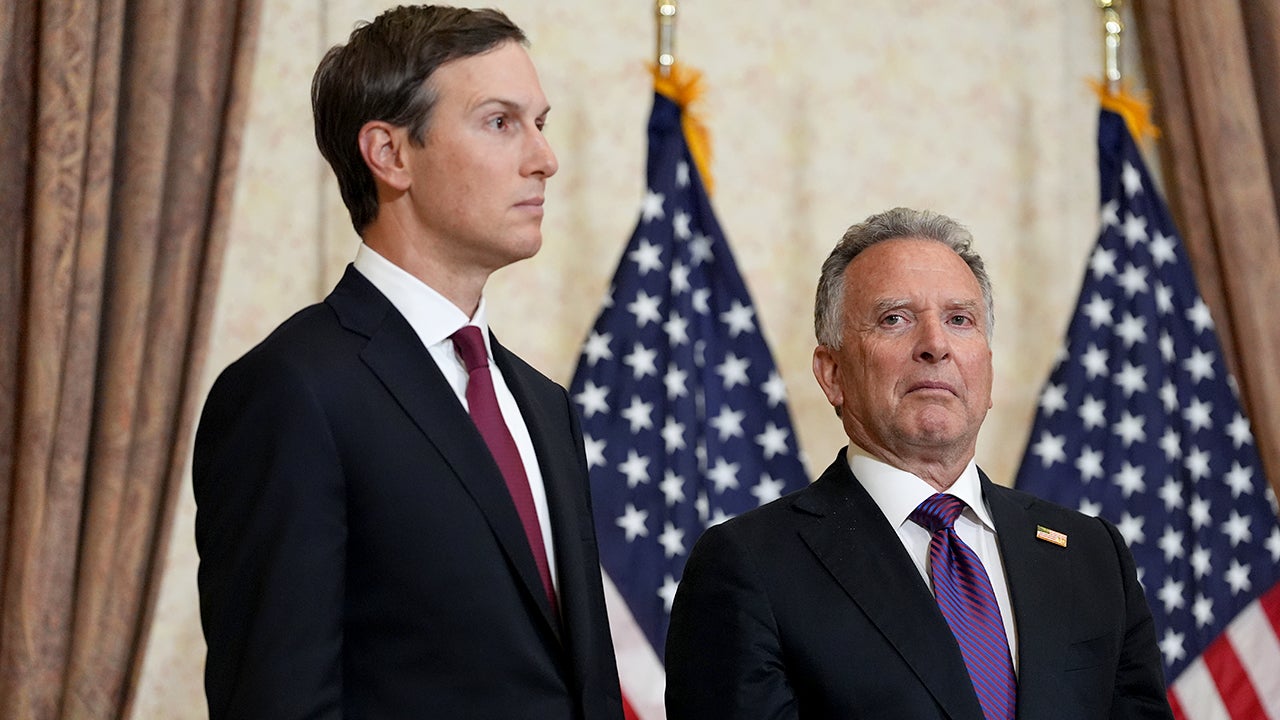
Trump canceled Steve Witkoff and Jared Kushner’s trip to Pakistan for U.S.-Iran talks, signaling negotiations remain uncertain while the Strait of Hormuz standoff intensifies. The U.S. is maintaining a naval blockade, warning it will destroy Iranian boats that lay mines, and has already interdicted two Iranian-linked tankers. The article also notes heightened military activity in the region, including three U.S. aircraft carriers operating in the Middle East at once and continuing disruption to commercial shipping.
The immediate market read-through is not “peace premium” but a higher-probability, lower-velocity risk regime: Washington is signaling it will not pay up for diplomacy, while simultaneously tightening coercive leverage through maritime interdiction. That combination tends to widen the tails in oil, freight, and defense logistics rather than produce a clean directional move, because the market still has to price intermittent disruption, convoy risk, and episodic headlines instead of a stable supply shock.
The second-order winner is any asset tied to force projection and maritime security, not just upstream energy. The U.S. appears to be substituting drones, legacy assets, and ad hoc escorts for the kind of dedicated mine-clearing posture that would normally reassure shippers; that raises the odds that transit normalization is slower than headline diplomacy suggests. In practice, that favors primes with naval systems, unmanned maritime tech, ISR, and command-and-control exposure, while pressuring tanker operators, insurance-linked flows, and any industrials with heavy Gulf/Suez dependence.
For CVX, the setup is asymmetric but less clean than a straight long-oil trade. The company benefits from tighter crude and LNG optionality, but any escalation that constrains Strait transit can also raise upstream-to-downstream friction, working capital drag, and refining/chemicals volatility; the stock can underperform spot energy if the market starts discounting regional logistics risk instead of just price support. The bigger contrarian point is that the market may be overestimating Iran’s ability to sustain a prolonged closure and underestimating how quickly U.S. escort capacity can restore partial flows, which caps the duration of the oil spike and argues for trading the headline, not investing through it.
AI-powered research, real-time alerts, and portfolio analytics for institutional investors.
Request DemoOverall Sentiment
mildly negative
Sentiment Score
-0.35
Ticker Sentiment
