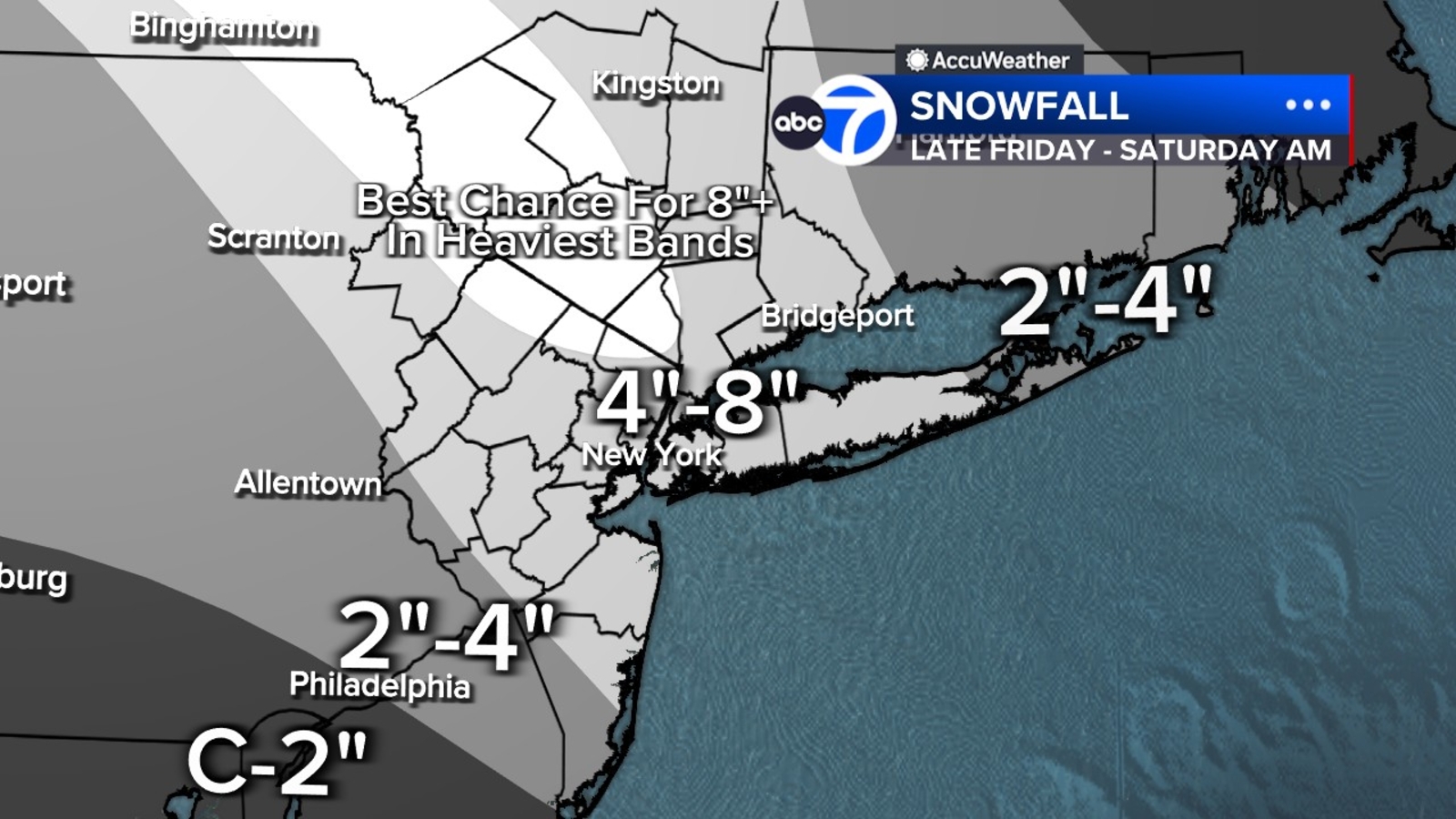
A Winter Storm Watch covers New York City and the Tri-State area from Friday evening into Saturday morning, with AccuWeather projecting widespread 4–8 inches of snow and localized totals exceeding 8 inches in the Catskills, Poconos, northern New Jersey and the Hudson Valley. Peak rates could approach ~1 inch/hour, visibility will be low and travel is expected to be extremely hazardous (NYC Emergency Management has issued travel advisories), with sleet reducing totals south of I-78; temperatures will remain near freezing Saturday and briefly rise into the 40s on Sunday before an Arctic blast returns. Expect short-term disruptions to transportation, logistics and local consumer activity, particularly Friday night into Saturday morning.
Market structure: Winners in the next 48–72 hours are regional winter-supply and infrastructure names (Home Depot HD, Lowe’s LOW, Compass Minerals CMP) and short-duration energy (natural gas futures/UNG) from a likely 1–4% spike in local demand and salt inventory drawdowns; losers are passenger transport (AAL, DAL, UAL, UPS, FDX) with potential 1–3% revenue/traffic hits and NYC-area retailers/REITs exposed to foot-traffic losses. Competitive dynamics: brick‑and‑mortar home‑improvement stores gain short-term share vs. e‑commerce for “buy now” items; airlines’ pricing power is weak for localized disruptions so cancellations compress Q1 revenue per available seat mile (RASM) in the near term. Cross-asset: expect a transitory bid to nat‑gas and heating oil (+5–15% intraday risk), modest safe‑haven bids in municipal paper for affected boroughs, and a blip higher in implied vols on regional travel/airline options.
Risk assessment: Tail risks include extended power outages from infrastructure failure (utility capex hit/insured losses >$100m regionally) or a forecast shift that targets NYC with heavier bands — both would change market moves from days to multi‑week impacts. Immediate (0–3 days): travel disruption, gas demand spike, retailer footfall shifts; short term (1–6 weeks): inventory replenishment and municipal budget strains; long term (>1 quarter): negligible structural demand change unless repeated storms drive higher capex for utilities/municipalities. Hidden dependencies: port/rail yard stoppages causing supply‑chain domino effects for nearby retail restocking; catalyst to watch is NWS/NOAA model convergence and municipal outage reports within 24–48 hours.
trade implications: Direct plays — establish 1–2% portfolio long in HD and LOW via 2‑week ATM call buys or 3–6% cash buys for expected 3–7% sales lift over 7–14 days; buy CMP equity 0.5–1% for salt restocking demand. Short 0.5–1% positions in airline equities (AAL/UAL) via 1–2 week put spreads (buy 5–10% OTM puts, sell deeper OTM) to cap cost. Options/volatility — buy 7–14 day calls on UNG or a small nat‑gas futures position for a tactical 5–15% rebound; pair trade long CMP (0.75%) / short UAL (0.75%) to express weather‑dependent relative value. Entry/exit: enter on increased model consensus or official Winter Storm Warning upgrade; trim at 20–30% P&L or after 10 days if no material move.
AI-powered research, real-time alerts, and portfolio analytics for institutional investors.
Request DemoOverall Sentiment
mildly negative
Sentiment Score
-0.25
