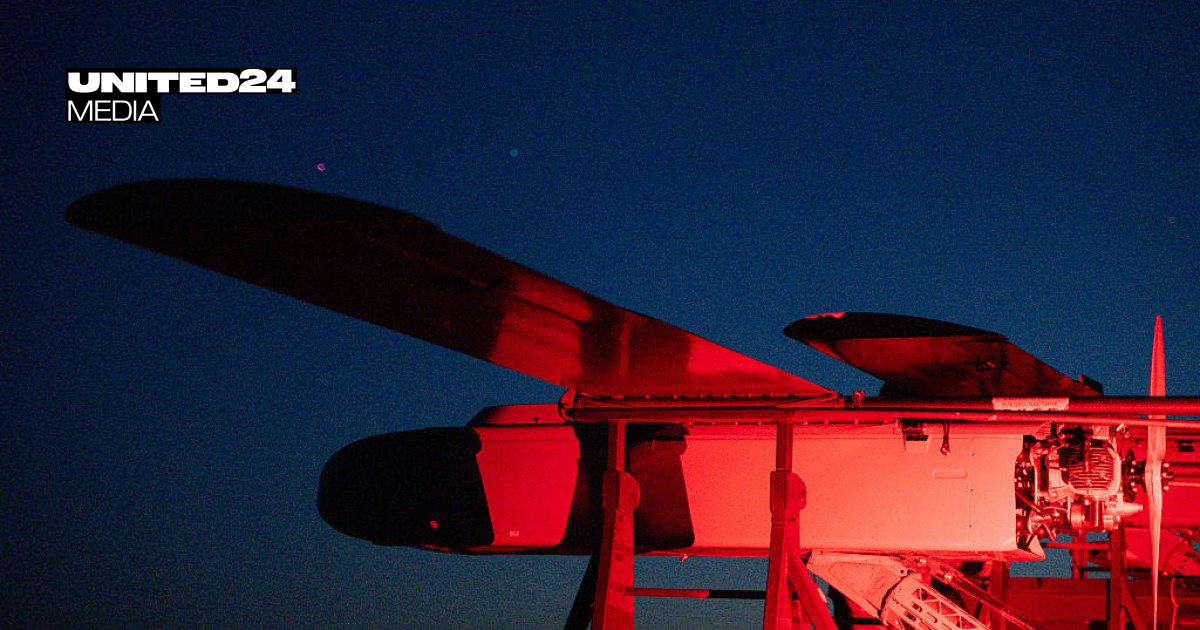
Russia’s top business lobby has asked Putin for heavier weapons, electronic warfare systems, laser installations, and dedicated reservists to defend industrial sites from Ukrainian drones. The request highlights the widening economic damage from long-range strikes, including an estimated 1 trillion rubles ($11 billion) in losses for Russian oil companies last year and drone reach now covering roughly a quarter of Russian territory. The article also notes a leadership shake-up in Russia’s air-defense command after repeated strike failures and describes Ukraine’s upgraded FP-2 drone with a 200-kilogram warhead and 370-kilometer range.
The key market implication is not the headline plea for more hardware, but the admission that Russia’s internal asset-protection model is failing at the margin. Once private industrial groups start lobbying for dedicated air defense and reservists, the state is effectively being forced to socialize a cost that was previously externalized onto the military budget; that should raise capex and opex for the most exposed cash-generating sectors, especially refining, logistics, power, and metals. The second-order effect is a widening gap between nominal production capacity and realizable throughput: even when facilities are physically intact, downtime, insurance, staffing, and convoy/security constraints will continue to reduce effective output.
For defense dynamics, this is a validation of a low-cost, high-scaling offense model. Ukraine does not need to destroy every target to impose persistent economic drag; it only needs to create enough dispersion and uncertainty that Russia is forced into redundant defense spending and inefficient asset allocation. That favors suppliers of counter-UAS, EW, surveillance, and hardened infrastructure over traditional platform-heavy prime contractors, and it likely accelerates procurement urgency over the next 1-3 quarters.
The contrarian read is that the market may overestimate the permanence of the shock in Russian industrial losses. Russia can partially offset with deeper dispersion, better point defense, and more centralized protection of the highest-value nodes, which means the damage path may be more uneven than linear. The bigger risk to the status quo is political: if elite frustration keeps rising, expect more reshuffles and command interference, which can temporarily worsen defense coherence before any genuine improvement appears.
AI-powered research, real-time alerts, and portfolio analytics for institutional investors.
Request DemoOverall Sentiment
moderately negative
Sentiment Score
-0.35
