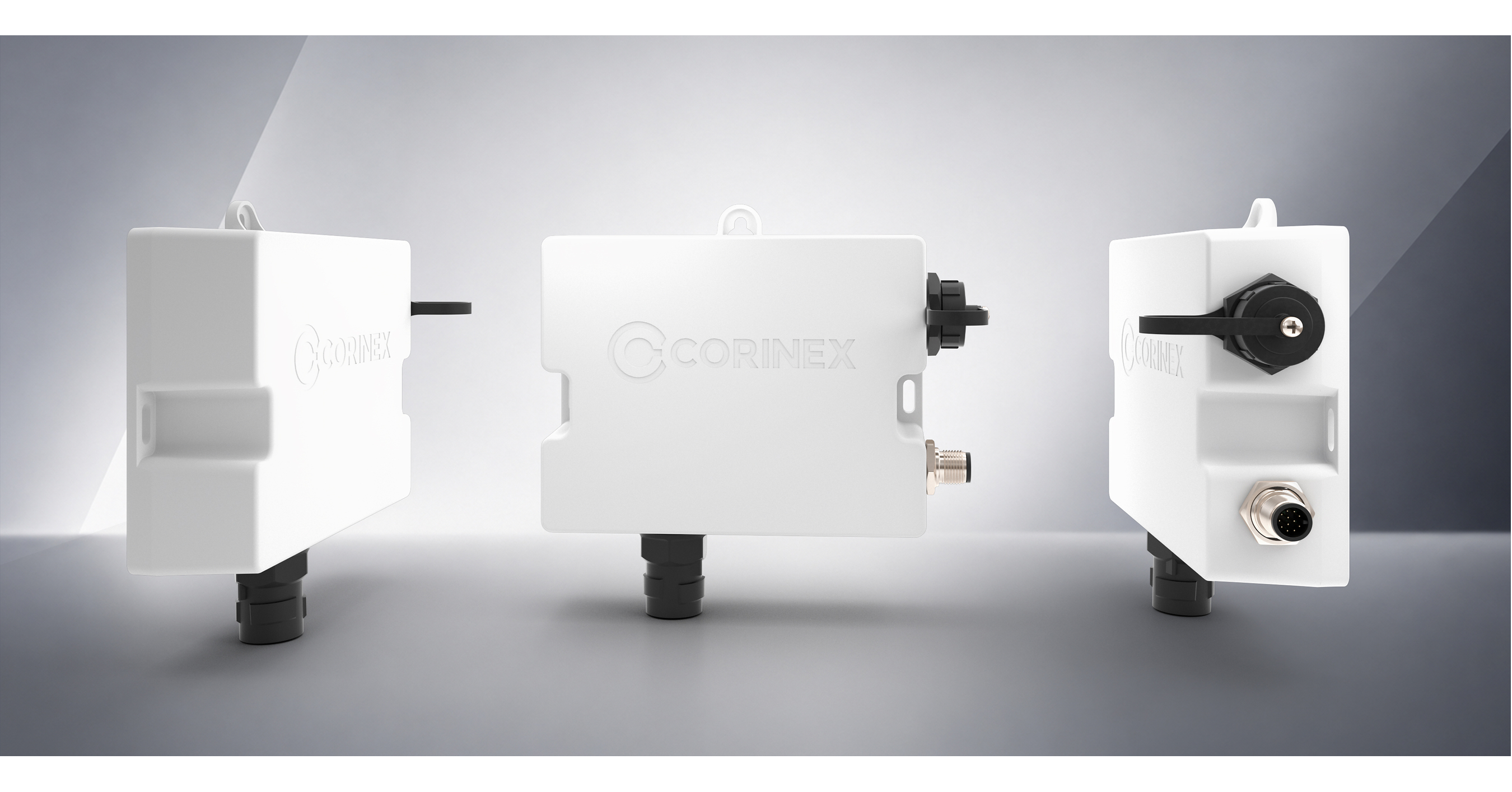
Corinex launched the Grid Intelligence Node (GIN), enabling near-real-time voltage/current and power-quality monitoring at low-voltage feeders/branch points via broadband powerline (BPL) plus integrated metering and event detection. The device targets improved “digital twin” accuracy for low-voltage grids—supporting better assessment of capacity for EVs, heat pumps, and PV, and helping determine whether bottlenecks require flexibility versus physical reinforcement. Technical specs include ≤0.5% effective-value measurement error and monitoring up to the 51st harmonic, with 1-minute operating overviews and 15-minute energy totals.
This is incremental validation for the grid digitization stack, not a new revenue pool by itself. The economic value is in reducing uncertainty around low-voltage congestion, which should improve capex prioritization and shorten approval cycles for utilities that are forced to electrify faster than they can reinforce assets. That tends to favor vendors selling visibility, analytics, and control layers over pure hardware spend, because the first budget dollars usually go to sensing and software before heavier civil works follow.
The second-order loser risk is for equipment-only vendors if utilities decide that better measurement can defer some physical upgrades; however, that effect is usually temporary. Once operators can actually see latent constraints, the backlog of needed reinforcement often gets pulled forward rather than eliminated, especially in EV, heat-pump, and PV-heavy feeders. Over 6-18 months the likely winner set is the grid-software and smart-meter ecosystem, while over 1-3 months the market may overpay for any announcement that sounds like “AI for the grid” without signed utility conversions.
The key risk is procurement friction: utilities buy slowly, integrate cautiously, and may reject proprietary communications layers if cyber, interoperability, or vendor lock-in concerns appear. A more important falsifier is whether pilots convert into multi-year framework agreements; absent that, this is mostly a credibility event. If upcoming utility budget guidance shows capex is still being pushed into physical reinforcement rather than digital sensing, the thesis for fast adoption becomes weaker.
AI-powered research, real-time alerts, and portfolio analytics for institutional investors.
Request DemoOverall Sentiment
mildly positive
Sentiment Score
0.20
