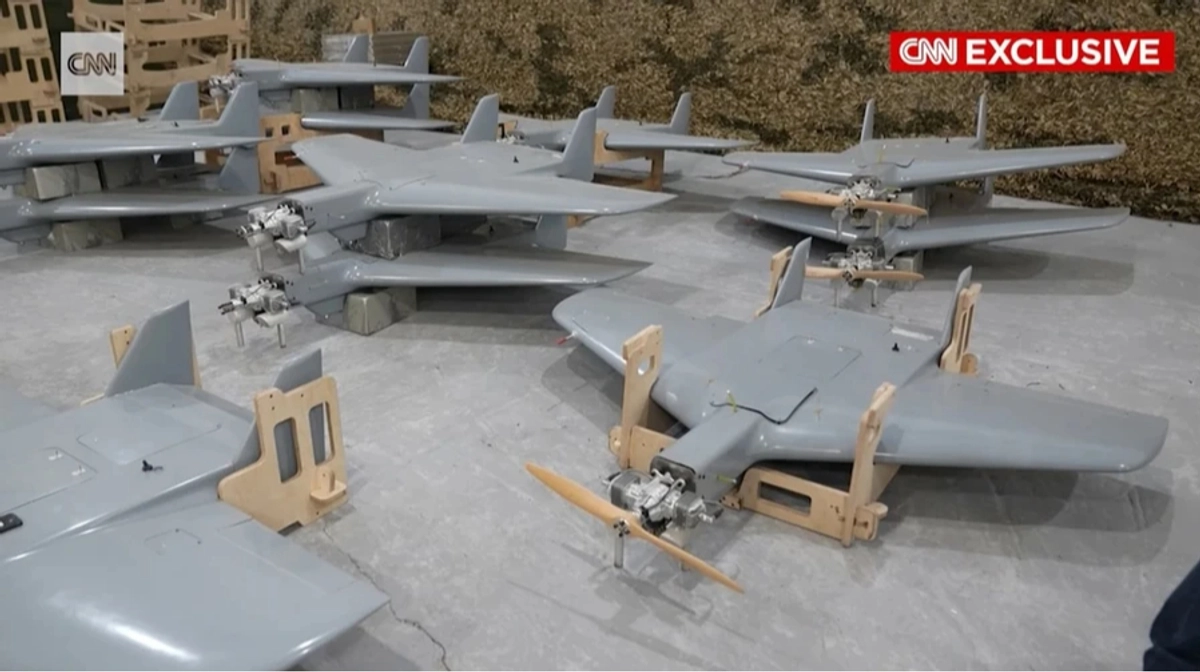
Ukraine announced a new Logistics Lockdown programme and allocated an additional UAH 5 billion (about US$113 million) for mid-range strike systems. The Ministry of Defence and General Staff will distribute the funds directly to effective units via the e-points system, while centralised tenders are set to scale procurement further. The move signals an escalation in attacks on Russian rear logistics and may modestly affect defense-related sentiment, but it is unlikely to have broad market impact.
This is a materially bullish setup for the drone/mid-strike industrial base rather than for the obvious defense primes. The key second-order effect is that Ukraine is trying to convert tactical success into an industrial procurement flywheel: direct allocation to the best-performing units should improve kill-per-dollar efficiency, while centralized tenders should compress unit costs and accelerate throughput. That combination favors smaller, faster, software-heavy suppliers and munitions component vendors more than legacy platforms with slower production cycles.
The market implication is a rising probability of sustained attrition on Russian rear logistics over the next 1-2 quarters, which can tighten supply chains around fuel handling, rail-adjacent maintenance, air defense, and truck fleet replacement. Even if front-line dynamics do not change immediately, rear-area vulnerability raises the cost of sustaining operations and forces Russia to spend more on dispersion, redundancy, and air defense coverage. That creates a persistent budgetary drag and can eventually reduce operational tempo, which is bearish for any assets tied to uninterrupted Russian export/logistics flows.
The contrarian risk is that this becomes a familiar escalation headline with limited incremental battlefield effect if Russian countermeasures improve faster than strike quality. If Russia hardens depots, disperses inventories, or improves EW and interception, marginal returns on additional funding could fall quickly; the first real test is over the next 6-12 weeks, not years. Still, the program’s explicit emphasis on competition and scaling suggests the bigger risk is underestimating how fast Ukraine can improve strike density once procurement bottlenecks are removed.
AI-powered research, real-time alerts, and portfolio analytics for institutional investors.
Request DemoOverall Sentiment
mildly negative
Sentiment Score
-0.20
