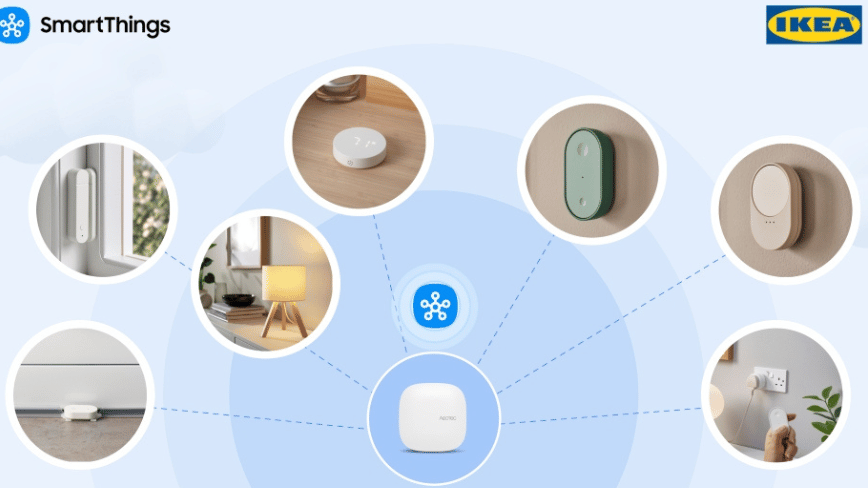
Samsung SmartThings and IKEA expanded Matter-over-Thread support so 25 new IKEA smart home devices can connect directly to a SmartThings hub, removing the need for IKEA’s DIRIGERA hub for bulbs, plugs, remotes, and some sensors. Pricing is aggressively competitive, with KAJPLATS bulbs starting at $5.99, a $29.99 air quality sensor, and other devices positioned at roughly half or less of rival pricing. The move strengthens Matter interoperability and could broaden adoption across Samsung’s installed base of TVs and appliances with embedded Thread border routers.
The immediate equity implication is not revenue monetization but ecosystem defense: Samsung and IKEA are lowering the activation energy for smart-home adoption at precisely the point where platform value is shifting from hardware compatibility to software engagement. That favors the largest installed-base owners in a winner-take-most interface war, but the bigger second-order effect is that every cheap Thread device makes Samsung’s embedded border-router strategy more valuable ex post. The hidden asset here is not a hub sale; it is persistent control-point density across TVs and appliances that can convert non-smart-home households into addressable users at near-zero incremental distribution cost.
For Apple, Google, and Amazon, the news is mildly positive on the surface because Matter expands device interoperability, but strategically it increases the importance of their UI/AI layers and reduces differentiation from home-device exclusivity. That is good for whichever platform can turn home state into agentic workflows first; it is less good for any ecosystem relying on lock-in through proprietary accessories. The likely losers are standalone hub vendors and premium sensor brands with weak brand moats, because the low-end pricing anchor compresses willingness to pay and forces them to justify 2-4x premiums with better reliability, battery life, or software automation.
The market may still be underappreciating the adoption curve. A sub-$10 entry product plus existing Samsung infrastructure creates a very short path from curiosity to household trial, which usually matters more than protocol elegance in consumer hardware. If this works, the next catalyst is not bulbs but repeat purchases across sensors, outlets, and eventually higher-ARPU categories like security and climate control, with a 6-18 month lag as households build confidence.
The contrarian risk is that the thesis is more visible than the monetization. Interoperability can commoditize the device layer faster than platforms can extract take rates, and the value may accrue to whoever owns the most frictionless app rather than the most devices. If SmartThings usage doesn’t convert into stickier engagement or Samsung appliance attach, the strategic upside becomes mostly defensive, not accretive.
AI-powered research, real-time alerts, and portfolio analytics for institutional investors.
Request TrialOverall Sentiment
moderately positive
Sentiment Score
0.62
Ticker Sentiment
